














Layer-2 Fee Dynamics: Why Ethereum Rollup Costs Are Not as Simple as They Look
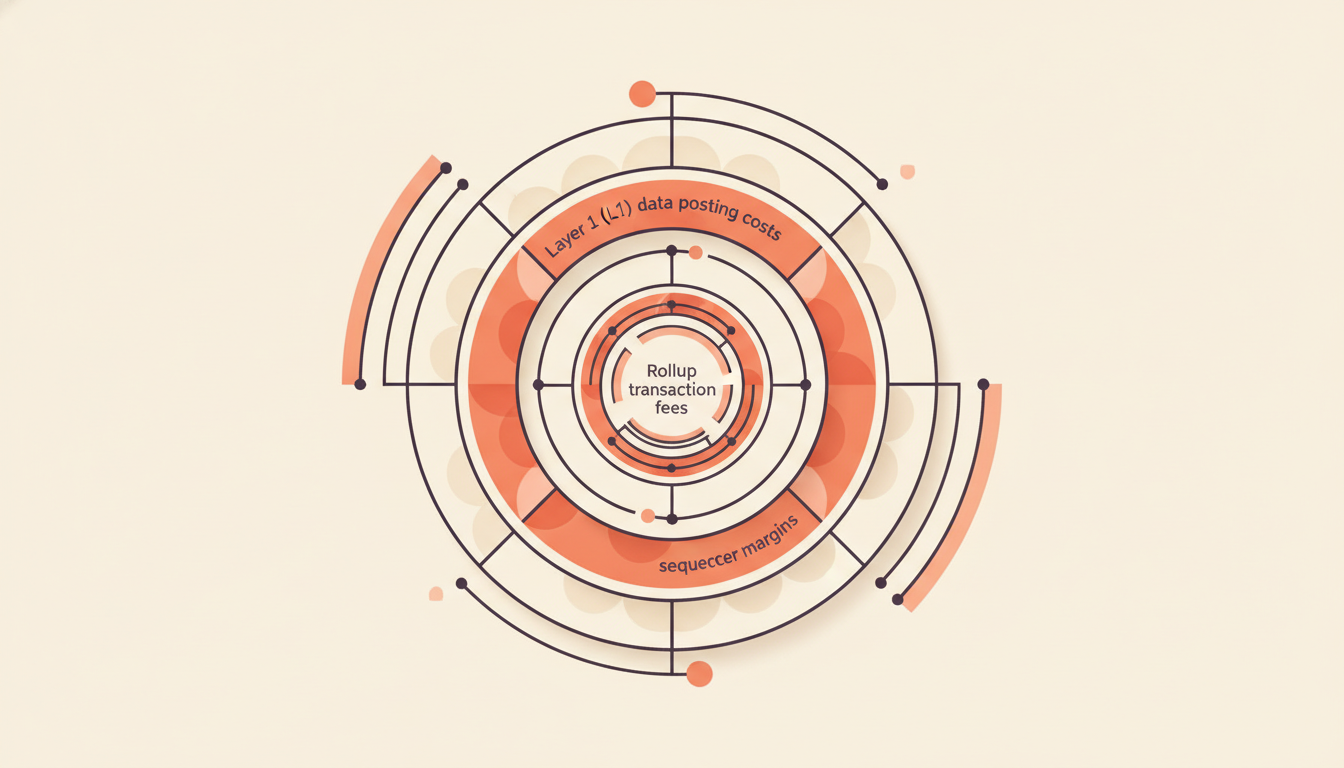
Rollup transaction fees have fallen to fractions of a cent on some networks, but the full picture includes L1 data posting costs, sequencer margins and a new fee market introduced by EIP-4844.
 Lena Kovacs
5 min read
Lena Kovacs
5 min read
Key takeaways
- A layer-2 rollup compresses many transactions and posts a batch record to Ethereum mainnet.
- Blobs have their own EIP-1559-style base fee that rises when demand for blobs exceeds the target.
- Most optimistic rollups today run a single, centralised sequencer operated by the rollup team.
- Under EIP-1559, ETH is burned proportional to Ethereum mainnet activity.
Rollup transaction fees have fallen to fractions of a cent on some networks, but the full picture includes L1 data posting costs, sequencer margins and a new fee market introduced by EIP-4844.
How rollup fees are structured
A layer-2 rollup compresses many transactions and posts a batch record to Ethereum mainnet. The fee you pay for a rollup transaction has two main components: the execution fee (what the rollup charges for computing your transaction) and the L1 data fee (the rollup’s cost of posting your transaction data to Ethereum, passed back to you).
Before March 2024, rollups posted transaction data as calldata on Ethereum, which competed for the same block space as regular mainnet transactions. When Ethereum was busy, this pushed rollup costs up sharply. A simple token swap on a major rollup could cost $1–$3 during congested periods, not the zero-fee experience often advertised.
EIP-4844, activated in the Dencun upgrade in March 2024, changed this. It introduced a new data type called a blob, a transient data container specifically designed for rollup batch data. Blobs use a separate fee market from calldata, their base fee starts very low, and the data is only stored for about 18 days before being pruned. For rollups, which need to post data cheaply but do not need Ethereum nodes to store it forever, this was the right trade. Within weeks of Dencun, median per-transaction fees on Optimism, Arbitrum and Base fell by 90% or more.
The blob fee market
Blobs have their own EIP-1559-style base fee that rises when demand for blobs exceeds the target. The target in EIP-4844 is 3 blobs per block with a maximum of 6. Because most rollups post multiple batches per hour, and there are dozens of active rollups, blob demand during busy periods can push blob base fees noticeably higher.
During the peak of memecoin trading on Base in 2024, blob fees spiked and rollup fees temporarily returned to dollar territory. This illustrates a structural reality: as more rollups compete for Ethereum’s blob capacity, users on all of them pay more. The planned Pectra and Fusaka upgrades aim to increase blob throughput further, but each step requires careful calibration to avoid overloading Ethereum’s consensus layer with data.
Sequencer margins
Most optimistic rollups today run a single, centralised sequencer operated by the rollup team. The sequencer orders transactions and determines what execution fee to charge. It is in a sequencer’s interest to price fees slightly above its L1 cost; that margin is sequencer revenue, sometimes called the “sequencer profit”.
For users, this means the fee you pay is not simply the L1 cost reimbursement; there is a markup. That markup funds protocol development and, in some cases, token incentive programs. Decentralised sequencer designs (where multiple parties can sequence) are an active area of research and are not yet live at scale on any major rollup.
ZK-rollups add a further cost component: the prover. Generating a validity proof is computationally expensive, and that cost is spread across the users in a batch. As proof generation hardware improves and proving software becomes more efficient, this cost has fallen, but it remains a real component of ZK fees.
What this means for ETH the asset
Under EIP-1559, ETH is burned proportional to Ethereum mainnet activity. Rollups reduce the amount of gas spent on mainnet, which reduces burn. For ETH’s supply dynamics, this is a meaningful shift: a world in which most user activity runs on rollups and only settlement data hits L1 burns less ETH than a world in which every swap and transfer happens on mainnet.
Some analysts argue this makes ETH structurally inflationary as rollup adoption grows; others point out that as rollups drive more settlement volume and blob fees, the base L1 activity stays meaningful. The honest answer is that the supply dynamics are genuinely harder to model post-Dencun, and anyone offering a confident prediction should be treated with appropriate scepticism. Our own ETH price page shows model-based scenarios using CoinGecko price data; see the methodology for what the model does and does not include.
For a broader introduction to how layer-2 networks work, see our layer-2 glossary entry.
Frequently asked questions
Why are rollup fees sometimes still high?
Blob fees have their own market that rises when demand exceeds the per-block target. During very busy periods (popular mints, token launches, broad market activity), blob competition among rollups can push per-transaction costs back into the tens of cents or higher.
What did EIP-4844 change?
EIP-4844, activated in March 2024, introduced blobs — a separate, cheaper data type for rollup batch posting. Blob fees are determined by their own base fee market, independent of calldata. This reduced median rollup fees by over 90% within weeks of activation.
Are rollup sequencers centralised?
Most optimistic rollups currently rely on a single centralised sequencer operated by the protocol team. This introduces censorship risk and is a point of centralisation. Decentralised sequencing is under active development but not yet widely deployed.
Does rollup growth hurt ETH’s value?
This is contested. Rollups reduce mainnet gas burn because users spend less on L1 execution. But they increase settlement demand and blob fees, which also feed into Ethereum’s economics. The net effect on ETH supply depends on the balance between these forces, which is hard to predict.
Sources
- EIP-4844 specification (ethereum.org)
- L2Beat — rollup TVL, sequencer status, and risk comparisons
- TheWeal: Layer-2 glossary entry
- TheWeal: Gas fee glossary entry

 · James Okafor6 min read
 · Lena Kovacs7 min read

 · Priya Rao5 min read