


Three Years After Terra: What the UST Collapse Taught Us About Algorithmic Stablecoins
In May 2022, roughly $60 billion in market value evaporated from the Terra ecosystem over seventy-two hours. TerraUSD (UST), an algorithmic stablecoin that was briefly the third-largest stablecoin by market cap, lost its dollar peg and fell to near zero. LUNA, the token that backed it, collapsed from $80 to fractions of a cent. Three…
 Sofia Romero
6 min read
Sofia Romero
6 min read
Key takeaways
- Unlike USDT or USDC, which hold real-world assets to back each issued token, UST was an algorithmic stablecoin: its peg to the dollar was maintained by an arbitrage mechanism involving its sister token LUNA.
- The SEC filed suit against Terraform Labs and its founder Do Kwon in February 2023, alleging that UST and LUNA were offered as unregistered securities and that the company made materially false statements about the peg’s stability.
- Not all stablecoins that use crypto collateral are algorithmic in the Terra sense.
- Three structural problems the Terra collapse exposed remain present in parts of the market.
- For holders or prospective holders, three questions diagnose most of the risk.
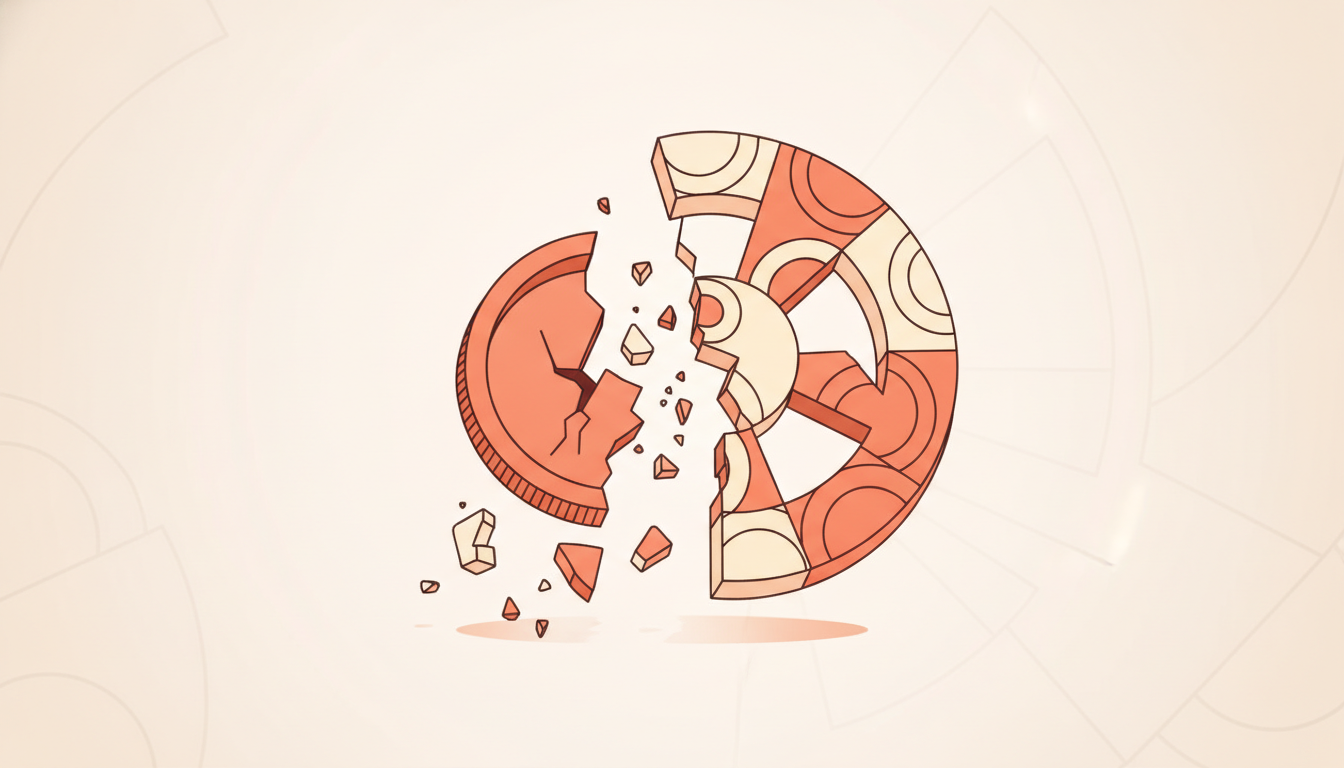
In May 2022, roughly $60 billion in market value evaporated from the Terra ecosystem over seventy-two hours. TerraUSD (UST), an algorithmic stablecoin that was briefly the third-largest stablecoin by market cap, lost its dollar peg and fell to near zero. LUNA, the token that backed it, collapsed from $80 to fractions of a cent. Three years on, the lessons for stablecoin design have been absorbed unevenly across the industry, and some of the same structural vulnerabilities are present in newer projects.
Analysis of past market events. This article does not constitute financial advice or a recommendation regarding any asset. Stablecoin pegs are targets, not guarantees.
How UST’s Peg Mechanism Worked, and Why It Failed
Unlike USDT or USDC, which hold real-world assets to back each issued token, UST was an algorithmic stablecoin: its peg to the dollar was maintained by an arbitrage mechanism involving its sister token LUNA. When UST traded above $1, holders could burn LUNA to mint new UST, pocketing the difference. When UST traded below $1, they could burn UST to receive $1 worth of newly minted LUNA. In theory, profit-seeking arbitrageurs would always push UST back toward its peg.
The theory had a fatal flaw: it assumed the arbitrage mechanism could absorb any selling pressure. When large holders began liquidating UST in early May 2022, LUNA needed to be minted to absorb the selling. The more LUNA was minted, the more the LUNA price fell under the newly created supply. A lower LUNA price meant that absorbing the same UST redemption required minting even more LUNA. This feedback loop, a textbook bank-run dynamic, was self-accelerating. The Anchor Protocol, which had attracted billions of dollars of UST deposits by offering a 20% yield, became the source of the initial selling pressure when confidence in that yield’s sustainability began to crack. Analysis from Chainalysis estimated that the collapse spread contagion across at least 15 other crypto projects with significant LUNA or UST exposure.
The Regulatory Aftermath
The SEC filed suit against Terraform Labs and its founder Do Kwon in February 2023, alleging that UST and LUNA were offered as unregistered securities and that the company made materially false statements about the peg’s stability. Do Kwon was arrested in Montenegro and extradited to South Korea. The SEC complaint provides the most detailed public account of the project’s claims and the mechanisms that failed. The case has influenced subsequent regulatory thinking on algorithmic stablecoins in both the US and EU, with MiCA explicitly prohibiting algorithmic stablecoins that rely solely on their own native token as collateral. See our regulation coverage for MiCA implementation updates.
What Survived the Collapse
Not all stablecoins that use crypto collateral are algorithmic in the Terra sense. DAI, issued by the protocol now called Sky (formerly MakerDAO), is crypto-collateralised but overcollateralised: every DAI is backed by a basket of collateral worth more than $1 at the time of minting, with liquidation mechanisms that trigger automatically if the collateral value falls. DAI was not immune to the Terra contagion (it traded slightly below peg for a period), but it did not fail. The distinction between overcollateralised crypto-backed stablecoins and undercollateralised algorithmic ones is now standard in both industry analysis and regulatory text.
The DeFi sector has broadly moved away from algorithmic designs. Several projects that launched with UST-inspired mechanisms during the 2021 bull market have quietly wound down or migrated to fully-backed models. The exception is a handful of projects using fractional reserves plus governance tokens, a design that critics argue still embeds the same latent vulnerability at lower magnitudes.
The Lessons That Are Not Being Applied
Three structural problems the Terra collapse exposed remain present in parts of the market. First, yield without a credible source: the Anchor Protocol’s 20% UST yield was funded initially by Terraform Labs’ own reserves, a detail that was not prominent in marketing materials. Any yield above prevailing money-market rates deserves a specific explanation of its source. Second, circular collateral: using a project’s own governance token as collateral creates a reflexive dynamic where price drops increase required collateral at precisely the moment when the token price is falling. Third, opacity about reserve composition: several stablecoin projects declined to publish detailed reserve breakdowns even after UST, and some that do publish them use methodologies that are difficult to verify independently. See our Tether page and our coverage of USDC for how the two dominant stablecoins describe their reserves.
How to Evaluate a Stablecoin Before Holding One
For holders or prospective holders, three questions diagnose most of the risk. First, what backs the peg? Fiat in a regulated bank, US Treasury bills, crypto overcollateral, and algorithmic mechanisms are fundamentally different risk profiles. Second, who attests to the backing and how often? Monthly attestations from a recognised accounting firm are better than quarterly unverified claims. Third, where is the peg mechanism’s failure point? Every stablecoin has a scenario under which the peg breaks; understanding that scenario is more useful than a blanket assurance of stability. Our methodology page covers how TheWeal models scenario ranges for assets with peg mechanisms.
Frequently Asked Questions
Could an algorithmic stablecoin work if designed differently?
Researchers have proposed designs with larger overcollateral buffers, circuit breakers that pause redemptions during high-speed depegs, and diversified collateral baskets. Whether any of these solve the fundamental bank-run problem is contested. The EU’s MiCA regulation has largely pre-empted the question for European markets by requiring full asset backing for regulated stablecoins.
Did UST holders lose everything?
Most did. UST fell from $1 to fractions of a cent and did not recover. Some holders who sold during the initial depeg recovered a partial position; those who held expecting a recovery or who tried to arbitrage the mechanism as it failed lost the majority of their capital. LUNA holders experienced near-total loss as the token was hyperinflated to absorb UST redemptions.
Are there legal remedies for Terra victims?
The SEC enforcement action against Terraform Labs does not directly compensate retail holders. Some class-action lawsuits have been filed in US jurisdictions. The outcome of the Do Kwon criminal proceedings in South Korea will determine what, if any, assets are available for potential recovery. Outcomes vary significantly by jurisdiction and are still proceeding through courts as of mid-2025.
Sources
- SEC v. Terraform Labs Complaint (February 2023) — the detailed regulatory account of the scheme and collapse
- Chainalysis: Terra Collapse and Contagion — on-chain analysis of the failure mechanism and downstream effects
 · James Okafor6 min read

 · Lena Kovacs7 min read
 · Priya Rao5 min read