


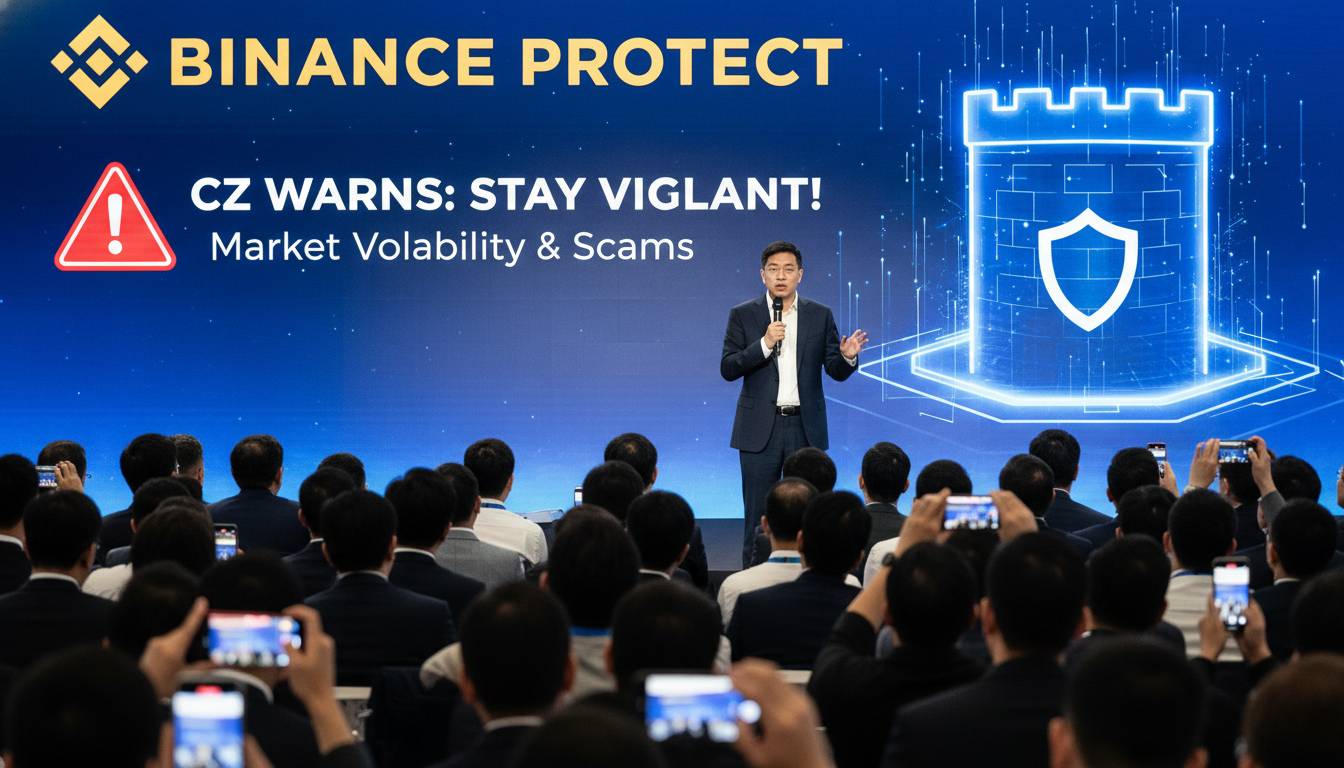
Binance founder Changpeng “CZ” Zhao has warned crypto projects that anyone claiming they can secure a Binance listing for a fee is running a scam, according to posts and reports published in late 2025 and early 2026. The warning matters because listing rumors can move token prices sharply, and Binance has also been revising how listings work through newer community-voting features and public criticism of its own process.
That combination creates a fertile environment for impersonators. Fraudsters can exploit founders’ urgency, retail traders’ fear of missing out, and the market impact that often follows a major exchange listing. Publicly available reports show CZ has repeatedly said that claims of paid “assistance” for listings are fraudulent, while Binance’s own educational materials separately warn users about impersonation, phishing, fake domains, and social-engineering attacks. For founders, traders, and token communities in the United States and globally, the practical question is not whether listing scams exist, but how to verify what is real before money or credentials change hands.
⚠️
Core warning:
Reports published in December 2025 said CZ stated that “any claims of assistance in listing coins are scams,” while Binance Academy has long warned users against impersonation and phishing tactics that mimic trusted brands and executives. Source context: ChainCatcher, U.Today, Binance Academy, accessed March 27, 2026.
Verified Context Around the Listing-Scam Warning
| Item | What public sources show | Why it matters |
|---|---|---|
| CZ warning | Media reports cite CZ saying claims of paid listing help are scams | Projects should distrust brokers promising exchange access |
| Binance leadership | Richard Teng became Binance CEO on November 21, 2023, after CZ stepped down | Stories calling CZ the current CEO are outdated or imprecise |
| Binance listing changes | Public reporting in March 2025 described community co-governance and voting features | Scammers can misuse confusion around evolving listing mechanics |
| Common scam vectors | Binance Academy flags impersonation, phishing, fake domains, and fake giveaways | Listing scams often use the same playbook |
Source: Axios, Binance Academy, ChainCatcher, U.Today, X search summaries | Accessed March 27, 2026
November 21, 2023 leadership change reshapes the framing
A key factual point comes first: CZ is no longer Binance’s chief executive. Binance announced Richard Teng as CEO on November 21, 2023, the same day CZ agreed to step down as part of a U.S. settlement, according to Axios’ contemporaneous report. That means headlines describing a fresh warning from the “Binance CEO” need careful wording. The more accurate description in March 2026 is Binance founder and former CEO Changpeng Zhao.
That distinction is not cosmetic. In crypto, authority signals matter. Scammers often borrow the names of founders, executives, exchange staff, or “listing agents” to create urgency. If a bad actor claims to represent Binance and invokes CZ’s name, a project team that does not know the current leadership structure may be easier to manipulate. Binance Academy’s anti-scam guidance describes this exact pattern in broader terms: impersonation, spoofed communications, and fake websites are standard methods used to steal funds or credentials.
Timeline of the Public Record
November 21, 2023: Binance names Richard Teng as CEO after CZ steps down, according to Axios.
March 7, 2025: Public X search summaries describe Binance rolling out community co-governance features for listings and delistings.
December 2025: ChainCatcher and U.Today report CZ warning that anyone claiming to help secure listings is running a scam.
March 13, 2026: TheStreet Crypto reports CZ also criticized Binance’s token-listing process as “broken” after a memecoin-related episode.
How listing scams create losses before a token ever reaches Binance
The mechanics are straightforward. A scammer approaches a founder, adviser, or community manager and claims to have direct exchange access. The pitch usually includes one of four elements: a guaranteed listing, a faster review, a discounted fee, or a confidential backchannel. Binance’s public educational content gives enough context to map the risk pattern even when it is not discussing listings specifically. The recurring red flags are unsolicited outreach, requests for upfront payment, pressure to move quickly, and links to unofficial domains or messaging accounts.
Losses can happen in several ways. First, a project may send stablecoins or other crypto to a fraudster posing as an intermediary. Second, team members may hand over internal documents, exchange account credentials, or wallet access. Third, scammers may use the false listing narrative to pump a token in secondary markets, then dump into the excitement. Binance Academy’s phishing and scam explainers warn that fake websites, spoofed emails, and lookalike domains are common tools in these schemes.
The market backdrop makes the scam more believable. Binance remains one of the world’s largest crypto exchanges by trading activity, so a real listing can materially affect visibility and liquidity. That creates a strong incentive for bad actors to sell fake access. Separately, public reporting in March 2025 indicated Binance was experimenting with more community involvement in listing decisions. Any process change, even a legitimate one, gives scammers new language to imitate.
ℹ️
Important accuracy note:
Public reports support the scam warning, but they do not establish that Binance uses paid third-party “agents” to secure listings. The safer interpretation is the opposite: unsolicited offers of listing help should be treated as suspect unless verified directly through official Binance channels. Sources accessed March 27, 2026.
March 2025 voting changes vs. fake “listing agents”
One reason this story has traction is that Binance’s listing framework has not stood still. X search summaries from March 7, 2025 described a community co-governance mechanism for listings and delistings, including user voting. Even without relying on those summaries alone, the broader point is clear from public discussion: Binance’s listing process has become more visible and more debated.
That visibility cuts both ways. On one side, more transparency can reduce information asymmetry. On the other, scammers can weaponize partial truths. A fraudster might say a token is “already in the vote queue,” “approved pending payment,” or “eligible for accelerated review” if the team pays a service provider. None of those claims should be accepted without direct confirmation from Binance’s official website, verified support channels, or formal announcements.
Red Flags in a Binance Listing Scam Pitch
| Red flag | Why it is suspicious | Safer response |
|---|---|---|
| Guaranteed listing | No credible exchange can promise outcomes through unofficial channels | Request official documentation and verify independently |
| Upfront crypto payment | Irreversible transfers are favored by scammers | Do not send funds to personal wallets |
| Private Telegram or X contact | Impersonation is common in messaging apps | Cross-check through official Binance pages |
| Lookalike domain or email | Typosquatting is a known phishing tactic | Type official URLs manually |
| Urgent deadline | Pressure reduces due diligence | Pause and verify with multiple team members |
Source: Binance Academy anti-phishing and anti-scam materials | Accessed March 27, 2026
5 practical checks before any project discusses a listing
First, verify who is contacting you. Binance Academy’s phishing guidance warns against spoofed emails, redirects, and typosquatting. Second, assume any request for payment to a personal wallet is high risk. Third, separate business development from custody: no legitimate listing conversation should require seed phrases, private keys, or wallet imports. Fourth, confirm leadership and staff identities using official Binance pages, because outdated assumptions about who runs Binance can be exploited. Fifth, document every interaction internally so legal, compliance, and security teams can review it before funds move.
For retail traders, the lesson is slightly different. If a token claims it is “about to be listed on Binance” based on screenshots, leaked chats, or unnamed intermediaries, treat that as unverified. Binance Academy’s materials on scams and fake giveaways show how often fraud relies on social proof manufactured by bots, cloned accounts, or edited images. In practice, the safest standard is simple: if the listing is real, it should be confirmable through Binance’s official announcement channels.
Frequently Asked Questions
Is CZ still the Binance CEO?
No. Binance named Richard Teng as CEO on November 21, 2023, after CZ stepped down as part of a U.S. settlement, according to Axios. In March 2026, the accurate description is Binance founder and former CEO Changpeng Zhao.
What did CZ reportedly warn about?
Reports published in late 2025 said CZ warned that anyone claiming they could help projects get listed on Binance was running a scam. That reporting aligns with Binance Academy’s broader warnings about impersonation, phishing, and fake service offers.
Does Binance use third-party listing agents?
Publicly available sources reviewed for this article do not support the idea that unofficial third-party “agents” can secure listings. Any such claim should be treated as unverified until confirmed directly through official Binance channels and formal announcements.
How can projects verify a real Binance communication?
Use only official Binance websites and verified support or announcement channels, check domains carefully, and avoid links sent in unsolicited messages. Binance Academy specifically warns that spoofed emails, redirects, and lookalike domains are common scam methods.
Why are listing scams effective?
They exploit the fact that a Binance listing can materially affect a token’s visibility and liquidity. Scammers combine that incentive with urgency, impersonation, and irreversible crypto payments, which makes founders and traders vulnerable if they skip verification.
Conclusion
The verified takeaway is narrower, but more useful, than many viral posts suggest. Public reporting indicates CZ warned that paid “help” for Binance listings is a scam, while Binance’s own educational materials show the underlying tactics are familiar: impersonation, phishing, fake domains, and pressure to act fast. The additional context matters too. CZ is not Binance’s current CEO, Binance’s listing process has been publicly debated and adjusted, and that evolving environment gives fraudsters more angles to imitate. For both project teams and traders, the safest rule is to trust only official Binance communications and to treat any promise of guaranteed listing access as a red flag.
Disclaimer: This article is for informational purposes only. Information may have changed since publication. Always verify information independently and consult qualified professionals for specific advice.

















Leave a comment