


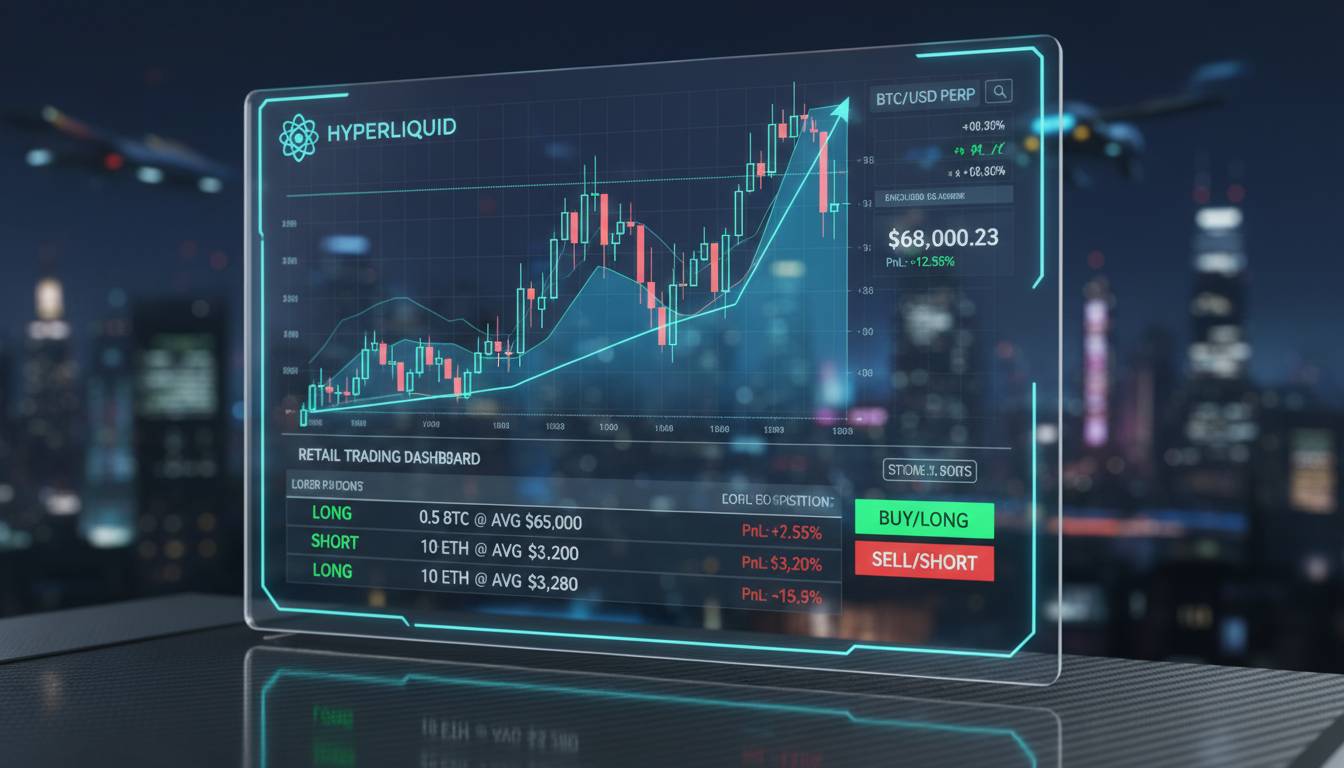
Hyperliquid’s native token HYPE traded near $35.97 on March 12, 2026, with roughly $414.5 million in 24-hour volume, as exchange-traded product activity and public-company treasury moves pushed the protocol back into focus, according to CoinGecko data crawled last week. At the same time, listed firms tied to HYPE accumulation and packaging have expanded, while retail traders continue rotating into higher-beta segments elsewhere in crypto.
That split matters. Institutional attention around Hyperliquid is increasingly centered on wrappers, treasury vehicles, and regulated access points. Retail traders, by contrast, often chase liquidity where upside appears less crowded, especially in large-cap smart-contract ecosystems, memecoins, and infrastructure tokens. For investors trying to identify the best crypto to invest in now, the more useful question is not whether Hyperliquid is important. It is whether capital is likely to flow into HYPE directly, into listed vehicles linked to HYPE, or into other tokens that benefit when retail money looks for the next trade.
Hyperliquid and Related Market Data
| Metric | Value | Source timestamp |
|---|---|---|
| HYPE price | $35.97 | CoinGecko, crawled last week |
| HYPE 24h volume | $414.5M | CoinGecko, crawled last week |
| HYPE market cap ranking | #11 | CoinMarketCap, crawled last week |
| Next token unlock | April 6, 2026 | CoinGecko, crawled last week |
| Hyperliquid Strategies HYPE holdings | 12,857,533 HYPE | Quarter ended Dec. 31, 2025 |
Source: CoinGecko, CoinMarketCap, SEC-linked company filings | Accessed via indexed pages in March 2026
4 Public-Market Routes Show How HYPE Is Being Packaged
The “packaging” race around Hyperliquid is no longer theoretical. Public filings and company disclosures show at least four distinct routes that give investors indirect or structured exposure to HYPE: treasury companies, merger vehicles, listed operating companies adding HYPE to reserves, and leveraged ETF structures.
First, Hyperion DeFi, formerly Eyenovia, said in 2025 that it was building a HYPE treasury and later described itself in a January 9, 2026 prospectus as the first U.S.-listed company building a long-term strategic treasury of HYPE. Second, Hyperliquid Strategies emerged through the Sonnet-Rorschach transaction, with SEC-linked materials indicating an expected 12.6 million HYPE position valued at about $583 million near signing, plus at least $305 million in gross cash. Third, Lion Group disclosed an initial HYPE purchase after the first closing under a $600 million facility. Fourth, an SEC filing shows a T-REX 2X Long HYPE Daily Target ETF had a new effective date of March 13, 2026.
Timeline of HYPE Packaging Moves
June 17, 2025: Eyenovia announces a $50 million financing tied to a HYPE treasury strategy.
July 14, 2025: Sonnet deal materials outline a plan to form Hyperliquid Strategies with about 12.6 million HYPE and at least $305 million in cash.
June 26, 2025: Lion Group says it completed an initial $2 million HYPE purchase under a broader $600 million facility.
March 13, 2026: SEC filing sets the effective date for the T-REX 2X Long HYPE Daily Target ETF registration amendment.
This matters because institutional demand does not always lift the spot token one-for-one. Sometimes it first boosts demand for wrappers, listed equities, or leveraged products. That can widen the gap between HYPE’s fundamental relevance and where retail traders decide to deploy fresh capital.
Why Retail Flow Is Still Spreading Beyond HYPE
Retail positioning usually follows volatility, narrative speed, and accessibility. Hyperliquid has strong metrics, but it is no longer an undiscovered trade. CoinGecko data shows HYPE already carries a multi-billion-dollar market cap, while CoinMarketCap places it among the largest crypto assets by value. That scale can attract institutions, but it can also push smaller traders toward sectors where a smaller amount of capital can move prices faster.
Chain-level data supports that broader rotation. Crypto.com Research, citing DefiLlama data as of March 10, 2026, put Ethereum TVL at $55.46 billion, Solana at $6.69 billion, and Base at $4.07 billion. Those ecosystems remain the main hunting grounds for retail speculation because they combine deep liquidity with a constant pipeline of new tokens, memecoins, and app-layer narratives.
💡
Retail flow is following ecosystem depth, not just one token.
Ethereum, Solana, and Base remain among the largest venues for deployable on-chain capital, based on DefiLlama data cited by Crypto.com Research on March 10, 2026.
That is why the best crypto to invest in during a Hyperliquid-driven news cycle may not be HYPE alone. It may include assets tied to the ecosystems where retail traders are still opening fresh positions, especially when those ecosystems have stronger token-launch velocity and broader exchange support.
3 Assets With Clear Data Support as Retail Alternatives
Ethereum (ETH) remains the clearest large-cap alternative. It still anchors the largest DeFi base by TVL at $55.46 billion as of March 10, 2026, according to DefiLlama data cited by Crypto.com Research. That gives ETH a different profile from HYPE: less concentrated around one protocol, but more exposed to broad DeFi, stablecoin, and layer-2 activity. For investors seeking liquidity and lower single-protocol risk, ETH remains one of the most defensible choices.
Solana (SOL) also stands out. The same March 10, 2026 dataset places Solana TVL at $6.69 billion, well ahead of most non-Ethereum chains. Solana continues to host a large share of retail-led token launches and memecoin trading, which makes it a direct beneficiary when traders rotate away from more institutionally packaged themes. Its appeal is not just price momentum; it is the speed at which new narratives form on-chain.
Base ecosystem exposure, whether through major Base-linked tokens or infrastructure plays, deserves attention as well. Base’s TVL reached $4.07 billion in the March 10, 2026 DefiLlama snapshot cited by Crypto.com Research. That is smaller than Ethereum and Solana, but large enough to matter. For investors looking for a middle ground between blue-chip liquidity and retail growth potential, Base-related assets remain relevant.
Comparison: HYPE vs Retail Rotation Alternatives
| Asset/Ecosystem | Primary driver | Key data point | Why it matters |
|---|---|---|---|
| HYPE | Protocol revenue, perps dominance, packaging demand | $414.5M 24h volume | Institutional and structured-product interest |
| ETH | DeFi and settlement depth | $55.46B TVL | Largest on-chain capital base |
| SOL | Retail trading and token-launch velocity | $6.69B TVL | High retail participation |
| Base-linked plays | App growth and lower-cap beta | $4.07B TVL | Bridge between infrastructure and speculation |
Source: CoinGecko and DefiLlama data cited by Crypto.com Research | March 2026
April 6 Unlock Adds a Near-Term Test for HYPE
One near-term variable for HYPE is supply. CoinGecko’s token page indicates the next HYPE unlock is scheduled for April 6, 2026. Unlocks do not automatically trigger selling, but they do matter when a token is already being repriced around institutional access and treasury accumulation. In practice, that means investors comparing HYPE with ETH or SOL should weigh not only narrative strength, but also upcoming supply events.
Hyperliquid’s core metrics still look strong. CoinGecko’s 2024 annual report said Hyperliquid accounted for more than 55% of perp DEX market share in Q4 2024, and later market commentary has continued to describe it as the dominant decentralized perpetuals venue. Even so, the market often treats dominant infrastructure tokens differently once they become large-cap assets with visible unlock calendars and multiple public wrappers.
For that reason, the best crypto to invest in during this phase depends on what an investor wants exposure to. HYPE offers direct exposure to Hyperliquid’s protocol economy and the packaging trend. ETH offers the broadest DeFi base. SOL offers the strongest retail-rotation profile among major alternatives. Base-linked assets offer a smaller-cap route into app-layer growth.
Frequently Asked Questions
Why is Hyperliquid getting so much attention in March 2026?
Hyperliquid is drawing attention because HYPE trades as a large-cap token with about $414.5 million in 24-hour volume and because multiple listed vehicles and filings now reference HYPE exposure, including treasury strategies and a leveraged ETF structure, based on CoinGecko and SEC-indexed documents accessed in March 2026.
What are the four firms or structures racing to package Hyperliquid?
The clearest documented routes are Hyperion DeFi, Hyperliquid Strategies, Lion Group’s HYPE treasury initiative, and the T-REX 2X Long HYPE Daily Target ETF filing. These come from company disclosures and SEC-indexed materials dated from June 2025 through March 2026.
Is HYPE still one of the best cryptos to watch?
On available data, yes. HYPE remains a top-ranked crypto asset by market capitalization, with strong trading volume and a central role in decentralized perpetuals. Investors should still account for the scheduled April 6, 2026 token unlock and the fact that institutional demand may flow first into wrappers rather than spot buying.
Why might retail traders buy ETH or SOL instead of HYPE?
Retail traders often prefer ecosystems with more token-launch activity and faster-moving narratives. As of March 10, 2026, Ethereum held $55.46 billion in TVL and Solana held $6.69 billion, according to DefiLlama data cited by Crypto.com Research, giving both ecosystems broad venues for new speculative positioning.
What is the main risk in chasing the Hyperliquid theme now?
The main risk is paying for a narrative after much of the institutional interest is already visible. HYPE is already a large-cap token, public-company treasury exposure is documented, and a token unlock is scheduled for April 6, 2026. That combination can increase volatility even if the long-term protocol story remains intact.
Conclusion
Hyperliquid is no longer just a fast-growing protocol story. It is becoming a packaged market theme, with treasury companies, merger vehicles, and ETF-style structures all competing to turn HYPE into a more accessible product. That supports the case for HYPE as a serious large-cap crypto asset. But it also explains why retail traders may keep rotating elsewhere, especially into Ethereum, Solana, and Base-linked opportunities where narrative formation is broader and position sizes can still move faster. For investors screening the best crypto to invest in now, the decision is less about choosing one winner and more about deciding whether to back institutional packaging, retail rotation, or both.
Disclaimer: This article is for informational purposes only and does not constitute financial or investment advice. Cryptocurrency investments carry significant risk, including the possibility of total loss. Always conduct your own research and consult a qualified financial advisor before making investment decisions.


















Leave a comment