


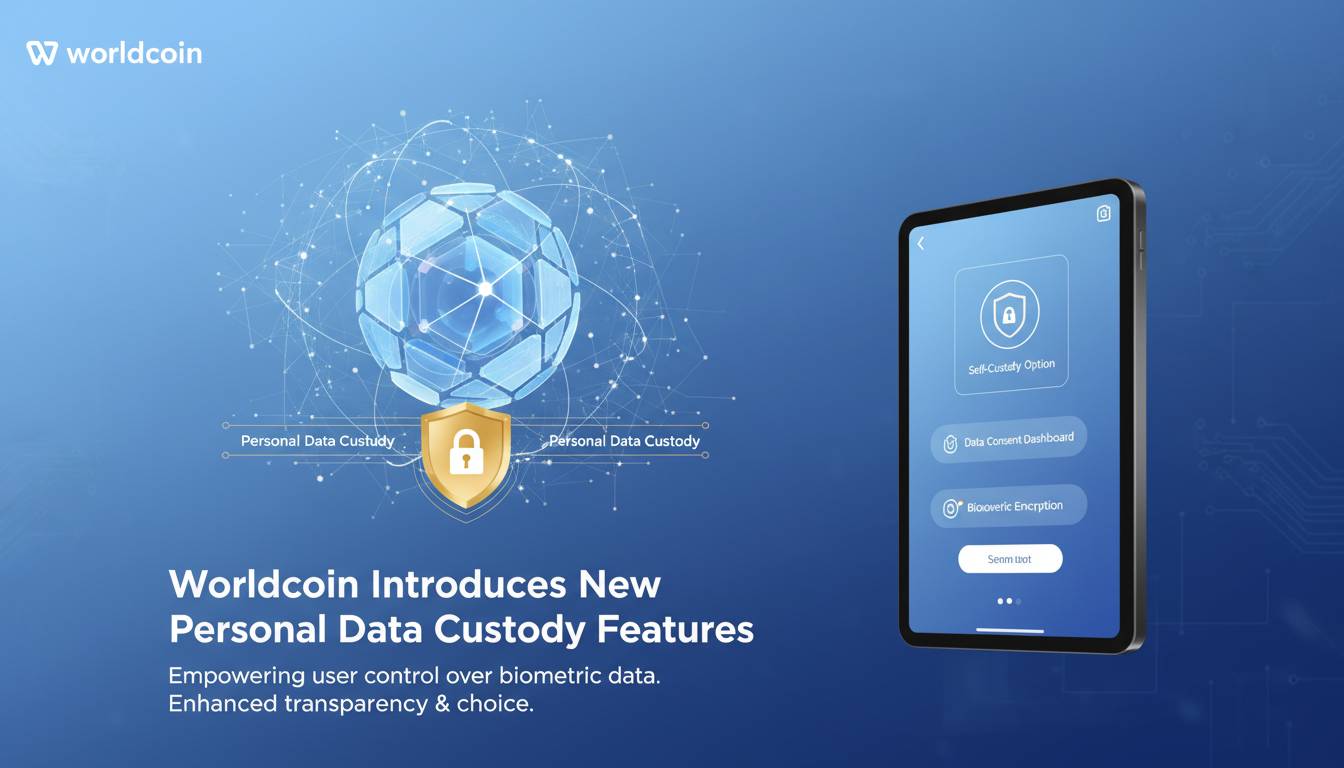
In a bid to enhance user privacy and control, Worldcoin has rolled out a suite of new “Personal Data Custody” features designed to give individuals greater ownership over their biometric data. These updates, which reflect growing regulatory pressures and public scrutiny, mark a pivotal shift in how the platform handles sensitive personal information. Notably, users can now store iris scan data locally on their devices, request deletion of that data, and even reverse their digital identity verification if desired.
Personal Custody: Local Data Control
The headline update, launched in March 2024, introduces Personal Custody, a significant shift in data handling. Under this feature, all information used to generate a user’s iris code during World ID verification is stored directly on the individual’s device—not on the Orb or central servers. This method ensures users maintain exclusive control over their biometric data from the moment of capture.
Beyond enabling local storage, Personal Custody empowers individuals to manage their data flow—deletion included—preemptively, without needing to engage Worldcoin’s systems for every decision. This represents a marked step toward user-centric data privacy, giving tangible authority back to individuals.
Open Source Transparency: Orb Software Released
In parallel, Worldcoin has open-sourced components of the software that powers its iris-scanning Orbs. Released under MIT/Apache 2.0 licenses, the code now allows outside observers and privacy auditors to examine how data is captured and transferred.
The combination of open-source transparency with Personal Custody underscores Worldcoin’s current approach: limit centralized access to sensitive data while enabling external verification of its systems.
Unverify Option and Biometric Deletion
Another major privacy safeguard arrived in April 2024: users can now unverify their World ID—effectively reversing their human-verified status by permanently deleting their iris code.
However, to guard against fraud and abuse, this deletion process includes a mandatory six-month “cooling-off” period, after which the World ID becomes irrevocably invalid. This measured approach balances user autonomy with security concerns.
SMPC System: Enhanced Security Through Encryption
In mid-2024, the Worldcoin Foundation introduced a Secure Multi-Party Computation (SMPC) system, open-sourced for broader adoption. This cryptographic innovation fragments iris codes into discrete secret shares, such that no individual shard reveals any biometric data.
Following the migration to SMPC, Worldcoin deleted its previous iris code storage systems entirely—further sealing off potential misuse avenues. SMPC aligns with top-tier privacy standards and even stands up against quantum decryption risks.
Regulatory Context and Privacy Pressures
These privacy enhancements come amid intense regulatory scrutiny. In March 2024, Spain’s data protection authority (AEPD) imposed a temporary ban on Worldcoin for failing to secure proper consent and processing minors’ data. This action echoed across other jurisdictions—including Hong Kong, where authorities mandated a halt to iris scanning and a review of data practices.
By December 2024, German regulators delivered a decisive ruling: Worldcoin must delete all iris data stored in Europe, reinforcing the permanence of privacy rights under GDPR.
Why It Matters Now
These developments represent more than just incremental updates—they signal a fundamental shift in how Worldcoin handles personal identity data. By placing control back in users’ hands, Worldcoin responds to regulatory mandates while attempting to restore public trust. The fusion of local custody, open-source transparency, identity revocation, and SMPC builds a layered framework for privacy that addresses past criticisms head-on.
Forward Look: What to Watch
As Worldcoin continues to evolve, key areas to monitor include:
- Whether regulators across additional markets find these privacy safeguards sufficient.
- User adoption and trust—does enhanced control translate to increased engagement?
- Potential expansion of local custody models to new biometric or identity use cases.
- Integration of these privacy features with future offerings, such as Face Authentication or decentralized finance (DeFi) tools.
Summary Takeaways
Worldcoin’s newly introduced Personal Data Custody features represent a crucial evolution in its privacy architecture. Users now store biometric data on their devices, can delete or revoke their digital IDs, and benefit from a robust SMPC encrypted backend. These measures arrive amid cracks in public and regulatory confidence, and signal a move toward user empowerment in identity infrastructure.
As privacy overshadows hype, these features may mark the turning point in how Worldcoin is perceived—and in how emerging identity systems must function in privacy-conscious times.





















Leave a comment