


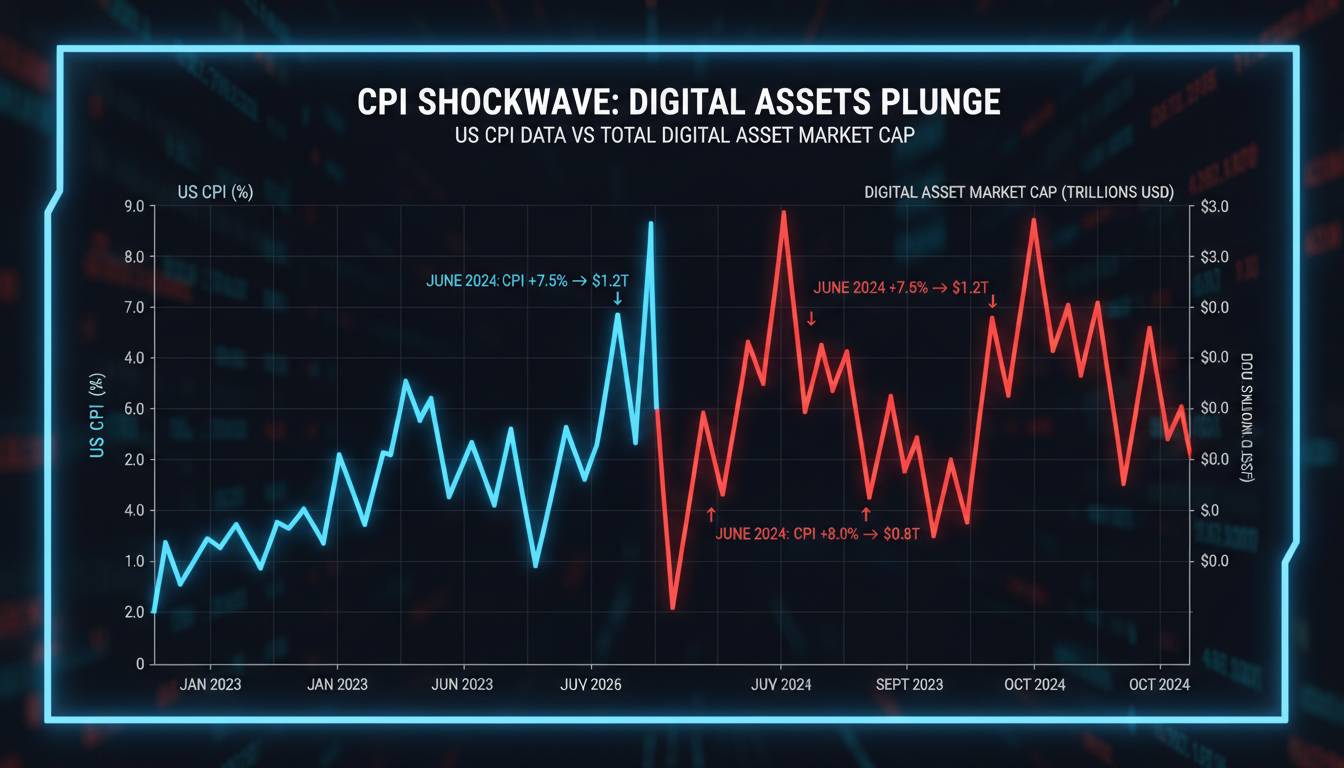
In a fresh jolt to the markets, the U.S. February Consumer Price Index (CPI) data, released on February 13, 2026, showed headline inflation cooling to 2.4% year-over-year—below the 2.5% consensus forecast—raising hopes for eventual Federal Reserve rate cuts. Yet, despite this seeming win for risk assets, digital currencies like Bitcoin saw only a fleeting lift before giving back gains as investor caution resurfaced.
Why It Matters Now
This CPI release matters because it touches the very core of crypto market dynamics—monetary policy and market sentiment. Reduced inflation tends to ease pressure on rate hikes, which typically supports high-risk assets like stocks and crypto. Here, “recent US CPI data” functions as a key macroeconomic driver capable of swaying digital asset valuations.
Moreover, volatility remains heightened amid mixed reactions. Bitcoin briefly rallied toward $69K on the lower CPI print, then slumped back below $68K. It reflects a tug-of-war: traders hopeful for rate cuts vs. those wary of lingering uncertainty.
CPI Surprise Sparks Brief Crypto Bounce
Bitcoin leaped up to 4% on initial trading after the softer-than-expected CPI, reaching around $69,190 on Bitstamp. Yet, relief faded quickly as rate-cut odds stayed muted—under 10%, according to CME’s FedWatch Tool.
Analysts noted the dip wasn’t surprising to those following alternative inflation metrics like Truflation. As Bitwise’s André Dragosch remarked on X, “Not really a surprise there if you have been following the Truflation CPI number which has plummeted sub‑1% already…”
Market Sentiment Remains Fragile Despite Cooling Inflation
Aside from crypto, broader markets displayed mixed reactions. Gold made another push toward the $5,000 per ounce milestone, while the U.S. dollar rebounded during the trading window. Stocks, by contrast, remained modestly lower, showing limited enthusiasm for the inflation relief.
Crypto sell pressure eased somewhat, with $726 million in short Bitcoin positions liquidated—the largest such event since September 2024. Yet sentiment stays fragile: the Crypto Fear & Greed Index remains entrenched in “extreme fear.”
Broader Downtrend: Bitcoin and Breaches Below Key Levels
Despite occasional rallies, Bitcoin continues to struggle with downward pressure. Prices dipped below $70,000—a level not seen since 2025—amid broader tech selloffs and macro uncertainty. Ethereum and XRP also tumbled sharply.
Last week, Bitcoin plunged to near $60,000, registering its steepest slide in three years—now sitting roughly 45% below its October 2025 all-time high of about $126,000. Analysts warn that this descent may trigger forced selling from crypto-backed loans and elevate volatility.
Crypto Sector Responses and Structural Shifts
Meanwhile, corporate actors are making calculated moves. Coinbase is aggressively “buying the dip,” having spent $1.7 billion on share repurchases and keeping another $2.3 billion earmarked for additional buybacks. Despite bullish corporate activity, firm-level analysts remain cautious, with forecasts as low as $50,000 for Bitcoin and $1,400 for Ethereum in the short term.
On the regulatory front, the CFTC added crypto executives to its advisory committee. Project-specific developments—including Trump-linked Truth Social applying to launch two new ETFs—offer tangential support to market structure, though these won’t reverse price pressure overnight.
What Comes Next for Crypto Watchers
Beyond CPI, markets now await the U.S. personal consumption expenditures (PCE) report, due February 20. This could solidify or sour rate-cut hopes and tilt crypto sentiment again.
Traders will be watching technical battlegrounds—especially the $60K–$74K zone for Bitcoin. A sustained rebound above $75K could signal bullish momentum, but failure to hold above $68K could usher in deeper losses.
Institutional flows will also be pivotal. Spot Bitcoin ETF activity, building integration platforms like BlackRock’s BUIDL via UniSwapX, and inflows into altcoins with renewed narratives could shape recovery paths.
Key Takeaways
- The February 2026 CPI cooling to 2.4% briefly sparked a crypto rally, but optimism faded fast.
- Bitcoin and broader digital assets continue to face pressure amid persistent macro caution.
- Structural initiatives (ETF launches, corporate buybacks, regulatory developments) may support longer-term resilience.
- All eyes now move to PCE data and key technical levels in coming days.
The market remains in flux. Traders and investors are watching inflation signals, liquidity shifts, and technical levels closely. If easing macro trends materialize, digital assets could benefit. However, for now, caution—and volatility—remain the norm.






















Leave a comment