


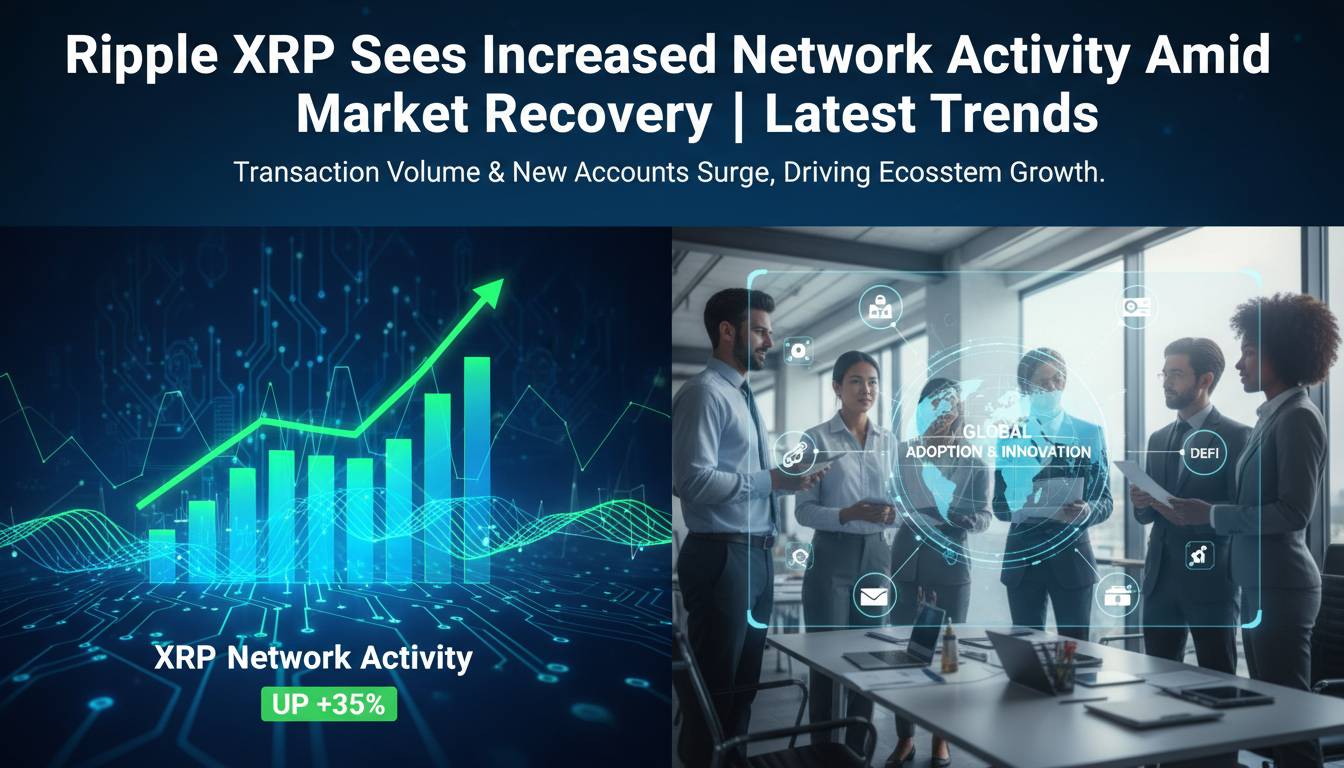
In February 2026, the XRP Ledger (XRPL) experienced a notable surge in on-chain activity, even as XRP’s price remained subdued. Daily successful payments climbed from around 1 million at the end of December 2025 to over 2.7 million, marking a 12-month high in network usage. Simultaneously, Automated Market Maker (AMM) deposits on the XRPL decentralized exchange hit a record high of more than 14,000. These developments suggest growing utility and institutional engagement on the network, despite ongoing price pressure.
Network Throughput Breaks Out
The spike in successful payments—from roughly 1 million to over 2.7 million per day—reflects a dramatic increase in ledger activity in February 2026. This surge is the highest seen in the past year and indicates heightened usage across payments, transfers, and DeFi applications on the XRPL.
At the same time, AMM deposits on the XRPL DEX exceeded 14,000, setting a new all-time high. This uptick followed the activation of two key protocol upgrades in early February: the Permissioned Domains upgrade and the launch of a Permissioned DEX. These enhancements are designed to facilitate controlled liquidity environments for banks, payment providers, and financial institutions, potentially expanding XRPL’s institutional appeal.
Transaction Volume Trends Earlier in 2026
Earlier in the year, XRPL’s decentralized exchange activity had already begun to pick up. By late January 2026, the DEX was processing over 1 million transactions on a 14-day moving average—a 13-month high. This breakout signaled renewed on-chain demand and deeper liquidity formation.
Price Remains Under Pressure
Despite the surge in on-chain activity, XRP’s price remained under pressure. As of late February 2026, XRP traded at approximately $1.33—down about 45% from its yearly high and struggling to break resistance near $1.47.
Market data also revealed potential selling pressure from large holders. CryptoQuant reported that wallets holding over 1 million XRP transferred more than 14 million XRP—worth around $45 million—to Binance in a single day. Such movements often signal intent to sell.
However, XRP’s Taker Buy Dominance remained elevated throughout February, suggesting that aggressive buying continued to outpace selling. Between February 10 and 16, the market entered a neutral absorption phase before buying dominance resumed, albeit at slightly lower levels than in late January.
Interpretation: Utility Over Price
The divergence between rising network activity and stagnant price suggests that XRP’s value proposition is increasingly rooted in utility rather than speculative momentum. The surge in successful payments and AMM deposits points to growing adoption of XRPL’s infrastructure—particularly among institutional users—driven by protocol upgrades like Permissioned Domains and the Permissioned DEX.
At the same time, whale transfers to exchanges and downward price pressure indicate that speculative sentiment remains cautious. The elevated Taker Buy Dominance, however, hints at underlying demand that could stabilize or support price if sustained.
What This Means for XRP’s Outlook
If XRPL’s on-chain activity remains elevated—especially in successful payments and AMM usage—it could reinforce XRP’s narrative as a settlement and infrastructure token. Sustained institutional engagement may eventually translate into renewed price support, particularly if accompanied by growing active addresses or value transfers.
However, for a meaningful price recovery, the market will likely need to see continued accumulation, reduced exchange outflows, and broader retail or institutional adoption. Without these, the current on-chain strength may not be sufficient to reverse the bearish price trend.
Disclaimer: This article is for informational purposes only and does not constitute financial or investment advice. Cryptocurrency investments carry significant risk, including the possibility of total loss. Past performance does not guarantee future results. Always conduct your own research and consult a qualified financial advisor before making investment decisions.















Leave a comment