


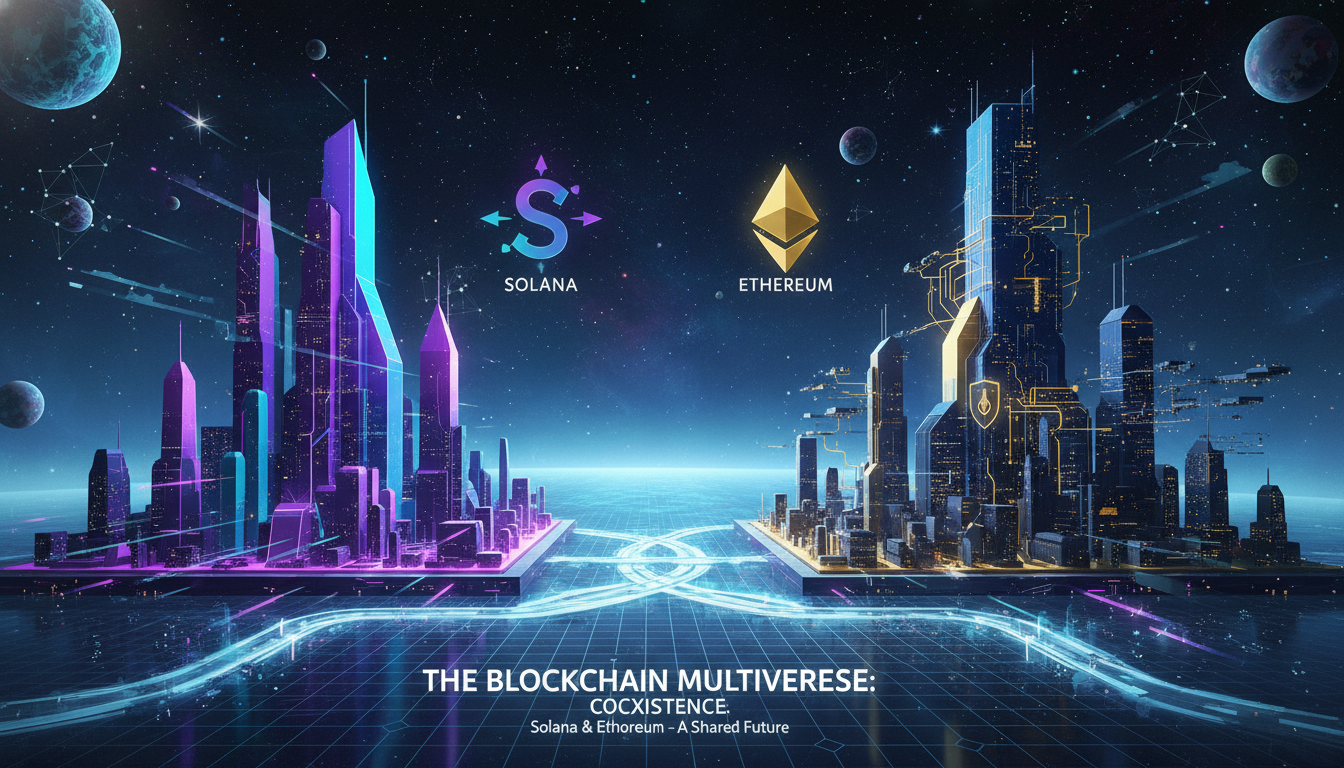
Solana’s rise as a high-speed, low-cost blockchain has sparked a provocative question: could SOL become the “Ethereum killer”? This article explores Solana’s price outlook and competitive edge, weaving together forecasts, ecosystem developments, and real-world examples. Along the way, it’s a bit conversational—because let’s be honest, crypto sometimes feels like a group chat gone rogue. You’ll find a mix of analysis, scenario-based projections, and even a splash of healthy skepticism. Here’s how Solana stacks up.
Solana’s Price Outlook: Navigating Forecasts and Realism
Solana price predictions are all over the map, as one might expect. That said, recent short- to mid-term forecasts offer some semi-grounded guidance.
Varied Projections for 2026
- Bitget projects SOL could range from $113 to $167, averaging around $156 by 2026, assuming continued growth in adoption and ecosystem expansion.
- Coinspeaker’s model pegs the year-end value more modestly, suggesting SOL might hover around $90.82, reflecting near-term uncertainty but long-term optimism.
- CryptoShelm lays out scenario-based projections:
- Conservative (60%): $280–$350 by year-end (est. ~$310)
- Moderate (30%): $350–$480 (est. ~$425)
- Optimistic (10%): $480–$650 (est. ~$575)
These scenarios allow for caution, ambition, and everything in between—helping ground expectations without resorting to hype.
Longer-Term Buzz: 2027–2030+
Looking further ahead, forecasts grow exponentially bolder—and riskier:
- Coinpedia sees SOL possibly hitting $510 in 2026, climbing to $1,351 by 2030, assuming surging DeFi adoption and ETF inflows.
- Coinmarketology blends technical levels with fundamental themes, positing an average of $252 in 2026 and hitting around $1,000 by 2030 in bullish conditions.
- InvestingHaven collects expert quotes, showing forecasts ranging from $200 to well over $1,000, with an average target near $425.
These long holds underscore crypto’s volatility—and the thin line between visionary and speculative.
Solana vs. Ethereum: Strengths, Trade-offs, and What “Killer” Means
As entertaining as “Ethereum killer” is, the real story lies in where each chain thrives—and where they struggle.
Solana’s Edge: Speed, Cost Efficiency, and Consumer Appeal
Solana’s architecture consistently delivers:
- Real-world transaction throughput ranges from thousands to tens of thousands per second, with fees near $0.002 versus Ethereum’s much higher costs.
- Solana has processed around 62 million daily transactions, while Ethereum handles about 1.2 million—highlighting retail and high-frequency appeal.
- Retail engagement is high: up to 3.6 million daily active wallets in 2026, compared to Ethereum’s lower activity counts.
Developers are responding, too—thousands of new contributors are building on Solana, pushing growth in gaming, NFTs, and consumer apps.
Ethereum’s Strength: Security, Institutional Trust, and Modular Design
Ethereum remains dominant in several critical ways:
- Its modular architecture (via Layer 2 rollups) prioritizes decentralization, composability, and institutional-grade infrastructure.
- Ethereum’s TVL significantly eclipses Solana’s. One estimate shows $126 billion in Ethereum TVL, versus Solana’s $23 billion, demonstrating deeper financial integration.
- Institutional channels favor Ethereum heavily—spot ETFs attracted $3.87 billion in inflows, compared to Solana’s more modest $530 million from staking-related liquidity.
Ethereum’s stature derives from its security, developer base, and trust—not necessarily speed or fees.
Not the Perfect Rival: Trade-Offs and Tensions
Solana excels at user volume and cost efficiency but is periodically critiqued for centralization and network instability. Concerns such as decreased validator diversity and outages temper its appeal among more security-conscious users.
In contrast, Ethereum’s complexity and higher fees limit casual use, though its stability attracts serious institutions.
Breaking Down “Ethereum Killer”
“Killer” gets thrown around in crypto forums as much as catchy headlines—but let’s unpack it.
- Solana doesn’t need to replace Ethereum to succeed. Their niches—fast, microtransaction chains versus durable, composable infrastructure—can coexist.
- In fact, diversification across chains may be healthier than single-chain domination.
- As one developer quipped: high TPS and low fees are great, “but everything else, not so much.”
Quote Highlight
“Price prediction is arguably finance’s favorite sport – and in crypto, that fascination is amplified by the asset class’s growing mindshare as the industry steps into maturity and declines in volatility.”
This reminds us: while forecasts attract attention, they’re ultimately speculative games—especially amid crypto’s inherent unpredictability.
Conclusion
Solana’s impressive performance—high throughput, low costs, active consumer engagement—positions it as a formidable contender in the Layer 1 space. Price forecasts vary wildly, from under $100 to over $1,000, reflecting differing assumptions around ETFs, ecosystem growth, and macro markets.
Meanwhile, Ethereum continues to hold ground, backed by institutional trust, modular architecture, and deep liquidity. The idea of Solana as the Ethereum killer may be dramatic—but the real narrative could be one of complementary strengths, not outright displacement. For smart crypto investors, diversification across chains with different value propositions may offer the most balanced path forward.
FAQs
What major price scenarios should investors expect for.sol?
Forecasts for 2026 range widely—conservative models suggest $110–$350, moderate scenarios around $400, and highly optimistic projections reach upward of $550 or more. Longer-term forecasts extend toward $1,000+, depending on institutional adoption and blockchain performance.
Is Solana actually faster than Ethereum?
Yes—Solana often processes thousands of TPS with fees under a cent, whereas Ethereum relies on Layer 2s to scale and typically charges significantly higher fees.
Does Solana threaten Ethereum’s dominance?
Threaten may be too strong a word. Solana excels in speed and retail adoption, while Ethereum remains dominant in institutional markets and DeFi infrastructure. Their strengths are different, not necessarily mutually exclusive.
Why are Solana price predictions so varied?
Different models weigh factors like ETF approval, TVL growth, macro cycles, and technical chart patterns differently. Without consensus, forecasts span from cautious to speculative.
What are the biggest risks for Solana in 2026?
Main risks include network instability, centralization of validators, regulatory uncertainty, and competition from Ethereum’s evolving scalability and enterprise use cases.
Should investors diversify across both Ethereum and Solana?
For many, yes. Their fundamentally different architectures—one built for speed, the other for composability and institutional trust—make them complementary, not direct rivals.
This blend of price analysis and ecosystem comparison reveals that while Solana boasts compelling performance metrics, Ethereum’s foundation remains robust. The future of blockchain may be multipolar, not polarized.
















Leave a comment