


Ever found yourself daydreaming—maybe half-joking—about Shiba Inu (SHIB) someday hitting $1? It’s a meme coin staple to fantasize big, but let’s bring a bit of grounded perspective here. While the idea of SHIB reaching that milestone makes for great conversation over coffee or memes in Discord channels, the mathematics and economics behind it currently make such a leap nearly impossible. That’s not to say the journey isn’t fascinating—there’s real community effort, burning mechanics, and ecosystem tools like Shibarium trying to nudge the needle. Let’s unpack what stands between SHIB and the mythical dollar mark.
The Math Barrier: Supply vs. Market Cap
A Sea of Tokens Makes $1 Soaring
Shiba Inu currently has a circulating supply in the neighborhood of 589 trillion tokens . To reach $1 per token, SHIB’s market capitalization would need to swell to about $589 trillion—a figure dwarfed only by global GDP or the total value of all assets on Earth . For context, the world economy is around $100 trillion, while Bitcoin’s entire market cap is a fraction of that .
Even within crypto’s wild volatility, such an astronomical valuation is, frankly, off the charts. As one analyst put it, SHIB reaching $1 would surpass even the combined value of all S&P 500 companies multiple times over .
Burn Mechanisms: A Drop in the Ocean
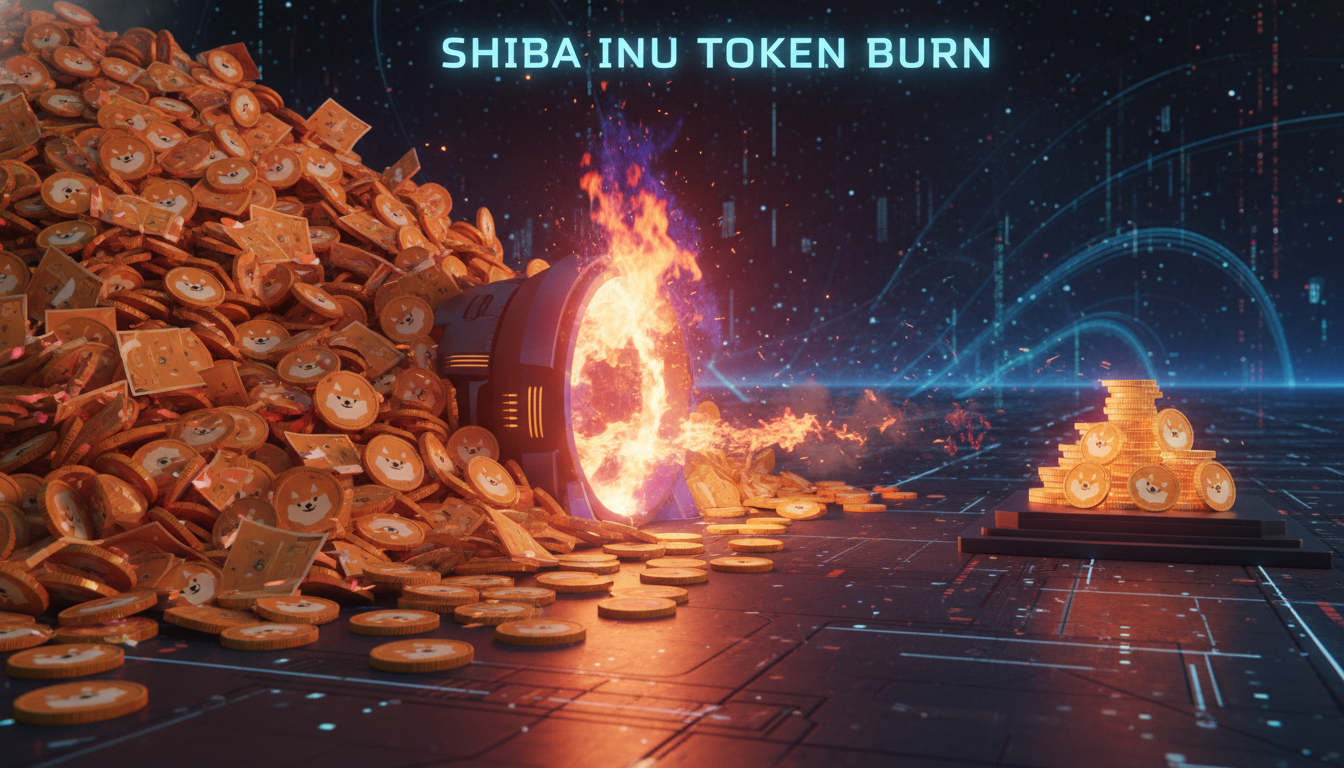
Burning tokens—sending them to irretrievable wallets—is one lever the community leverages to reduce supply. Theoretically, less supply should raise price if demand stays constant. But there’s the catch: current burn rates are painfully slow. Estimates suggest it would take anywhere from thousands to millions of years to burn enough SHIB to inch near $1 . One Motley Fool analysis even put the time to reach such a target at over 700,000 years at current burn speeds . The math becomes, well, mind-bending.
Realistic Milestones: $0.0001 to $0.001
While $1 remains a far-out dream, more modest targets aren’t entirely out of the question. Analysts throw around figures like $0.0001 or $0.001 as possible, albeit still ambitious, long-term outcomes . Metrics like RSI and MACD show occasional momentum, but nothing approaching the kind needed for a quantum leap .
Ecosystem Developments: Tools or Just Noise?
Shibarium Layer-2 and Burn Incentives
Shibarium—the Layer‑2 solution built for Shiba Inu—offers a burn-per-transaction mechanism that could help chip away at the supply over time . In a best-case scenario, this introduces real utility and could drive gradual improvement in token scarcity—but it’s still a long play.
Speculative Frenzy vs. Sustainable Growth
Meme coins thrive on narratives and social buzz. However, without substantial utility, new use cases, or institutional backing, hype alone won’t push valuation into trillion‑plus territory . In fact, SHIB has lost steam as newer players with actual infrastructure (like Little Pepe/LILPEPE) attract attention for offering staking, DAO features, and Layer‑2 tech .
“At the current burn rate, Shiba Inu would take thousands to millions of years to reduce supply enough for $1—so none of us will be here when that happens.”
— Motley Fool analyst paraphrase
Narrative Variations: Community, Experts, and Speculators
- On Reddit, some fans humorously peg a $1 target not by 2030—but maybe around the year 2438—a tongue-in-cheek reflection of just how distant that goal might be .
- Others crunch numbers and conclude that even reaching $0.10 would take over two thousand years of token burning .
- Analysts not only question the supply problem but also emphasize SHIB lacks widespread adoption and hasn’t set a new record high in years—making dramatic appreciation even less likely .
Summary of Barriers and Paths Forward
| Barrier/Challenge | Details |
|————————————|————————————————————————-|
| Massive Token Supply | ~589 trillion tokens make $1 target mathematically unrealistic |
| Slow Burn Rates | Takes millennia to reduce supply meaningfully at current rates |
| Lack of Real-World Use Cases | Minimal merchant adoption; not a reliable store of value |
| Decreasing Investor Attention | Competition from tokens offering utility and modern infrastructure |
Meanwhile, the realistic upside lies in small gains, speculative rallies, or tech-driven functions like Shibarium gradually adding value—but nothing close to the $1 mark.
Conclusion: Keep Dreaming, But Adjust Expectations
The notion of SHIB ever hitting $1 is the stuff of crypto legend—or maybe a meme-driven fantasy. The math, supply dynamics, and lack of fundamental utility all converge to make that outcome nearly impossible under current conditions. Yet, that doesn’t mean SHIB lacks value entirely. Modest price increases, driven by ecosystem growth and burn mechanics, remain within the realm of possibility. For long-term holders, the smarter play may be hoping for incremental upside—not the moonshot—while watching for real innovations or shifts in the memecoin landscape.
FAQs
1. Why is $1 per SHIB considered impossible?
Because with nearly 589 trillion tokens in circulation, a $1 price would require a $589 trillion market cap—a figure larger than global GDP or all financial assets combined.
2. Can burning tokens realistically make SHIB reach $1?
Theoretically yes, but at current burn rates, it would take thousands to millions of years to burn enough tokens to support that price.
3. What are realistic price targets for SHIB instead of $1?
Analysts suggest more reasonable goals like $0.0001 to $0.001, assuming sustained community activity and gradual burn mechanisms.
4. Does Shibarium help SHIB’s value?
Shibarium introduces burn-per-transaction mechanics, which may chip away at supply over time, potentially supporting modest price improvement.
5. Are there better meme coin alternatives to SHIB?
Yes—tokens like Little Pepe (LILPEPE) are gaining attention for combining viral appeal with real infrastructure like staking, low taxes, and governance, possibly offering higher upside potential.
6. Should investors hope for spectacular returns from SHIB?
Cautious optimism is wise: while stories of SHIB reaching $1 are fun, sensible expectations focus on incremental gains backed by ecosystem growth, not a speculative moonshot.












Leave a comment