


Curious whether Ethereum is gearing up for a major bounce—you’re not alone. Many investors and analysts are debating if the current signs point toward a rebound or a continued slide. There’s a lot of chatter about technical indicators, ETF flows, institutional movements, and price levels. Let’s sift through it—warts and all—to paint a realistic yet open-minded picture of what’s next.
Ethereum’s Current Landscape: Volatility, Fear, and Momentary Rebounds
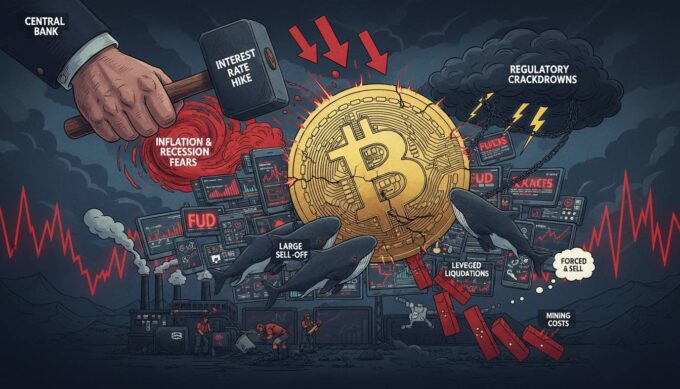
February 5, 2026 brought fresh turbulence. Ethereum dropped about 7.4% in 24 hours, closely following Bitcoin’s slump amid a tech stock selloff. The sentiment remains fragile as investors waver between risk-off and higher conviction.
In early February, Ethereum had also sunk around 10%, trading near $2,100, as some $2 billion in crypto liquidations highlighted fading investor confidence.
These moves underline just how reactive ETH still is to broader macro shifts and equity market tremors—an instability that only deepens speculation around its immediate trajectory.
Short-Term Forecasts: Mixed Messages
Several models and platforms offer disparate views on Ethereum’s near-term price:
- CoinCodex predicts ETH will climb from around $2,377 to $2,685 by February 6—an anticipated +10.6% gain.
- DigitalCoinPrice projects a dip initially, with a rebound toward $2,487 by February 11, followed by sustained momentum.
- Coinbase’s tool estimates a modest 5% weekly rise, placing ETH near $2,211 by March—again quite conservative.
These conflicting estimates show how short-term predictions are often guesswork influenced more by sentiment than solidity.
February’s Fork in the Road: Technical Setup and Institutional Behavior
Historically, February tends to be a positive month for Ethereum—median gain near +15%—though January 2026 defied that with a 7% loss.
Technical structure hints at a potential falling wedge, while Ethereum’s Net Unrealized Profit/Loss (NUPL) sits in the “hope–fear” zone (~0.19). That’s somewhat promising, drawing comparisons to June 2025’s setup ahead of a massive rally—but it’s far from a full capitulation.
“January’s ETF dynamics point to maturation rather than outright retreat,” said John Murillo, CBO of B2Broker. He cautioned, though, that derivatives could begin to drive price discovery more than spot demand if institutional ETF behavior remains choppy.
So, whales seem to be accumulating cautiously, even as institutional flows remain erratic—supportive of short-term rebounds, but with sustainability still in question.
Key Support and Resistance Levels to Watch
Understanding Ethereum’s potential price swing means watching these levels:
- Support zone: Holds near $2,690; a breach could drag prices toward $2,120.
- Resistance path:
- Reclaiming $3,000 would be psychologically significant.
- A break above $3,340 signals structural shift.
- Sustained rally past $3,520 opens the door to upward moves toward $4,030.
So navigation between these zones will likely dictate ETH’s next meaningful move.
Broader Outlook: Bullish Forecasts vs. Realistic Checks
There are enthusiasts and analysts forecasting big wins. For instance, some ERC-20 coins are expected to soar alongside ETH, with ETH itself anticipated to surge to the $7,000–$10,000 range by Q1 2026.
A standout bullish forecast comes from Changelly, projecting ETH might average $8,477 in 2026, with a high near $10,284. But let’s not hold that as gospel—sometimes models pack enthusiasm that may not survive market reality.
Skeptics remind us that these projections often hinge on ideal scenarios—regulatory tailwinds, sustained ETF inflows, and tech optimism—which may not align with emerging caution around macro tightening and equity volatility.
Narrative Overview: Is ETH Positioned for a Surge?
There’s a nuanced tug-of-war at play:
- Supportive signals like NUPL entering a rebound zone and whale accumulation suggest potential bouncebacks. ETFs may be adjusting, not exiting completely, adding a veneer of resurgence.
- Alarm bells include January’s underperformance, institutional caution, and how quickly broader macro shocks spill into crypto markets. It’s still vulnerable.
- Bullish ambitions abound, from price forecasts reaching beyond $8,000 to expectations of ETH-led sector rallies—but they may assume ideal conditions that may or may not materialize.
If February delivers clean movement above $3,000, momentum might rekindle. But through all this, staying grounded in data and technical triggers (like support/resistance levels) remains essential.
Conclusion
Ethereum stands at a volatile crossroads. The $2,690 support line may stabilize a bounce, while regaining $3,000 is the psychological threshold for a deeper rally. Technical indicators like NUPL add cautious optimism, and whale activity hints at confidence, but institutional behavior remains unpredictable.
This isn’t a clear-cut case of a “next big surge.” Instead, it’s a story of conditional recovery—tied to ETF dynamics, macro sentiment, and chart structure. Keeping a watchful eye on both price zones and investor flows offers the best roadmap ahead.
FAQs
What short-term price range should investors watch?
Expect ETH to oscillate between the $2,690 support and resistance near $3,000–$3,340. A breakout above that could lead toward $4,000+, while a breach below might signal deeper declines.
Are institutional flows bullish or bearish right now?
They’re mixed. ETF behavior in January showed volatility and tactical rebalancing, not wholesale exits. This suggests maturation but also unpredictability in institutional flows.
Is February typically a good month for ETH?
Historically, yes—February often sees a median return of around +15%. However, January 2026 saw a –7% drop, showing this trend isn’t guaranteed.
Should investors rely on bullish long-term forecasts like those from Changelly?
Use them cautiously. Forecasts projecting $8,000–$10,000 ETH assume ideal conditions. They’re useful reference points, but real allocation decisions should be grounded in current data and risk tolerance.
What could trigger a true breakout?
Sustained price movement above $3,000, followed by solid support past $3,340 and ideally $3,520, alongside strong institutional ETF inflows and improved on-chain signals, could set the stage for more credible upward momentum.




















Leave a comment