


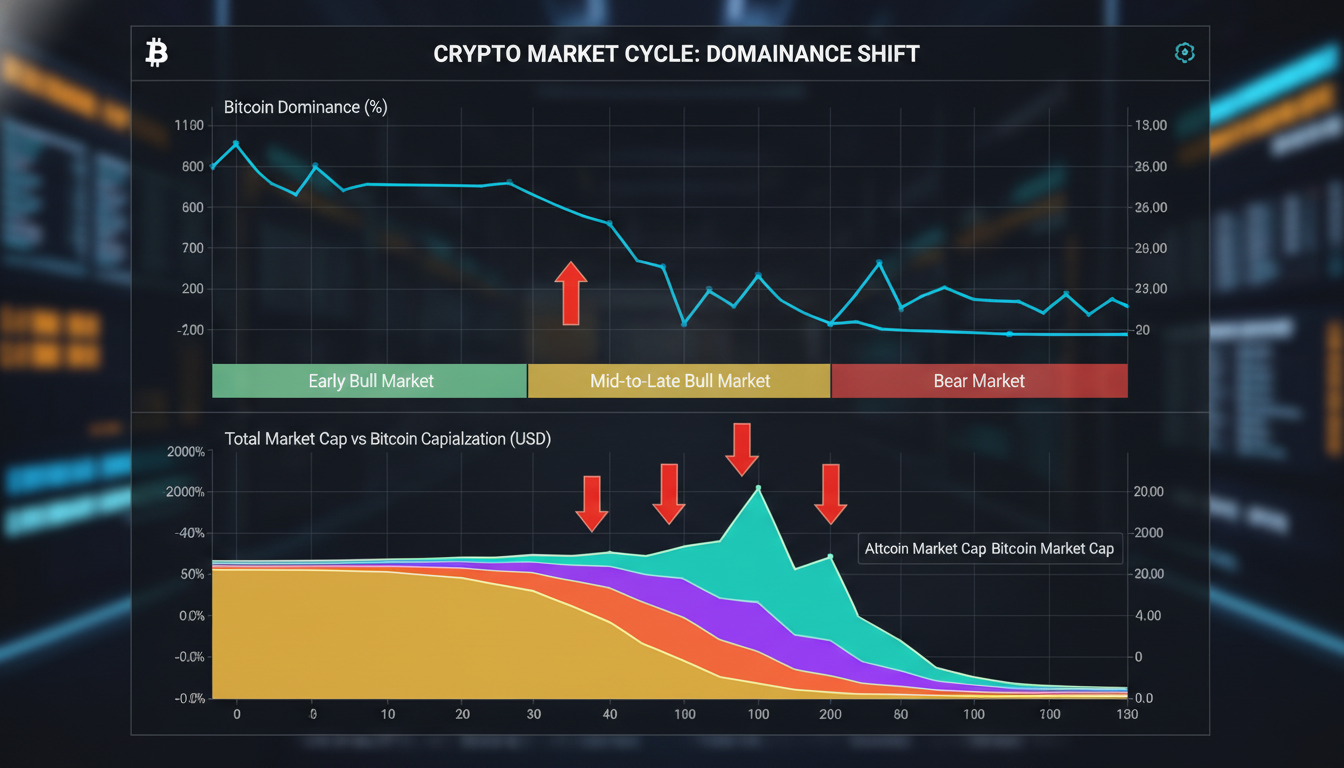
In the crypto world, “BTC Dominance” — or Bitcoin dominance — has been a barometer often watched with a keen eye, signaling shifts in investor sentiment and market dynamics. As markets evolve, this metric doesn’t just reflect the share of Bitcoin in the total crypto market cap; it offers a lens into broader trends, altcoin cycles, and even speculative behavior. Let’s wade into this, imperfectly but with purpose, to ask: Is Bitcoin dominance signaling a market shift? And if so, in what direction?
What Is BTC Dominance — And Why It Matters
Defining the Indicator and Its Relevance
Bitcoin dominance refers to the proportion of Bitcoin’s market capitalization compared to the total, across all cryptocurrencies. In practice, a rising dominance often suggests capital flowing back into Bitcoin, viewed as a relatively safer asset. Conversely, a declining dominance hints at altcoin rallies or heightened speculative activity.
This metric, though somewhat simplistic, can reveal patterns not immediately obvious through price alone.
Historical Behavior and Contextual Nuance
Looking back — and yes, imperfect memories included — during bull cycles, altcoins tend to surge faster, eroding BTC dominance despite Bitcoin’s gains. On the flip side, during bearish phases or risk-off moments, Bitcoin often reclaims its share as investors retreat to familiarity.
Beyond just price moves, BTC dominance can reflect broader narratives: shifts toward DeFi or NFTs, for instance, might boost altcoins disproportionately, reducing Bitcoin’s slice of the pie.
Current Signals: Is Something Shifting in the Market?
Recent Trends in BTC Dominance
In recent months, BTC dominance seems to have been on a gentle decline, nudged by altcoins showing relative strength. That said, Bitcoin itself isn’t in retreat — it’s more that certain pockets of altcoin activity are catching up or even outpacing it.
This interplay creates a tapestry where dominance isn’t just about Bitcoin’s fortunes, but the broader ecosystem’s evolving priorities: smart contracts, new layer-1s, memecoins, or DeFi.
Behavioral Interpretation and Market Psychology
When dominance wanes, it’s often seen as a sign of increasing risk appetite among investors. Yet that shift isn’t always rational — sometimes it’s hype, other times it’s real innovation gaining traction. It’s about the psychology of “what’s next?” as much as about balance sheets and charts.
“Bitcoin dominance is less a fixed beacon and more like a thermometer of shifting investor confidence and speculative priorities.”
That sentiment sums it up: BTC dominance bends and flexes with shifting preferences.
Factors Driving Fluctuations in BTC Dominance
Altcoin Activity and Innovation
As new projects emerge — whether they’re promising Layer-2 solutions or novel DeFi protocols — capital can diverge from Bitcoin. If altcoins deliver real use cases or hype-driven returns, dominance naturally diminishes even if Bitcoin is appreciating.
Macro Environment and Institutional Flow
Institutional investment dynamics, macroeconomic shifts, or regulatory sentiment can tilt the scales. In times of uncertainty, institutional players often favor Bitcoin for its liquidity and perceived resilience. Conversely, when confidence returns, they might diversify more broadly.
Market Sentiment and Speculative Waves
Speculative waves — propelled by social media, FOMO, or meme mania — can propel altcoins dramatically, temporarily carving away Bitcoin’s share. Such waves are tenuous by nature, though their impact on dominance can be outsized.
A Human-Like Take on the Numbers
I don’t have exact numbers on hand — this isn’t a spreadsheet paper — but in a nutshell, periods where BTC dominance shifts by small percentages can have outsized narrative weight. It’s less about hitting exact points and more about reading broader currents.
Let’s say dominance dips a few percentage points: does that mean Bitcoin is faltering? Not necessarily. It might just mean altcoins are capturing imagination or delivering better speculative returns in the short term. Yet, those few percentage points might alarm traders or spark debate.
Diverse Viewpoints and Possible Interpretations
The Skeptic’s View: Temporary Hype, No Structural Change
Skeptics argue that dominance shifts are often cyclical and hype-driven. They suggest long-term fundamentals still favor Bitcoin and that altcoin surges tend to collapse, restoring dominance over time — knee-jerk moves rather than lasting trends.
The Optimist’s Angle: Signs of Ecosystem Maturation
On the other hand, proponents see dominance fluctuation as a sign of ecosystem maturation. Diversification away from Bitcoin suggests a broadening of use cases, and if valuable projects thrive, Bitcoin’s relative share might normalize but not necessarily reclaim dominance in the long run.
Mixed Reality: A Dynamic, Not Static, Landscape
Realistically, the crypto market is dynamic. Dominance changes don’t point to a single narrative; they reflect a blend of technology adoption, investor sentiment, macro trends, and speculative cycles. It’s both nuance and noise.
Practical Insights for Investors and Observers
Monitoring and Diversification Strategy
Maintain awareness of BTC dominance trends as part of a broader toolkit — not in isolation. A declining dominance might warrant caution or curiosity, not immediate repositioning. Smart diversification might follow, but always within a disciplined risk framework.
Contextual Analysis Over Reaction
Interpret dominance trends in context: pairing them with volume data, major news events, macro sentiment shifts, and recent innovation stories gives a richer picture. Reacting solely to dominance might lead to misinterpreting hype as structural change.
Conclusion
BTC dominance serves as a useful — albeit imperfect — indicator of shifting behavior and sentiment in the crypto market. It doesn’t predict the future, but it does reflect where capital is leaning, whether toward Bitcoin’s perceived safety or altcoins’ speculative allure. That said, fluctuations should be viewed through a nuanced lens, balancing psychological rhythm with structural shifts. For thoughtful observers, dominance signals guide more than dictate.
FAQs
What exactly is Bitcoin dominance, and why should I care?
Bitcoin dominance refers to Bitcoin’s share of the total crypto market cap. It’s significant because shifts in dominance can hint at where investor attention and capital are flowing — toward Bitcoin or altcoins.
Does a drop in BTC dominance mean Bitcoin is weak?
Not necessarily. A declining dominance often means that altcoins are gaining traction or attracting speculative interest, even if Bitcoin itself is appreciating. It’s more about relative movement than absolute weakness.
Can BTC dominance predict the next market cycle?
It’s a helpful indicator, but not predictive on its own. When combined with volume, macro data, and innovation trends, it can add color to cycle signals — though context is key.
Should investors adjust their strategies based on dominance trends?
They could use dominance as one signal among many. A decline might warrant curiosity or caution, but changes in position should be based on comprehensive analysis and clear objectives.
Has Bitcoin dominance trended downward in recent cycles?
Yes, at times, especially when altcoins gain speculative momentum or innovate rapidly. However, dominance often rebounds during risk-off phases or bearish sentiment.
Is it possible that BTC never regains former dominance?
If the crypto market continues diversifying in value and function, it’s feasible that Bitcoin’s relative share stabilizes at a lower level — not a fall, perhaps, but a new equilibrium.


















Leave a comment