


In chasing Bitcoin price predictions, one tends to bump into forecasts that seem to live in different universes. The crypto space is notorious for its wild swings—from soaring optimism to cautious conservatism. Let’s unravel Bitcoin Price Prediction: BTC Insights, Analysis, and Future Forecast, navigating through a maze of expert perspectives, AI models, and market signals. Along the way, we’ll keep things a bit imperfect and conversational—because, honestly, that’s how this ride often feels.
Navigating Short-Term Forecasts
AI Models vs. Technical Projections
Recent AI-driven tools paint a range of paths for Bitcoin this month. Finbold’s aggregated model—mixing ChatGPT, Gemini 2.5, and Claude Sonnet 4—points to an average of approximately $76,667 for February 28, a slight dip from current levels. Yet, diversions abound: Claude Sonnet projects a bullish $82,500, while Gemini and ChatGPT lean bearish at $72,500 and $75,000 respectively .
Contrast that with Coinspeaker’s more technical short-term forecast, suggesting a tighter range around $73,950, with lows near $73,708 and highs approaching $76,382 . It’s like AI and technical analysts are having separate conversations—each plausible, each with its quirks.
Institutional and Cyclical Context
Then there’s vTrader, taking us through the calendar—placing this month in the 22-month post-halving stage, where Bitcoin often transitions from explosive growth to measured consolidation. Forecasts span $95,000 to $110,000, with downside risk leaning toward $92,000 if resistance holds firm .
Indeed, this paints a more hopeful picture—especially if institutions return with ETF flows or macro factors ease. It’s less about AI whim and more about recognizing seasonal, technical, and institutional rhythms.
Medium-Term Insights for 2026
Institutional & Wall Street Forecasts
Wall Street carries both bullish and tempered predictions. Citi projects a base case of $143,000 in 2026, with a bull scenario above $189,000 and a bear near $78,500, hinging on ETF adoption and favorable regulation . Similarly, JPMorgan suggests Bitcoin could reach $170,000 in the next 6–12 months if it increasingly behaves like gold from a volatility-adjusted lens .
Standard Chartered, however, has tamed earlier exuberance, revising its forecast from $300K to about $150,000, while still eyeing $500,000 by 2030 . Bernstein echoes the $150K target for 2026 and anticipates $200K by end-2027 .
Risks, Pessimism, and Extreme Swings
Not everyone is optimistic—Stifel warns of a steep drop to $38,000, arguing fear and liquidity woes could drag price toward capitulation . On the flip side, some forecasts paint a future between $75,000 and $225,000, centering near $110,000, as volatility and macro interplay drive outcomes .
In essence, expert opinions reveal a spectrum: bulls see ascent toward $150–200K, moderates stick around $110K, and bears caution with sub-$80K or even lower scenarios.
Interpreting the Forecasts: What’s Realistic?
Factors that Could Lift BTC
- ETF Inflows & Institutional Adoption: A major tailwind, especially if U.S. regulation evolves favorably (e.g., Clarity Act) and ETF capital re-enters the market .
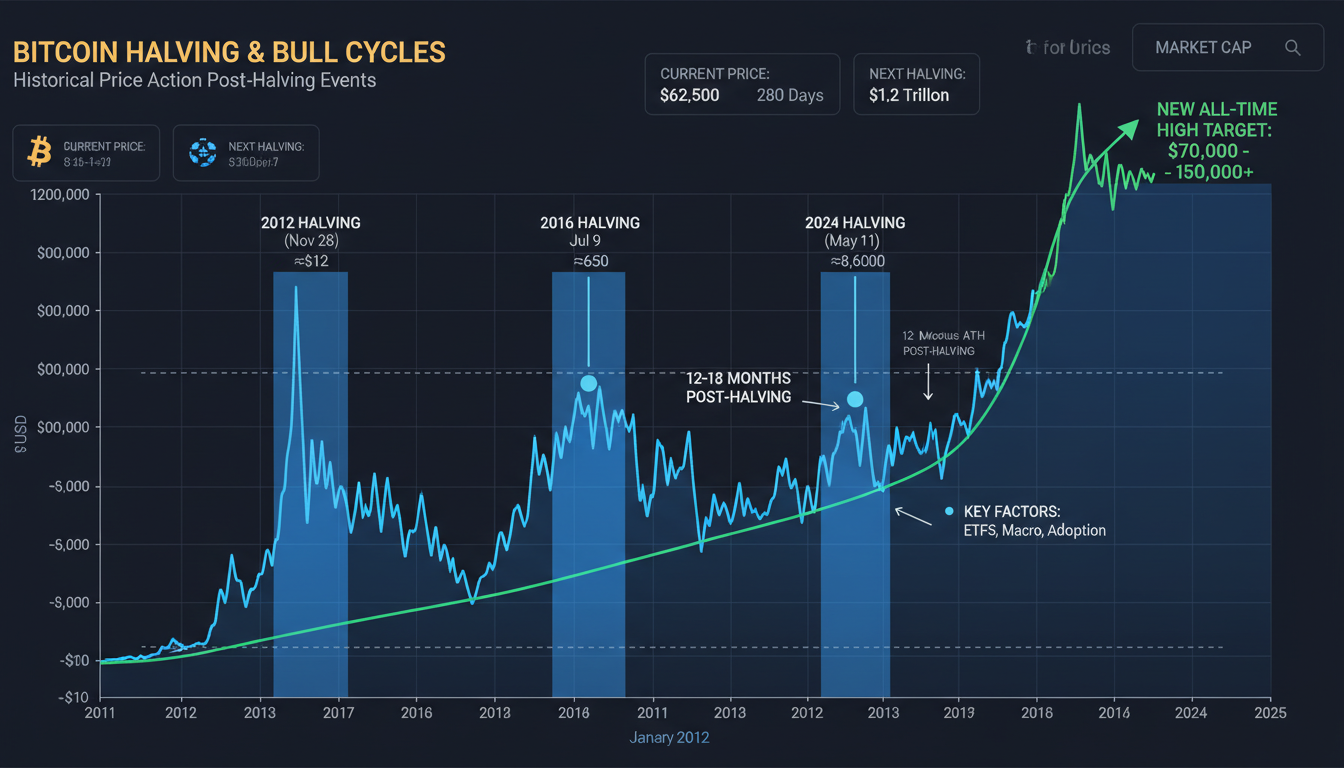
- Halving Cycle Momentum: Scarcities from the 2024 halving tend to support medium-term price gains, typically peaking 12–18 months after .
- Gold Correlation: JPMorgan’s model suggests Bitcoin may increasingly mirror gold’s behavior, hinting at continued upside if macro tailwinds persist .
Curveballs & Risks
- Institutional Selling & Overexposure: Key players like Strategy or MicroStrategy may lighten holdings if their valuations sour, potentially triggering sell pressure .
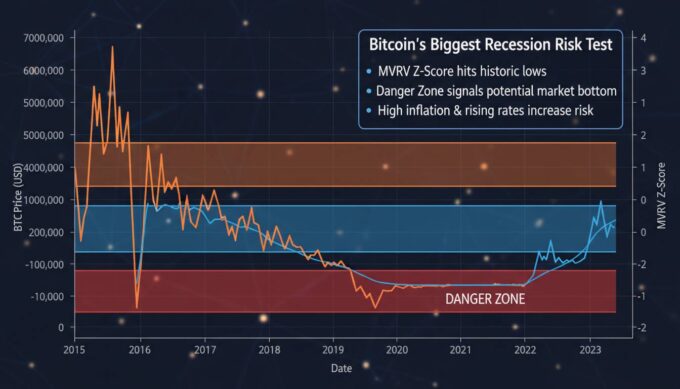
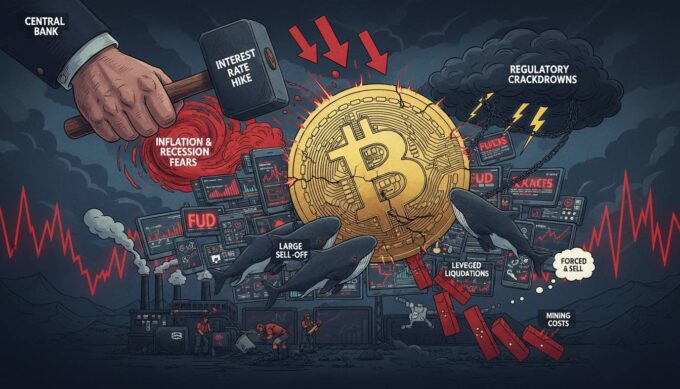
- Macro Volatility: Higher interest rates, recession risks, or policy missteps could derail momentum, reinforcing deep drawdowns like those projected by Stifel .
- Market Psychology: Sentiment can shift quickly. As Standard Chartered notes, the current environment feels more like a “cold breeze” than a crypto winter—but that could change fast .
Dual Scenarios: Upside & Downside Paths
Optimistic Path
If ETF inflows surge, regulation clarifies, and macro trends improve, Bitcoin could thread a path to $150,000–$170,000 by late 2026—a range supported by Citi, JPMorgan, Standard Chartered, and Bernstein .
Cautious Path
Alternately, if macro headwinds persist and institutional appetite remains muted, BTC could hover around $90,000–$110,000—or worse, break below $75,000–$80,000 in a bearish scenario .
Expert View
“The key lies in ETF demand and macro clarity. Without institutional re-engagement, BTC may stall in a range—and if pressure mounts, we might see levels below $80K.”
It’s a paraphrase, but it underscores that structural demand and sentiment shifts will largely dictate direction—not technical cycles alone.
Conclusion
Bitcoin’s future, at least over the next few months into 2026, isn’t a simple trajectory—it’s a multi-lane highway with diverging paths. On one side, a renewed institutional run could push BTC toward $150–170K. On the other, macro stress and fading demand could re-anchor price in the $75–110K corridor. And yes, an extreme drop below $50K, while less likely, can’t be ruled out entirely.
Ultimately, forecasting BTC’s next moves feels like trying to steer through fog—it’s part art, part data, and all about adapting to how the macro and institutional currents evolve. Strategy matters: whether you’re buying dips, watching ETF inflows, or using conservative positions. Stay alert, flexible, and aware that real investing rarely feels neat.
FAQs
What do AI models predict for Bitcoin at the end of February 2026?
AI tools offer mixed estimates: an average forecast of ~$76,667, a bullish estimate of ~$82,500, and bearish projections between ~$72,500 and ~$75,000—highlighting elevated near-term uncertainty .
What is Citi’s 2026 Bitcoin forecast?
Citi’s baseline forecast sees Bitcoin reaching ~$143,000 in 2026, with a bullish scenario exceeding $189,000 and a bearish case closer to $78,500, largely driven by ETF inflows and regulatory developments .
Why has Standard Chartered lowered its target?
After initially projecting up to $300K, Standard Chartered trimmed its 2026 target to ~$150,000 due to slower-than-expected institutional buying, though it still sees potential for long-term gains toward $500K by 2030 .
What downside risks should we watch?
Major risks include macroeconomic tightening, institutional selling (from heavy BTC holders), liquidity shocks, and policy setbacks. These factors could push BTC toward $75K or even as low as $38K in worst-case scenarios .
What technical or cyclical factors support growth?
Post-halving scarcity, historical cycle patterns, and the potential for renewed ETF demand underpin medium-term bullishness. If ETFs return and macro improves, those trends could support a rally toward $150–170K .
Should investors expect Bitcoin to mimic gold going forward?
JPMorgan’s volatility-adjusted model suggests Bitcoin may increasingly mirror gold in behavior, implying institutional portfolio allocation dynamics may boost BTC if that correlation holds .

















Leave a comment