


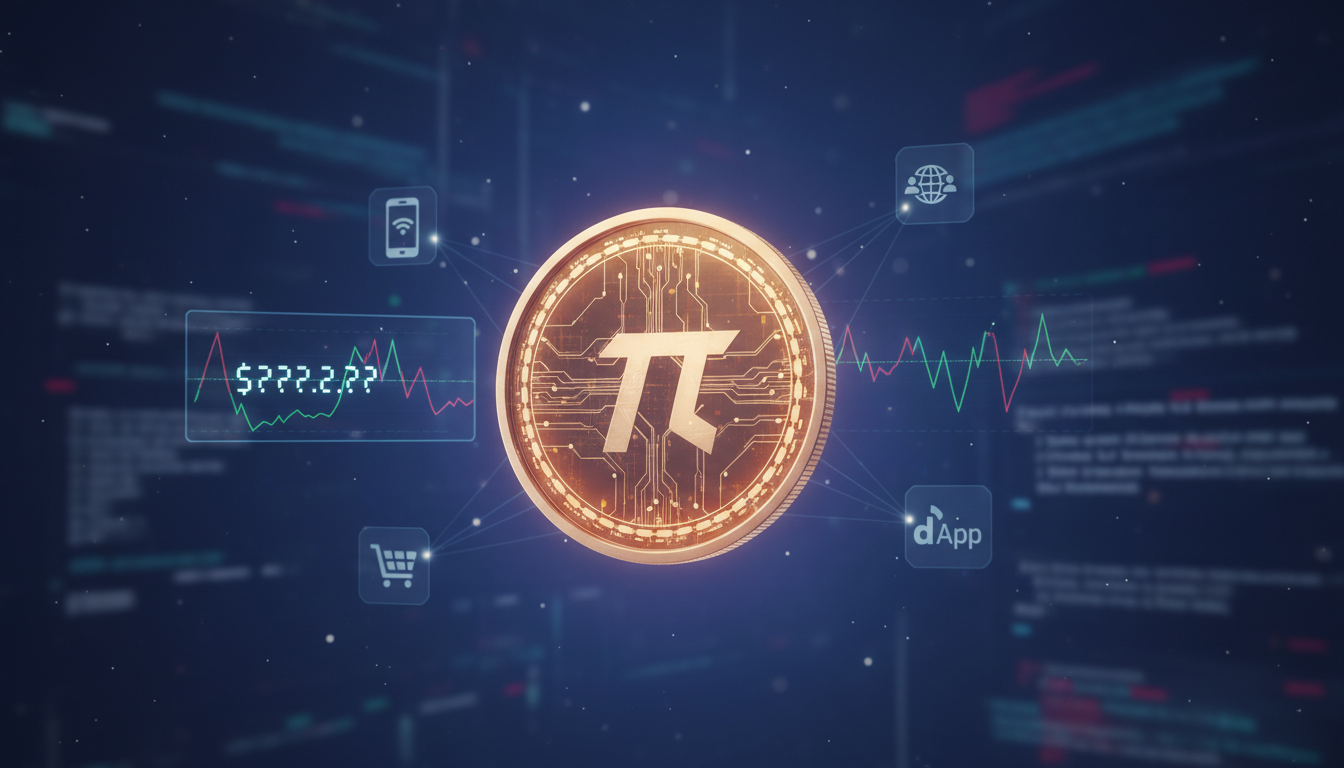
Diving into Pi Coin Price and the pressing question — Is Pi Network cryptocurrency worth anything? — feels a bit like chasing a mirage. There’s chatter, forecasts flying around, and the community is both hopeful and skeptical. So, let’s untangle what we know, what people expect, and whether Pi holds real value beyond the app taps and group chats.
Current Price Reality: How Much Is Pi Actually Worth?
Pi is not trading at mainstream exchanges, and most early “values” are speculative or community-driven. Several models and predictive platforms estimate prices anywhere from mere cents to eye-watering highs.
- CoinCodex’s February 2026 forecast shows Pi likely hovering around $0.1245, reflecting a nearly 20% downturn over recent days.
- Similarly, CoinDCX suggests Pi may reach between $0.28 and $0.45 by year-end 2026 if sentiment improves.
In other words, as of now, Pi Network has limited real monetary value, and its price remains highly speculative.
Predictive Range: From Conservative to “Moonshot”
Forecasts vary wildly — some are cautious, others borderline exuberant:
- TradingView lays out upside potential if Pi breaks resistance levels: forecasts range from a low of $0.85 to an average of $2.25, with highs up to $3.50 for 2026. By 2030, there’s talk of $22 in extremely bullish scenarios.
- CoinLore models a more aggressive trajectory — Pi could hit $4.84 in 2026 and even $9.44 by 2030, representing thousands of percentage gains over current levels.
- On the optimistic end, Coin Edition envisions Pi ranging from $1.05–$5.75 in 2026, climbing toward $15.50 by 2029.
But then there’s the “Psychic Forecast” layer — Reddit users toss around impossible-to-verify predictions such as $60–$280 in mid-term or even over $1,000 by 2040–2050. These are fascinating, but extremely speculative and demand a huge leap in adoption and ecosystem utility.
“If Pi doesn’t break key resistance—around $0.40 to $0.45—it’s hard to see significant gains. A move past that could push it to $1–$3 territory.”
— TradingView technical insight
What Holds Pi Back? Structural Challenges and Risks
Several structural issues temper enthusiasm:
- Token Supply: A vast number of Pi coins remain locked. Some estimates suggest only a small fraction is tradable, raising concerns over inflation and diminishing investor confidence.
- Liquidity & Listings: Pi has struggled with limited exchange listings and low trading volumes, which crimp price discovery and adoption.
- Transparency & Governance: Questions linger around Pi Foundation’s control, token distribution, and ecosystem credibility.
These weaknesses suggest that unless Pi addresses fundamentals like utility, decentralization, and exchange access, forecasts remain more hopeful than realistic.
Weighing the Upside: What Would It Take for Pi to Be Worth Something?
Not all is gloom. There are scenarios where Pi might justify value:
- A successful expansion of the Pi ecosystem, especially through dApps, merchant adoption, or utility-focused services, could drive real demand.
- Breaking technical resistance at $0.40–$0.45 might trigger a market turnaround, potentially validating higher price action.
However, it’s crucial to note: most forecasts remain speculative, with real-world catalysts still missing. Without tangible use cases, Pi may drift in low-value territory for the foreseeable future.
Summary: Is Pi Network’s Cryptocurrency Worth Anything?
To wrap it up—right now, Pi Coin has minimal real-world value beyond speculation. Forecasts vary:
- Conservative models: forecast sub-dollar values ($0.12 to ~$0.50) in the near term, with cautious gains possible.
- Bullish scenarios: envision multi-dollar values if adoption and ecosystem improve significantly.
- Wild speculation: includes fantasy-level prices like $100–$1,000+, which require near-impossible adoption and growth.
In short, Pi could be worth something… but only under very specific, optimistic conditions. Until then, it’s best viewed as a speculative token tied to sentiment rather than solid fundamentals.
Conclusion
Pi Network’s coin stands at a crossroads—caught between hope for mass adoption and reality of limited liquidity and unclear fundamentals. Predictive models offer headlines, but many rely on best-case guesses or technical breakouts that may never materialize. Without credible utility, transparent governance, and exchange access, the question remains open: Is it worth anything? The answer depends heavily on how Pi evolves—and for cautious observers, that evolution is anything but guaranteed.
FAQs
Is Pi Coin trading on major exchanges?
Currently, Pi is only on a handful of smaller platforms. No listings on major exchanges like Binance or Coinbase yet, hampering liquidity and price discovery.
Why do price predictions vary so much?
Differences stem from model assumptions—some are algorithmic and conservative, others are built on high adoption and bullish trends, while community forecasts are often purely speculative.
What would make Pi’s value increase?
Key factors include broader utility (like merchant use or dApps), improved ecosystem development, credible governance, and breaking technical resistance levels.
Are there supply issues affecting Pi?
Yes. Only a small portion of tokens are circulating, with the majority held by the Pi Foundation, fueling concerns over inflation and lack of price support.

















Leave a comment