



Coinbase has lately been making headlines across multiple fronts—regulatory tussles, elections, acquisitions, and a bit of controversy thrown in. The controversies feel almost inevitable in crypto, right? There’s this interplay between innovation, governance, and public perception that always keeps things interesting. This article takes a human-paced dive into the most relevant, recent developments surrounding Coinbase—so hang tight if you feel swerved by the fast pace.
Regulatory Crossroads and Legislative Pressure
Tensions Over Stablecoin Regulation
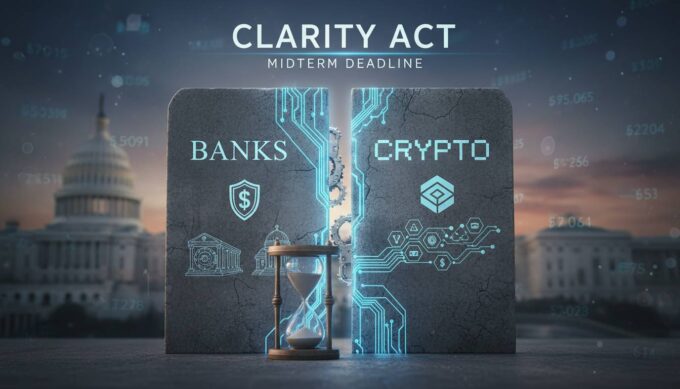
Over the past week, the White House convened with crypto leaders and banking executives in a bid to break a regulatory stalemate. The deadlock centers on stablecoin rewards—a feature Coinbase supports but banks vehemently oppose, citing concerns over the outflow of consumer deposits . The bill at issue, intended to provide clear rules for digital-asset trading, saw Coinbase withdraw its support, delaying progress. This tug-of-war puts into sharp focus the balancing act the firm is navigating between innovation-friendly policies and mainstream financial apprehensions.
Political Campaigning via Fairshake PAC
Political muscle has clearly become part of the crypto playbook. The pro-crypto PAC Fairshake—bolstered by Coinbase’s own $25 million contribution alongside Ripple and a16z—has raised a record-breaking war chest of over $193 million heading into the 2026 midterms . These funds serve dual purposes: empowering crypto-friendly candidates and cautioning policymakers to reconsider draconian oversight.
“This level of political investment doesn’t just reflect confidence—it’s about preserving the future of digital assets in U.S. policy.”
That quote captures it well—even though I’m paraphrasing the industry sentiment, it underscores how political advocacy is now a core business strategy for Coinbase and peers.
Agencies Step In While Congress Stalls
Congress may be gridlocked, but regulators haven’t hit pause. SEC Chair Paul Atkins and CFTC Chair Michael Selig recently indicated they’re ready to push forward with crypto oversight through an inter-agency memorandum of understanding . This suggests a shift toward regulatory clarity and could soften the blow from legislative delays. Interestingly, this is as much about preserving innovation as it is about safeguarding markets.
Strategic Moves: Expansion, Acquisitions & Innovations
Deribit Deal Seals Coinbase’s Global Reach
In an assertive global play, Coinbase officially wrapped up its $2.9 billion acquisition of Deribit—the world’s largest crypto options platform by volume . This move further emboldens Coinbase’s trajectory toward becoming a one-stop platform—spanning retail trading, derivatives, custody, and institutional services. Branching out beyond a traditional exchange, the strategy feels deliberate in preparing Coinbase for broader market and regulatory shifts.
Trailblazing Products and AI Integration
Product innovation hasn’t taken a backseat. Late in 2025, Coinbase rolled out Coinbase Advisor, an AI-powered financial management tool that offers portfolio guidance across crypto, stocks, and prediction markets . Tailored AI tools like this hint at how Coinbase wants to simplify a complex ecosystem and grab a user base that juggles more than just tokens. Additionally, the announcement of “custom stablecoins” built atop USDC shows how Coinbase is not only acting as a platform but also enabling businesses to put brand spin on stablecoin transactions . It’s like letting brands have their custom-dollar—they embed their brand into each transaction.
Relocation and the Great “DEXIT”
By late 2025, Coinbase’s corporate home changed from Delaware to Texas, following 78% shareholder approval . This move reflects a broader “Delaware exodus,” where companies are fleeing perceived unpredictability in favor of Texas’s crypto-friendly, low-tax environment. It’s a clear strategic and symbolic shift—aligning operational structure with a much more welcoming regulatory terrain.
Challenges: Security and Reputation
Breach Fallout Reverberates
Despite expansion and advocacy, Coinbase’s operations aren’t without issues. Over the last year, reports emerged of a massive phishing attack and data breach impacting nearly 70,000 customers, with $16 million stolen and insider involvement suspected . Earlier insider-extortion incidents in 2025 cost the company potentially up to $400 million and impacted security optics considerably .
These incidents underscore the reality that even the largest, most-resourced platforms aren’t immune to internal threats. The gap between promised “bank-level security” and actual vulnerabilities remains a fragile plank in Coinbase’s public trust.
Market Momentum and Financial Updates
A Stock Rebound Fueled by Regulation
Coinbase’s stock is riding a strong wave in 2025 and early 2026—up about 63%, even surpassing $100 billion in market capitalization . This rally is closely tied to a favorable regulatory shift, including the SEC’s move to drop a two-year lawsuit against the firm . Notably, Coinbase’s inclusion in the S&P 500 further adds legitimacy and institutional appeal. Lawmakers, policy shifts, and investors seem to be aligning around a maturing crypto narrative.
Looking Ahead: Earnings on February 12, 2026
Coinbase is set to release its Q4 and full-year 2025 financial results on February 12, 2026, after market close, with a webcast at 2:30 p.m. PT . Expectations are cautiously optimistic, given the regulatory tailwinds and expansion into derivatives and AI tools. Analysts and investors will be watching for signs of sustained revenue diversification—and whether acquisitions and tech innovation are translating into meaningful growth.
Conclusion
Coinbase sits at a pivotal juncture marked by bold expansion, political advocacy, regulatory evolution, and some reputational turbulence. From buying Deribit and rolling out AI tools to contributing millions to PACs and relocating HQ, the firm is playing in all the major arenas. Yet security breeches and regulatory friction remind us that growth isn’t frictionless. The upcoming earnings call on February 12, 2026, may be a telling snapshot of whether Coinbase can hold these many pieces together or if the pressure points show cracks.
FAQs
What is Coinbase’s latest major acquisition?
Coinbase formally completed its acquisition of Deribit—a top global crypto options platform—for roughly $2.9 billion in 2025. This move greatly enhances Coinbase’s derivatives and institutional market footprint.
Why did Colebase withdraw support for the crypto regulation bill?
Coinbase pulled out of a key crypto bill amid disagreements over stablecoin rewards, which banks opposed fearing consumer deposits might shift toward higher-yield crypto assets. That stalled legislative progress.
When will Coinbase release its Q4 2025 financial results?
The company will publish its fourth-quarter and full-year 2025 earnings on February 12, 2026, after the markets close, followed by a webcast at 2:30 p.m. PT.
How has Coinbase’s stock performed in 2025?
Coinbase’s shares climbed approximately 63% over 2025, powered by regulatory optimism, inclusion in the S&P 500, and strong investor sentiment toward the crypto industry as it nears maturation.
Has Coinbase faced any security issues recently?
Yes. Over the last year, Coinbase has dealt with serious security concerns, including a phishing scheme, internal data breaches affecting tens of thousands, and an insider-extortion scandal—raising questions about internal controls.



















Leave a comment