


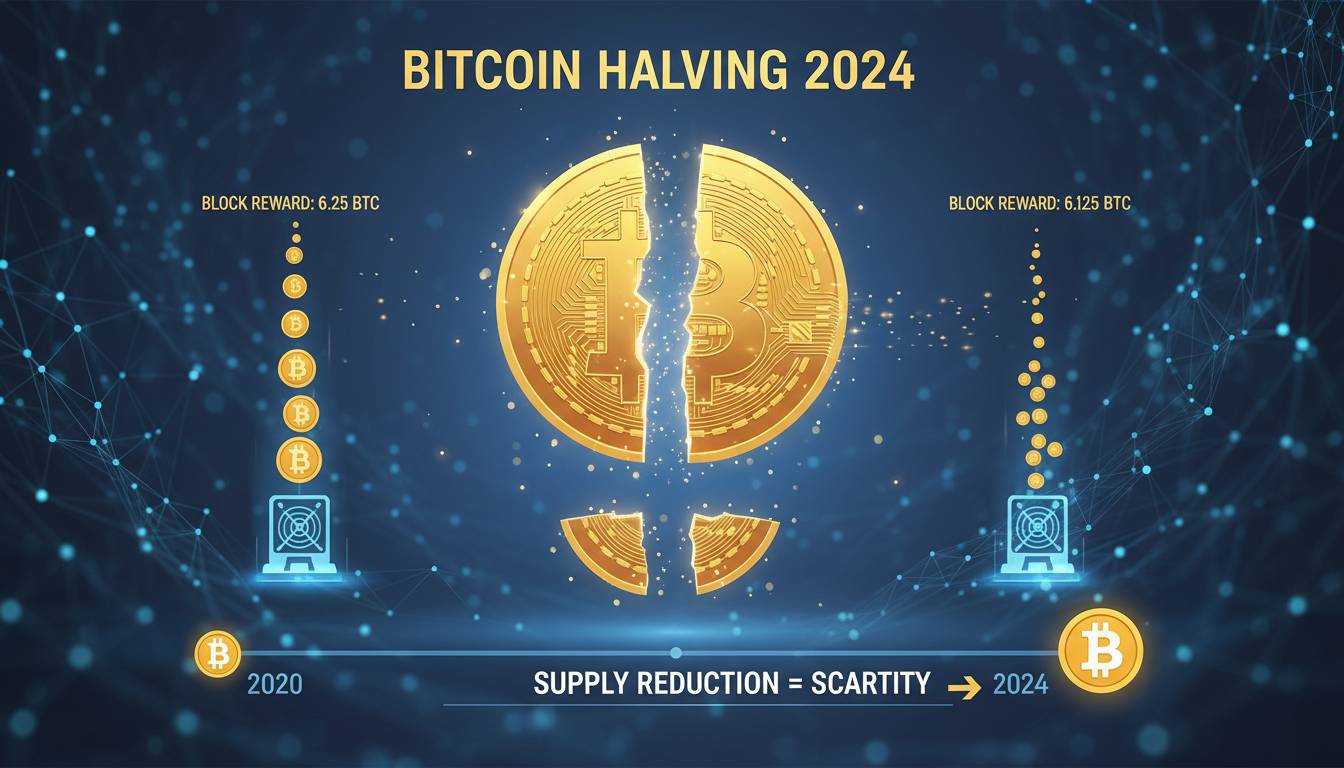
Bitcoin halving is a pivotal event in the cryptocurrency world, and the most recent one occurred on April 20, 2024, when the block reward dropped from 6.25 BTC to 3.125 BTC per block . This article explores the mechanics, significance, and implications of the halving, offering insights for U.S. investors, miners, and market watchers. We also look ahead to the next halving, expected in 2028, and provide practical guidance on how to prepare.
The halving is a programmed event that cuts Bitcoin’s issuance rate in half approximately every four years or every 210,000 blocks . It’s a cornerstone of Bitcoin’s monetary policy, designed to enforce scarcity and control inflation. The 2024 halving occurred amid heightened institutional interest, including the approval of U.S. spot Bitcoin ETFs, marking a new era in market dynamics .
What Is Bitcoin Halving?
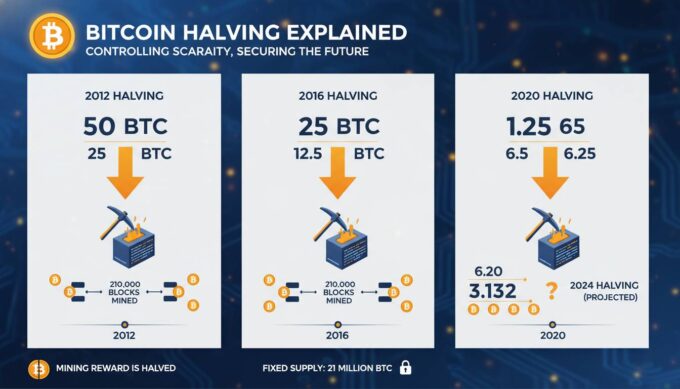
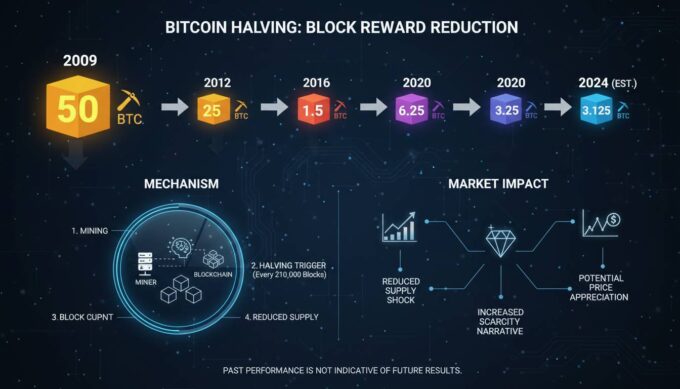
Bitcoin halving is a built-in mechanism in the Bitcoin protocol that reduces the reward miners receive for validating new blocks by half. This event happens every 210,000 blocks—roughly every four years—and continues until the maximum supply of 21 million BTC is reached .
- The first halving occurred on November 28, 2012, reducing the block reward from 50 BTC to 25 BTC .
- The second took place on July 9, 2016, lowering the reward to 12.5 BTC .
- The third occurred on May 11, 2020, dropping the reward to 6.25 BTC .
- The most recent, the fourth halving, happened on April 20, 2024, reducing the reward to 3.125 BTC .
This predictable reduction in supply is central to Bitcoin’s appeal as a deflationary asset.
Historical Impact and Market Behavior
Bitcoin halvings have historically preceded significant price rallies, though past performance does not guarantee future results.
- After the 2012 halving, Bitcoin’s price surged from around $12 to over $1,000 within a year—an increase of more than 8,000% .
- The 2016 halving saw Bitcoin rise from approximately $650 to nearly $20,000 by late 2017 .
- Following the 2020 halving, Bitcoin climbed from about $8,800 to a peak near $69,000 in November 2021 .
- The 2024 halving occurred in a more mature market, with Bitcoin trading near $64,000 at the time .
Scarcity economics underpin these trends: as new supply slows, sustained or growing demand can drive prices upward .
Significance for Stakeholders
Miners
Halvings directly impact miners by cutting their block rewards in half. This can squeeze profit margins, especially for operations with high energy costs. However, rising transaction fees can offset some of the lost revenue. For instance, during the 2024 halving, miners earned significantly higher fees on the halving block compared to preceding blocks .
Investors and Institutions
The 2024 halving coincided with the approval of U.S. spot Bitcoin ETFs, which created a powerful demand channel. These ETFs were buying between 1,000 and 5,000 BTC per day at peak inflows, absorbing much of the reduced supply . This alignment of supply reduction and institutional demand marked a unique moment in Bitcoin’s history.
Broader Market
Halvings reinforce Bitcoin’s narrative as “digital gold” by emphasizing its scarcity and predictable issuance schedule. With annual inflation rates dropping below 1% post-2024 halving, Bitcoin’s inflation rate became lower than gold’s estimated 1.5–2% .
Looking Ahead: The 2028 Halving
The next Bitcoin halving is projected for around April 2028, at block height 1,050,000. The block reward is expected to drop from 3.125 BTC to 1.5625 BTC .
Key projections include:
- Daily new supply will fall from approximately 450 BTC to 225 BTC.
- Annual inflation will drop to around 0.39%.
- By then, over 96.8% of Bitcoin’s total supply will have been mined .
This tightening of supply could further amplify Bitcoin’s scarcity narrative and attract long-term investors.
How to Prepare
- Monitor block height progress via reliable trackers to anticipate the halving window.
- Miners should optimize operations and consider fee strategies to maintain profitability.
- Investors may evaluate historical cycles but should remain cautious—past performance is not predictive.
- Institutions and retail investors should assess demand trends, regulatory developments, and macroeconomic factors.
Conclusion
Bitcoin halving is a defining event in the cryptocurrency’s lifecycle. The April 2024 halving marked a milestone, occurring amid institutional adoption and ETF inflows that reshaped market dynamics. With the next halving expected in 2028, the stage is set for further supply tightening and potential price implications. While historical patterns suggest bullish cycles, investors and miners must remain vigilant and adaptable. Bitcoin’s programmed scarcity continues to distinguish it as a unique monetary asset in the digital age.
Frequently Asked Questions
What is Bitcoin halving?
Bitcoin halving is a protocol event that cuts the block reward miners receive by half every 210,000 blocks—approximately every four years. It reduces the rate of new Bitcoin entering circulation .
When did the most recent halving occur?
The most recent halving occurred on April 20, 2024, reducing the block reward from 6.25 BTC to 3.125 BTC .
When is the next halving expected?
The next halving is projected for around April 2028, at block height 1,050,000, when the reward will drop to 1.5625 BTC .
How have past halvings affected Bitcoin’s price?
Historically, Bitcoin’s price rose sharply after each halving: over 8,000% after 2012, nearly 3,000% after 2016, and around 700% after 2020. However, past performance does not guarantee future results .
What does halving mean for miners?
Halvings reduce miners’ block rewards, potentially squeezing margins. However, higher transaction fees and operational efficiency can help offset the impact .
Why does halving matter for Bitcoin’s value?
Halving enforces scarcity by slowing new supply. If demand remains steady or increases, this scarcity can support upward price pressure, reinforcing Bitcoin’s value proposition as a deflationary asset .












Leave a comment