


Bitcoin halving is a pivotal event in the cryptocurrency world, and its latest occurrence in April 2024 has once again captured global attention. This article explores what bitcoin halving entails, why it matters to miners, investors, and the broader market, and what lies ahead for the U.S. and global crypto landscape.
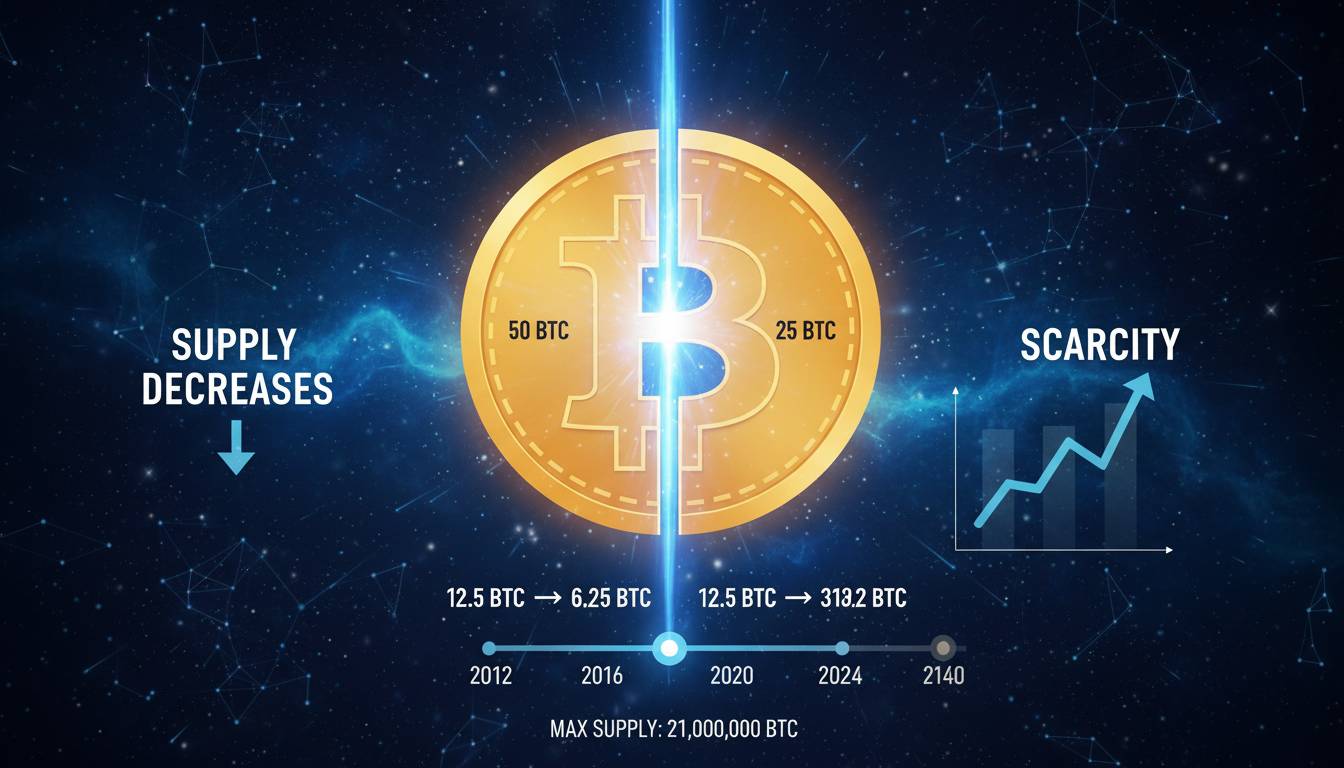
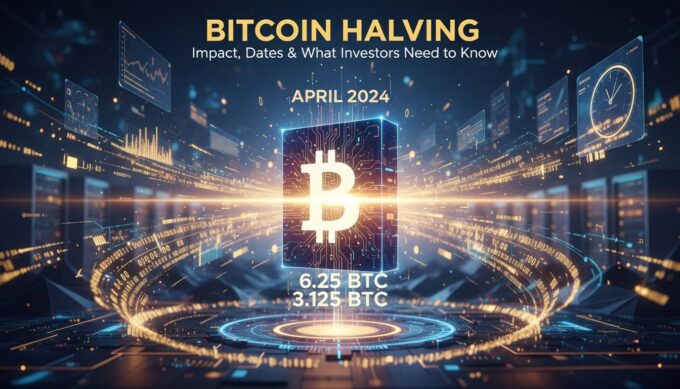
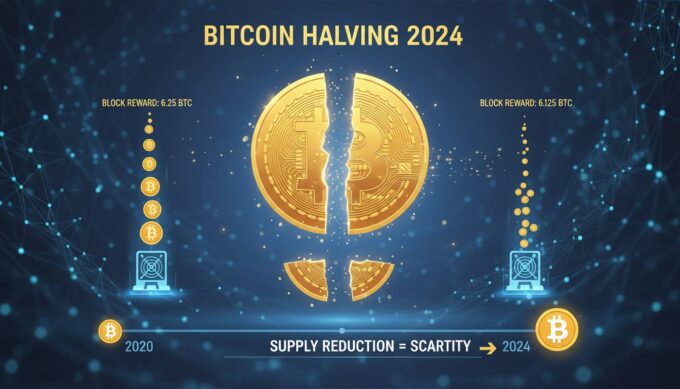
Bitcoin halving refers to the automatic reduction of the block reward that miners receive by 50%, occurring every 210,000 blocks—roughly every four years. The most recent halving took place in April 2024, reducing the reward from 6.25 BTC to 3.125 BTC per block . This mechanism is hardcoded into Bitcoin’s protocol to control inflation and enforce scarcity, with the total supply capped at 21 million coins .
What Is Bitcoin Halving?
Bitcoin halving is a built-in feature of the Bitcoin protocol that halves the reward miners receive for validating new blocks every 210,000 blocks, approximately every four years . When Bitcoin launched in 2009, miners earned 50 BTC per block. This reward dropped to 25 BTC in 2012, 12.5 BTC in 2016, 6.25 BTC in 2020, and most recently to 3.125 BTC in April 2024 .
This mechanism is designed to mimic the scarcity of precious metals like gold, ensuring that Bitcoin’s supply grows at a predictable, diminishing rate until the maximum supply is reached—projected around the year 2140 .
Why Bitcoin Halving Matters
Scarcity and Value Proposition
Halving reinforces Bitcoin’s scarcity narrative, a key driver of its value. By reducing the rate of new coin issuance, halving increases scarcity while demand remains constant or grows, potentially driving price appreciation .
Historical Price Trends
Historically, each halving has preceded significant bull runs. After the 2012 halving, Bitcoin’s price surged from around $12 to over $1,200 within a year. The 2016 halving saw a rise from approximately $650 to nearly $20,000 by late 2017. Following the 2020 halving, prices climbed from under $9,000 to over $64,000 by April 2021 . However, experts caution that past performance does not guarantee future results .
Mining Economics and Network Security
Halving directly impacts miners’ profitability by cutting rewards in half. This can lead to some miners exiting the network, reducing hash rate temporarily. However, Bitcoin’s difficulty adjustment mechanism helps stabilize block production times and network security . As Charles Guillemet, CTO of Ledger, explains, less efficient miners may drop out, but the resulting liquidity shock from reduced supply can support upward price pressure .
Institutional Inflows and Market Dynamics
The 2024 halving occurred alongside the rise of Bitcoin exchange-traded funds (ETFs) in the U.S., which have introduced significant institutional demand. ETFs are reportedly purchasing around 2,500 BTC daily—far exceeding the 900 BTC daily issuance before halving and the 450 BTC after . This supply-demand imbalance has contributed to record-high prices, with Bitcoin reaching nearly $74,000 in March 2024 .
Impact on Stakeholders
Miners
Miners face tighter margins post-halving. To remain profitable, many must invest in more efficient hardware or seek lower-cost energy sources. Some may exit the market, but the network adjusts difficulty to maintain stability .
Investors and Traders
Halving events often spark speculative interest and increased trading activity. While some investors anticipate price rallies, others caution that macroeconomic factors and market sentiment also play significant roles .
Broader Market and U.S. Context
In the U.S., the combination of halving-induced scarcity and institutional ETF inflows has intensified market dynamics. The halving’s supply shock, paired with ETF demand, has amplified price movements and investor attention .
Future Outlook and Analysis
Next Halving and Long-Term Supply
The next halving is projected for around 2028, when block rewards will drop to approximately 1.5625 BTC . Over time, Bitcoin’s stock-to-flow ratio will continue to rise, reinforcing its scarcity relative to assets like gold .
Price Cycles and Market Behavior
Bitcoin’s price historically follows multi-year cycles tied to halving events. Analysts observe that all-time highs often occur around 1,065 days after a halving, though the 2024 cycle may differ due to ETF-driven demand .
Network Evolution
As block rewards diminish, transaction fees will become increasingly important for miner revenue. This shift could influence network dynamics and long-term sustainability .
Conclusion
Bitcoin halving is a foundational event that shapes the cryptocurrency’s economic model, reinforcing scarcity, influencing miner behavior, and often triggering market cycles. The April 2024 halving occurred amid unprecedented institutional demand via ETFs, intensifying its impact on price and investor sentiment. Looking ahead, the 2028 halving and beyond will continue to test Bitcoin’s resilience and its role as a scarce, digital store of value.
Frequently Asked Questions
What is bitcoin halving?
Bitcoin halving is a pre-programmed event that cuts the mining reward in half every 210,000 blocks—approximately every four years—to control supply and enforce scarcity .
When did the most recent halving occur?
The most recent halving occurred in April 2024, reducing the block reward from 6.25 BTC to 3.125 BTC .
Why does bitcoin halving matter?
Halving matters because it reduces new supply, reinforces scarcity, impacts miner profitability, and often precedes significant price movements .
How does halving affect miners?
Halving cuts miner rewards in half, squeezing profitability. Some miners may exit, but Bitcoin’s difficulty adjustment helps maintain network security .
What role do ETFs play in halving cycles?
In 2024, U.S. Bitcoin ETFs have driven substantial institutional demand, purchasing more BTC daily than is newly issued, amplifying the supply-demand imbalance .
When is the next halving expected?
The next halving is projected for around 2028, when block rewards will drop to approximately 1.5625 BTC .
This article offers a comprehensive, fact-based overview of bitcoin halving, its implications, and its evolving role in the U.S. and global cryptocurrency markets.














Leave a comment