


Introduction
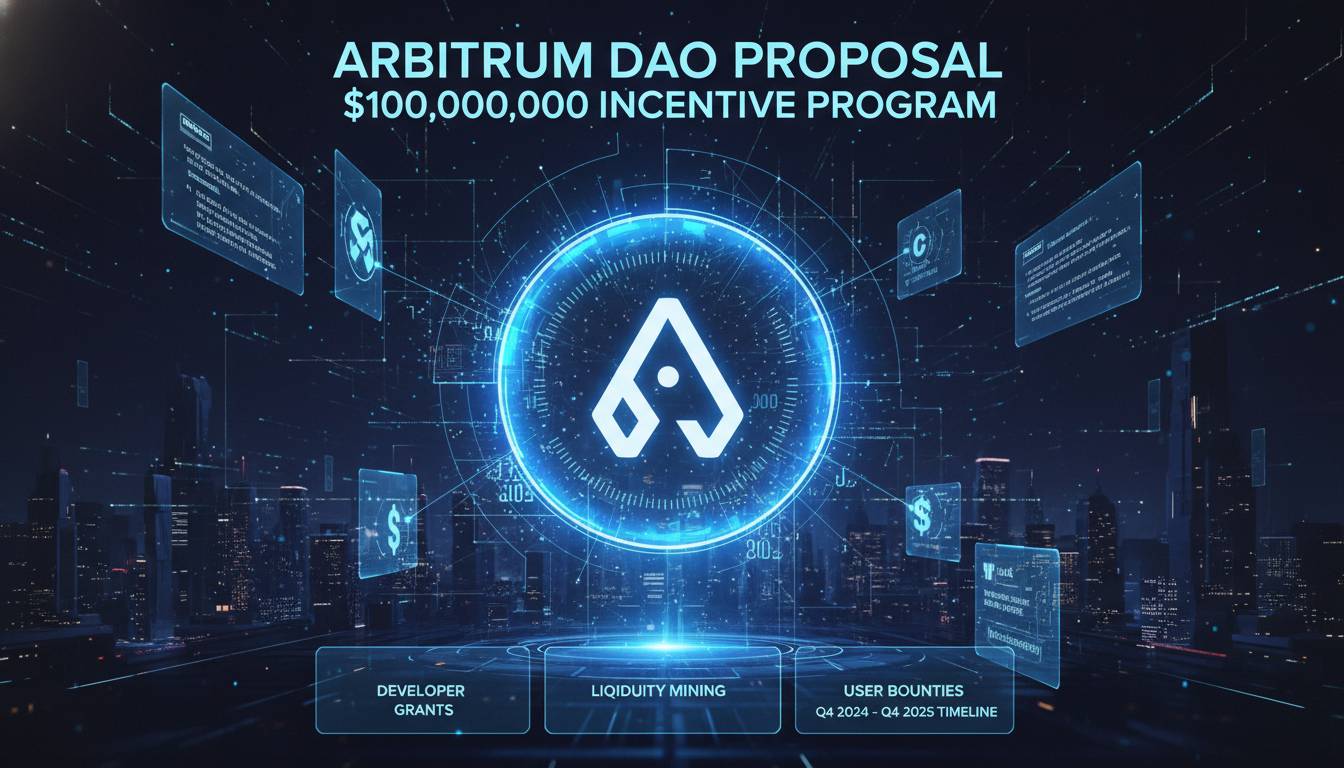
A new proposal has landed before the Arbitrum community today, seeking approval to distribute a substantial $100 million in incentives. The proposal aims to channel these funds into bolstering ecosystem activity, drawing attention to its potential impact across developers and users. As a high-value, ground-moving initiative, this stands as one of the most significant incentive proposals raised by Arbitrum DAO to date.
Why It Matters Now
Arbitrum continues to be among the leading Layer‑2 networks on Ethereum, long recognized for its scalability and growing developer engagement. A proposal this large—$100 million—underscores growing ambition from the DAO to accelerate ecosystem growth through meaningful financial support. The outcome could reshape how the protocol attracts innovation. It’s precisely the scale and the strategic potential that make this development especially newsworthy today.
Proposal Details
The proposal suggests committing $100 million worth of incentives, though denominated in ARB tokens. It does not specify whether this amount will be distributed as direct grants, staking rewards, liquidity rewards, or ecosystem funding, but it signals a broadly scoped incentive initiative aimed at encouraging participation and development across the Arbitrum ecosystem. The document outlines a one-time distribution plan, contingent on DAO member approval. The proposal frames this as a regeneration of economic momentum through token-backed incentives.
Context: Bigger Than Previous DAO Incentives
This proposal stands out when compared to prior Arbitrum DAO incentive programs:
– The DeFi Renaissance Incentive Program (DRIP) allocated up to 24 million ARB tokens (~$40 million) across four seasons to boost DeFi protocols on Arbitrum .
– In contrast, earlier Short-Term Incentive Program (STIP) grants were topped up by an additional 21.1 million ARB (~$23.4 million) to support overlooked projects .
– By comparison, this new $100 million proposal outstrips both in immediate funding scale, marking a bold escalation in incentive budget.
Community Reaction & Risks
Though reactions are just forming, echoes from prior debates suggest a mix of enthusiasm and concern:
– Previous incentive expansions generated criticisms over dilution of funds or perceived lack of focus on core ecosystem units .
– Some voices in the DAO have advocated for more targeted funding rather than broad allocation, citing risks around coordination and oversight .
This new proposal could face similar scrutiny: Is a lump-sum distribution effective? Will it privilege established players over grassroots innovators? How will accountability mechanisms be built in?
What’s Next on the Radar
If the proposal advances, the DAO must make several key calls:
- Voting Structure: Will it proceed via Snapshot, on-chain vote, or require multiple stages?
- Allocation Plan: Clarity is needed on how $100 million will be divvied—e.g., developers, DeFi, gaming, infrastructure, grants.
- Transparency & Oversight: Are there proposals for periodic reporting, benchmarks, or clawback clauses?
- Timeline & Activation: How soon will funds be distributed, and is there a rollout schedule?
These questions will shape how the proposal ultimately unfolds—and whether it evolves from bold headline to effective execution.
What the Market Is Watching
Beyond the vote’s outcome, stakeholders will watch:
- Price Reaction: Will ARB markets reflect confidence or caution tied to large token emissions?
- Developer Engagement: Will new projects emerge, or is demand already saturated?
- Protocol Accountability: Are incentive recipients reporting impact clearly, or is misuse a risk—recall past “Watchdog” discussions ?
Looking Ahead
Should the DAO approve this proposal, it may crystallize into a cornerstone incentive regime that either propels ecosystem momentum or raises questions over DAO stewardship. Either way, it will define the next chapter of Arbitrum’s growth strategy.
This is a high-stakes vote. The community must weigh excitement over scale against the need for governance discipline. Observers will be watching every step—the proposal’s drafting stage, debate flow, voting signals, and eventual execution.
















Leave a comment