



Few assets command as much global scrutiny and debate as Bitcoin (BTC). Often hailed as the original cryptocurrency, BTC’s price is tracked by institutional investors, retail traders, and policymakers alike. Navigating the rapidly shifting landscape of BTC requires more than glancing at price charts—it means understanding the factors influencing its volatility, watching regulatory developments, and reading between the lines of global economic news.
BTC’s journey—marked by breathtaking rallies and gut-wrenching corrections—offers a lens into broader market sentiment and emerging digital finance trends. From its inception in 2009 as a peer-to-peer alternative to fiat currencies, Bitcoin has become a bellwether not only for crypto markets but, increasingly, for the global appetite for risk and innovation.
BTC Price Analysis: Recent Performance and Technical Indicators
Identifying Key Levels and Market Structure
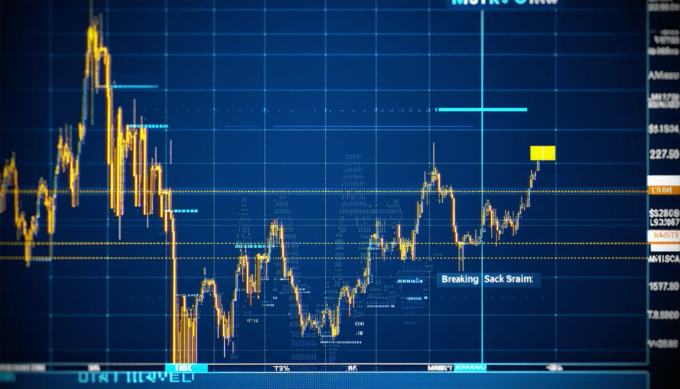
Bitcoin’s price action over the past year mirrored the uncertainty found throughout global markets. Rallies in late 2023 were fueled by speculation around potential spot Bitcoin ETF approvals in the US and mounting institutional adoption. BTC repeatedly tested resistance near all-time highs, only to encounter volatile corrections triggered by shifting macroeconomic signals and regulatory pronouncements.
Technical analysts often focus on:
- Support zones: Frequently observed around psychologically significant levels, like $30,000 and $40,000.
- Resistance bands: Key ceilings seen historically above $60,000.
- Moving averages: The 50- and 200-day moving averages serve as major trend indicators, with crossovers often telegraphing bullish or bearish momentum shifts.
“Technical levels can act as a self-fulfilling prophecy, driving short-term price action as traders crowd around them,” notes Lydia Palmer, a senior crypto market strategist.
Throughout 2024, patterns such as higher lows have suggested an underlying bullish bias—yet each rally has faced counter-pressure from profit-taking and external shocks, from inflation data to legal developments affecting exchanges.
On-Chain Metrics and Sentiment Analysis
Beyond technical price charts, serious analysts look to on-chain data to gauge the real health of the BTC network. Metrics like:
- Exchange balances: Drops in exchange BTC reserves can signal accumulation by large holders (“whales”) and reduced immediate selling pressure.
- Network activity: Spikes in transaction volume or wallet creation often accompany periods of heightened public interest or institutional movement.
- Long-term holder statistics: An increase in BTC held for over a year suggests investor confidence and reluctance to sell at current levels.
Integration of these data streams with social sentiment analysis—tracking keyword trends across platforms like Twitter and Reddit—can provide early warning signs of FOMO (fear of missing out) or mounting market panic.
Latest News Shaping BTC’s Outlook
Macro Factors: Inflation, Economic Policy, and Geopolitics
BTC has evolved from a cryptographic curiosity to a macro-sensitive asset class. Throughout recent quarters, several macro factors have played crucial roles:
- Inflation trends in major economies: High inflation has, at times, boosted BTC’s narrative as “digital gold” and a store of value—a hedge against currency debasement.
- Interest rate moves by central banks: Fluctuations in US Federal Reserve policy have affected crypto-buying appetite, driving both rallies and steep plunges.
- Geopolitical uncertainty: Tensions in Eastern Europe and Asia, as well as energy market disruptions, have increased BTC’s attractiveness for those seeking an uncensorable, borderless asset.
For instance, during the banking sector’s instability in early 2023, inflows into BTC surged as some investors moved to hedge traditional finance exposure.
Regulatory Developments and Institutional Adoption
No single theme has more consistently moved the BTC price than regulatory rumblings. In the US, back-and-forth decisions about Bitcoin ETFs and SEC-driven lawsuits against exchanges have generated pronounced price swings. Meanwhile, Europe and parts of Asia are racing to develop clear crypto frameworks, bolstering institutional confidence.
Notably, the launch of several spot Bitcoin ETFs in the United States in 2024 was viewed as a watershed moment for mainstream adoption. Early trading volumes signaled strong interest, and even risk-averse pension funds began dipping their toes into the BTC ecosystem.
Elsewhere, regulatory crackdowns—from China’s mining bans to periodic bans and unbans of crypto exchanges in various countries—continue to create short, sharp shocks to the market.
Emerging Trends: How BTC is Shaping—and Being Shaped By—Global Dynamics
Institutional Integration and Payment Infrastructure
A growing cohort of publicly traded companies continues to add BTC to their balance sheets, and major payment processors have integrated crypto payments, smoothing volatility for merchants through instant fiat conversion. This integration points toward a future where Bitcoin’s price is influenced not only by speculative activity but also by its function in global commerce networks.
The Maturing Derivatives Market
BTC futures, options, and other derivatives products have grown exponentially. Major exchanges report consistent growth in both open interest and trading volume, particularly around market-moving events such as halving cycles and regulatory announcements. These products allow sophisticated players to hedge risk and speculate on price directions, creating a more complex and liquid ecosystem—but also amplifying volatility in times of stress.
Evolving Use Cases Amidst Layer 2 Innovations
The lightning network, smart contract protocols built on top of Bitcoin, and the rise of atomic swaps are all strengthening the case for long-term BTC utility beyond simple store-of-value functions. As transaction fees fluctuate with network congestion, these Layer 2 solutions enable cheap, quick, and scalable microtransactions.
Short-Term Risks and Long-Term Potential
Despite waves of adoption, notable risks remain. Bitcoin faces ongoing threats from regulatory overreach, technical vulnerabilities, and the perennial possibility of dramatic leverage-driven corrections. On the flip side, a successful track record through several macro crises and its limited supply reinforce its position as a digital alternative to gold.
Long-term investors, while wary of short-term drawdowns, often cite BTC’s inelastic supply curve and relentless global innovation as core strengths. Recent data suggest that younger generations, particularly millennials and Gen Z, view Bitcoin favorably compared to traditional assets—a dynamic that could influence BTC’s price base for years to come.
Conclusion: Navigating BTC’s Shifting Landscape
BTC’s price journey encapsulates the tension between innovation and uncertainty. Short-term moves remain elusive to predict with precision, especially as this asset now dances to the tune of both grassroots investor fervor and institutional chess moves.
Understanding the interplay between technical indicators, on-chain data, global news, and regulatory developments is essential to making sense of BTC’s wild ride. Looking forward, adoption trends and technological advancements are poised to shape Bitcoin’s narrative, making informed analysis a necessity for anyone watching—or participating in—the crypto economy.
FAQs
What factors most influence BTC’s price?
BTC’s price is impacted by macroeconomic data, regulatory developments, technological upgrades, and overall sentiment from institutions and retail traders. Market liquidity and major news events often drive short-term volatility.
How do ETFs affect Bitcoin’s price?
ETFs make BTC more accessible to traditional investors, typically increasing demand and adding legitimacy. Significant ETF inflows or outflows can lead to abrupt price shifts.
Are on-chain metrics reliable for trading BTC?
On-chain metrics offer valuable insights into network health and investor behavior, but they’re most effective when combined with other types of analysis, like technical indicators and news flow.
What are the primary risks facing BTC investors?
BTC investors face risks including regulatory crackdowns, security breaches, high volatility, and sudden shifts in market sentiment fueled by leverage or external shocks.
How do macroeconomic trends, like inflation, affect BTC?
Periods of high inflation or financial instability often boost BTC’s appeal as a store of value, but rapid policy changes—especially involving interest rates—can trigger quick price corrections.
Is BTC adoption growing among institutional investors?
Yes, institutional adoption has grown steadily, with more funds, companies, and public entities directly holding BTC or offering exposure to it through regulated products. This trend is supported by greater regulatory clarity and growing infrastructure.





















Leave a comment