


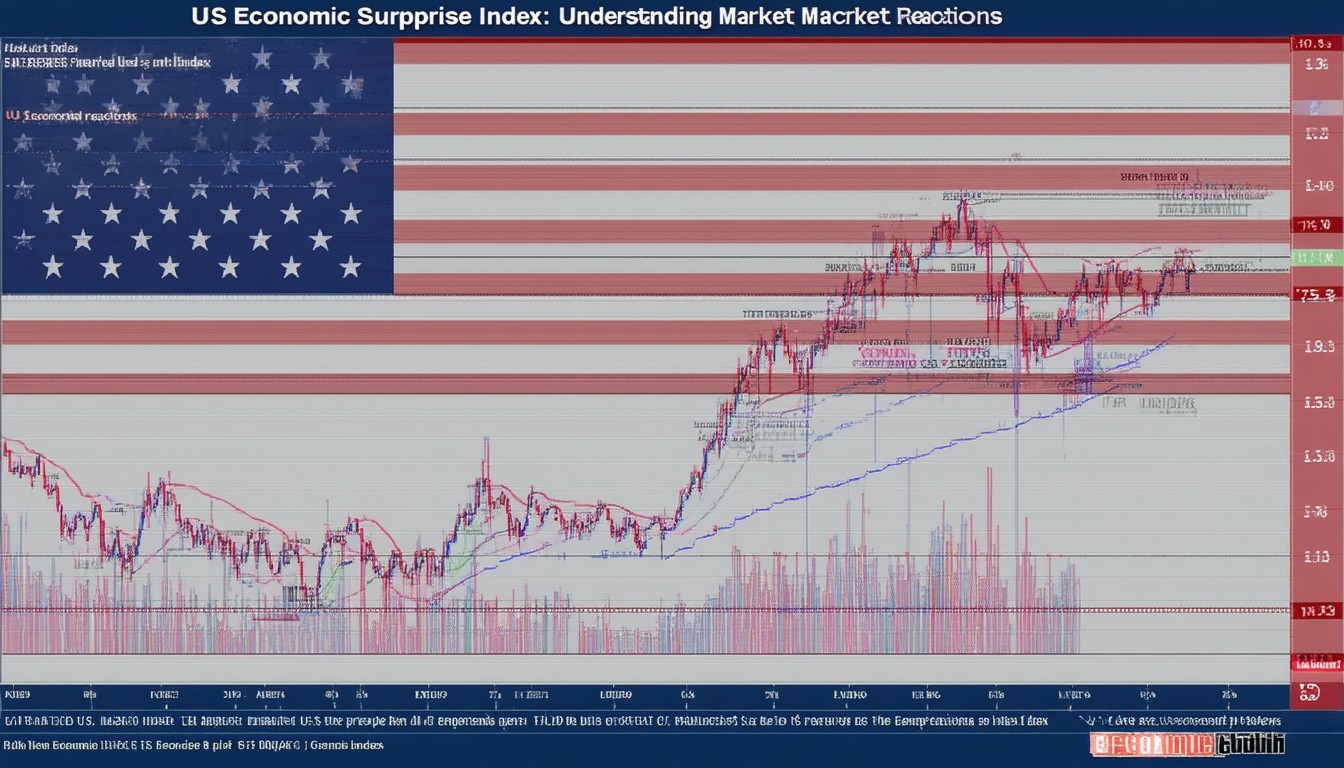
The financial markets live and breathe on expectations—how reality stacks up against forecasts can set the tone for assets worldwide. The US Economic Surprise Index (ESI) is a powerful tool that captures this dynamic, quantifying whether recent economic data releases have been better or worse than economists anticipated. As a gauge of market sentiment, the ESI has grown from a specialized data point to a widely referenced barometer among traders, strategists, and policymakers.
Understanding the mechanisms behind the ESI and its market implications offers a window into how the complex machinery of expectations, data releases, and investor psychology interact to shape major asset moves. In times of economic uncertainty or rapid recovery, movements in the Economic Surprise Index provide early insights into both optimism and caution circulating within the market.
What Is the US Economic Surprise Index?
The US Economic Surprise Index measures the degree to which US economic data releases diverge from Wall Street consensus expectations. Developed by Citigroup, the index rises when data releases exceed consensus, and falls when they underperform.
Unlike traditional economic indicators, the ESI is not a direct reflection of actual economic growth or recession. Instead, it measures the gap between reality and expectation—providing a nuanced look at market mood and narrative shifts. The index is typically calculated by:
- Collecting key economic data points (such as employment, inflation, manufacturing activity, and retail sales).
- Comparing each actual release to the consensus forecast.
- Aggregating these surprises, adjusting for the importance and recency of each indicator.
A strongly positive ESI suggests most data is beating expectations, often sparking risk-on sentiment in equity or currency markets. Conversely, a negative reading signals widespread disappointment.
“The surprise index is less about current performance and more about how reality is evolving relative to the market’s shared story,” notes a senior macro strategist at a global investment bank.
How the Economic Surprise Index Influences Market Reactions
Market participants pay close attention to the US Economic Surprise Index because sudden swings can drive sharp asset repricing. For example, if a string of robust payrolls and consumer spending numbers consistently beats forecasts, the ESI surges, leading traders to reassess growth estimates—and, often, to bid up US equities or the dollar.
Case Study: COVID-19 Recovery Surges
During the 2020–2021 reopening period, US economic data routinely shattered subdued estimates set during the pandemic’s height. The ESI rocketed to record highs, closely followed by rapid rallies in the S&P 500 and a stronger greenback. This sequence underscored how markets can swing from caution to optimism when reality defies consensus gloom.
Why Surprises Can Matter More Than Levels
Markets are forward-looking and price in expectations. If everyone predicts robust GDP growth, a strong report might not move markets unless it exceeds those forecasts. Conversely, a “less bad than feared” data point can trigger a rally even if the numbers remain weak by long-term standards.
Trends and Patterns Within the US Economic Surprise Index
While the ESI fluctuates daily, certain trends bear watching:
- Cycles of optimism and pessimism: Prolonged periods of positive (or negative) surprises often lead to shifting consensus, as analysts recalibrate baseline expectations.
- Sectoral drivers: Sometimes, a few high-impact reports—such as non-farm payrolls or inflation prints—can disproportionately move the ESI, causing outsized asset reactions.
- Seasonal effects: Year-end or quarterly reporting cycles can lead to swings, as corporate guidance and government revisions come into play.
Traders and analysts often overlay the ESI with long-term economic or market data to spot inflection points. A sudden downturn in the index after a period of steady beats may signal that optimism has peaked, while a persistent run of negative surprises could set the stage for more dovish monetary policy.
Limitations and Critiques of the Surprise Index
While the ESI is a valuable tool, it is not a crystal ball. Several limitations should be kept in mind:
Short-Term Focus
Because the ESI tracks only the deviation from consensus, it may spike or plunge on methodological quirks, such as a streak of particularly low (or high) forecasts. Sudden changes in analyst behavior can skew readings.
Not a Standalone Indicator
Professional investors rarely act on the ESI alone. It serves as a complement to other data—offering context, not conclusions. Bond and currency strategists, for example, might pair ESI readings with inflation expectations, yield curve moves, or options pricing to get a full picture.
Global Interconnectedness
An unexpected US data print can ripple across global markets—even driving surprise indices in other economies. This tight interlinkage means the ESI is both a barometer and a catalyst within the international economic ecosystem.
How Investors and Policymakers Use the Economic Surprise Index
Both professional and retail investors monitor the ESI for clues about the market’s next major move. Here’s how it’s applied in practice:
Market Timing and Positioning
Asset managers may adjust risk exposure based on persistent trends in the index. For example, a sustained run of positive surprises could justify higher equity allocations, while negative turns might provoke caution.
Policy Analysis
Federal Reserve officials and private economists track the ESI to gauge whether economic policies are achieving desired effects—or if they’re being interpreted as such by the broader market. In some cases, sharp ESI shifts have coincided with changes in central bank communication or actions.
Media and Market Narrative
Financial news outlets often cite the ESI to explain day-to-day volatility or to contextualize economic turning points. Its simple, intuitive framework makes it a popular reference point during both bull and bear market phases.
Conclusion: Harnessing the Power of the US Economic Surprise Index
The US Economic Surprise Index offers a real-time snapshot of the market’s emotional state—not just tracking economic facts but the all-important delta between what was expected and what actually materializes. When incorporated with other data, it provides a nuanced lens for interpreting market reactions, setting strategy, or simply reading the market’s mood.
Relying solely on any single index can be risky, but when viewed as part of a broader toolkit, the ESI can help investors and policymakers anticipate narrative shifts and calibrate their responses. In an environment defined by uncertainty, understanding the “surprise factor” is more relevant than ever.
FAQs
What is the US Economic Surprise Index based on?
It aggregates the differences between reported US economic data and consensus forecasts, weighting both the significance and recency of individual indicators.
Does a high ESI mean the US economy is strong?
Not necessarily. A high ESI means that economic data is outperforming forecasts, which may or may not align with robust long-term growth.
How do traders use the ESI in daily decisions?
Many traders monitor ESI trends to gauge market sentiment and adjust their risk exposure, particularly in currencies and equities sensitive to economic momentum.
Can the ESI predict market crashes or rallies?
While it can hint at market over- or under-optimism, the ESI is not a predictive tool for crashes or bubbles. It serves as a sentiment gauge rather than a forecasting model.
Is the ESI relevant outside the United States?
Yes—many institutions also track Eurozone, China, and global surprise indices, as cross-border data surprises can influence capital flows and risk appetite worldwide.
Where can I find up-to-date ESI data?
Major financial news services and investment banks, including Citigroup, publish regular updates. Public dashboards and economic research blogs also track both the US and international surprise indices.





















Leave a comment