


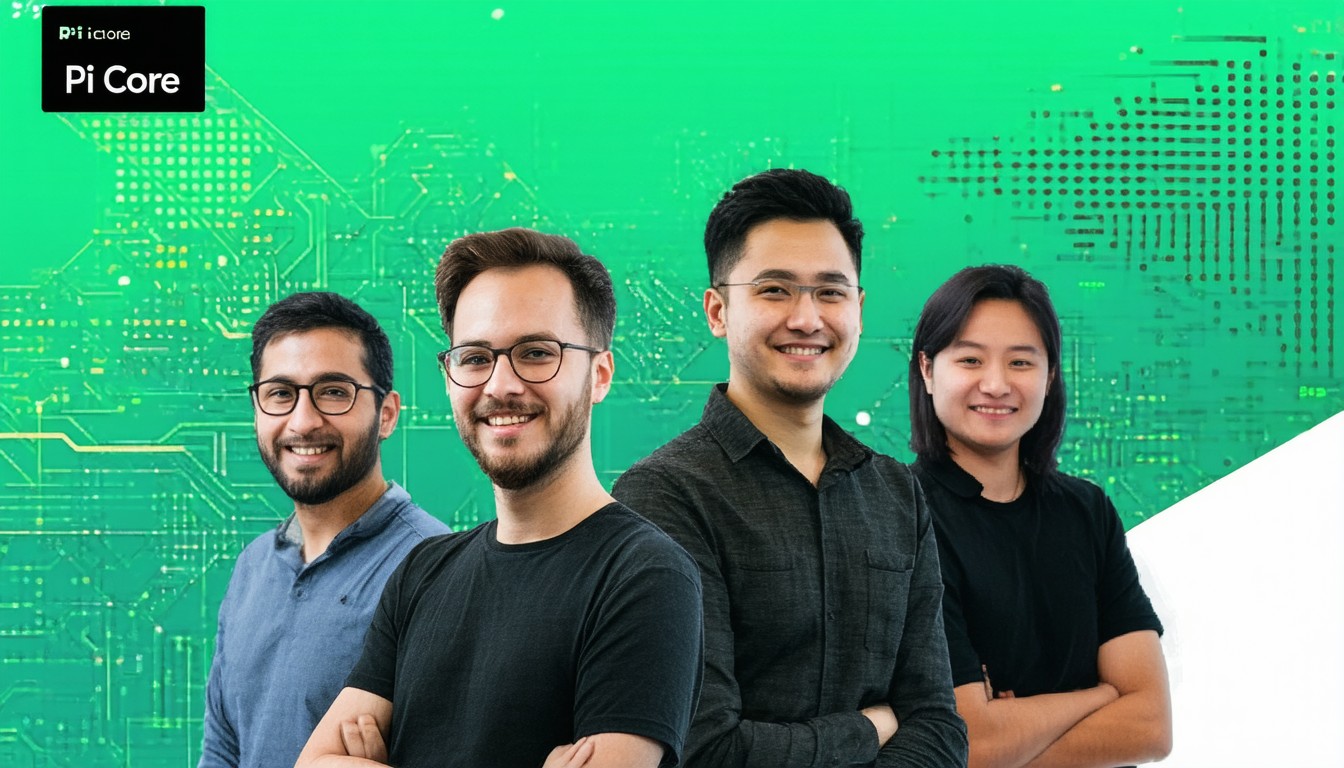
In the rapidly evolving world of blockchain, a handful of teams stand out not only for their technological prowess but also for their vision of accessibility and mass adoption. The Pi Core Team sits squarely among these innovators, having launched and steered the Pi Network—one of the most widely-discussed mobile-based blockchain projects in recent years. Their ambition: to redefine how people access and interact with cryptocurrency, removing the barriers that have kept billions sidelined from the digital finance revolution.
Origins and Composition of the Pi Core Team
The Pi Core Team was founded by a group of Stanford PhDs and graduates led by Dr. Nicolas Kokkalis and Dr. Chengdiao Fan. Both were deeply involved in distributed computing and social computing research, providing a strong academic backbone to the project. Their mission emphasized building a cryptocurrency “for and by the people”—a statement that continues to influence every stage of Pi Network’s development.
Key Team Members
- Dr. Nicolas Kokkalis: Pi Network’s Head of Technology, with a background in decentralized systems and blockchain education.
- Dr. Chengdiao Fan: Specializes in human-computer interaction and social computing, ensuring Pi’s systems are both robust and user-focused.
- Vincent McPhillip (former): Played a significant early role in community relations and strategic development.
By leveraging their collective experience in academia and Silicon Valley, the Pi Core Team has uniquely bridged theoretical rigor with the practical needs of a global user base.
Vision and Technology: Bridging Gaps in Blockchain Adoption
Traditional cryptocurrencies like Bitcoin and Ethereum, while revolutionary, have presented significant entry barriers—typically requiring specialized hardware, technical knowledge, and a tolerance for volatility. The Pi Core Team’s vision was markedly different: prioritize accessibility and social trust while retaining blockchain’s decentralized ethos.
Mobile Mining: A Paradigm Shift
Unlike most major cryptocurrencies, Pi Network enables users to “mine” via an everyday smartphone app. This approach avoids energy-intensive proof-of-work mechanisms and instead leverages a federated trust graph—users validate each other’s trustworthiness within their social circles.
“We set out to design a currency that was as easy to use as sending a text message,” explained Dr. Nicolas Kokkalis at a Stanford blockchain symposium. “Making mining accessible from a smartphone was central to building a truly inclusive blockchain ecosystem.”
This mechanism not only democratizes access but also reduces environmental impact, addressing a major criticism faced by older chains.
Consensus Algorithm: Building Trust On-Chain
The Pi Core Team developed a variant of the Stellar Consensus Protocol (SCP), focusing on validating transactions through social trust rather than computational horsepower. This innovative approach allows Pi to maintain security and network integrity without excessive resource consumption.
Community and Ecosystem Building
One of the most striking features of Pi Network’s growth is its community-driven momentum. From beta launch, the team fostered a culture of contribution and collective problem-solving, with millions of pioneers (as Pi users are called) engaging actively in governance and ecosystem development.
Global Reach and User Growth
Within a few years, Pi Network claimed tens of millions of engaged users—a rare feat in the blockchain space, especially for a network still in its initial stages of mainnet development. The Pi Core Team’s strategic focus on mobile users, peer referrals, and in-app engagement features helped ignite exponential viral growth.
Pi Hackathons and Developer Initiatives
To cement Pi as more than a speculative asset, the Core Team launched global hackathons and provided SDKs and APIs for developers. These efforts are designed to cultivate a decentralized app (dApp) ecosystem, allowing practical use cases—from local marketplaces to social apps—to flourish within the Pi economy.
Notably, many developer teams from Southeast Asia, Africa, and Latin America have participated, aligning with Pi’s vision of empowering users in both developed and developing markets.
Security, Transparency, and Challenges
Blockchain projects frequently face criticism over transparency, security, and the real-world viability of their roadmaps. The Pi Core Team has addressed these through periodic whitepaper updates, technical documentation, and measured, phased rollouts.
KYC and Mainnet Migration
A core challenge in onboarding global users is ensuring that accounts are unique and legitimate. The Pi Core Team’s Know Your Customer (KYC) process, implemented via the app, aims to prevent fraud and comply with potential regulatory requirements—though it has also led to some user frustration due to the phased approach and bottlenecks.
Mainnet and Future Roadmap
As of mid-2024, the Pi Network remains in an “enclosed mainnet” phase, where transactions can occur only within the Pi ecosystem (e.g., for goods, services, or dApps). The Core Team has cited security audits, regulatory clarity, and anti-fraud measures as prerequisites for opening the network to public blockchain interoperability.
This incremental strategy reflects a desire to balance innovation with prudence—a departure from the “move fast and break things” approach that has compromised other crypto projects.
Industry Impact and Critical Reception
The Pi Core Team’s unique fusion of academic pedigree, grassroots mobilization, and technical innovation has drawn both praise and skepticism within the crypto community.
Comparative Landscape
While many established blockchains target either enterprise use cases or speculative trading, Pi Network’s people-centric approach has created a new template. It’s seen as a live social experiment—can mass adoption precede network value, and can an app-driven blockchain build a sustainable, utility-focused economy?
Some critics argue the closed nature of the mainnet impedes independent validation, while supporters highlight the unprecedented scale of user loyalty and participation.
Real-World Use Cases Emerging
Early examples of Pi Network utility range from digital goods exchanges to micro-commerce pilots in several countries. The Core Team continues to accelerate the development and onboarding of dApps, betting on eventual network effects to drive value.
Conclusion: A Team Reshaping Blockchain’s Trajectory
The Pi Core Team stands out not just for building an accessible blockchain, but for challenging preconceptions about who cryptocurrency is for—and how it should be delivered. With measured expansion, a commitment to user security, and an ambitious roadmap, the team’s ongoing work will help define whether mass-market blockchain adoption is achievable.
While the project’s full potential will only be realized with broader mainnet access and proven real-world applications, the groundwork laid by the Pi Core Team has already raised the bar for inclusivity, innovation, and community engagement in the blockchain industry.
FAQs
What is the Pi Core Team’s primary mission?
Their mission is to make digital currency accessible to everyone by building a user-friendly blockchain that can be mined and used directly from mobile devices.
Who are the main leaders of the Pi Core Team?
The project is led by Dr. Nicolas Kokkalis and Dr. Chengdiao Fan, both Stanford PhDs with expertise in distributed systems and social computing.
How does Pi Network differ from other cryptocurrencies?
Pi Network emphasizes smartphone-based mining and uses a social trust-based consensus model instead of resource-intensive proof-of-work systems, making participation much easier for average users.
When will Pi Network’s mainnet become fully open?
The full opening of mainnet to the public is contingent on completed audits, regulatory compliance, and a robust KYC process; no firm date has been announced as of mid-2024.
Why has Pi Network attracted such a large user base?
By lowering technical and financial barriers, involving communities through referrals and engagement features, and consistently promoting decentralized app development, Pi has achieved viral growth across diverse regions.
Is Pi Network considered secure and legitimate?
The Pi Core Team prioritizes transparency, KYC enforcement, and security audits, but like many emerging blockchains, the long-term security and market legitimacy depend on successful mainnet launch and ongoing development.



















Leave a comment