



Bitcoin is showing unusual resilience as energy markets convulse and geopolitical tensions intensify. While Brent crude has surged above $100 a barrel in recent days amid conflict-linked supply fears, the world’s largest cryptocurrency has held near the low-$70,000 range instead of breaking sharply lower. That divergence is drawing fresh attention from traders and institutional investors who see a possible setup for a renewed move toward $80,000, even as macro risks remain elevated.
Bitcoin shrugs off oil surge and geopolitical tension, setting up potential push toward $80k
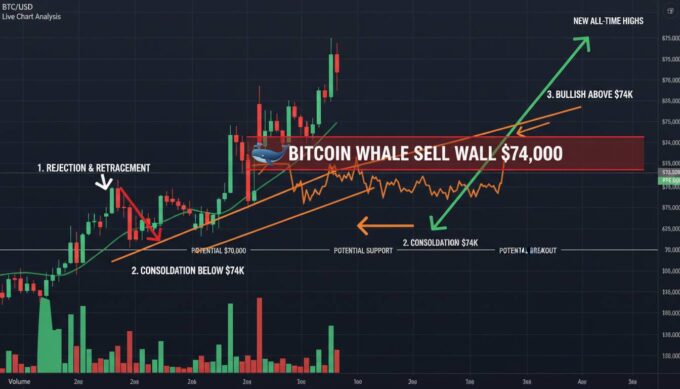
As of March 14, 2026, Bitcoin is trading at about $70,915, according to market data, after moving between an intraday low of $70,420 and a high of $73,897. The price action matters because it comes during a week when oil volatility has dominated global headlines and pressured broader risk assets. Instead of collapsing alongside equities, Bitcoin has remained comparatively stable, reinforcing the view that buyers are still active on dips.
The backdrop is unusually tense. Brent crude briefly surged to $119.50 a barrel earlier this week, its highest level since the aftermath of Russia’s 2022 invasion of Ukraine, before swinging lower as markets reassessed supply risks and policy responses. Even after that pullback, Brent still settled above $100 on March 11, underscoring how seriously traders are pricing Middle East disruption.
For Bitcoin, the key question is whether this resilience reflects a temporary pause or the early stage of a broader breakout. The answer may depend less on headlines alone and more on whether institutional demand continues to absorb macro-driven selling pressure.
Why Bitcoin is holding up better than many expected
Historically, sharp oil spikes and geopolitical shocks have triggered broad risk-off moves across global markets. Higher energy prices can feed inflation, complicate central bank policy, and reduce appetite for speculative assets. Under that framework, Bitcoin would normally be vulnerable.
This time, however, several forces appear to be offsetting that pressure:
- Institutional inflows into spot Bitcoin ETFs
- A market structure that has already absorbed earlier outflows
- A growing perception of Bitcoin as a macro hedge by some investors
- A lack of panic selling despite elevated headline risk
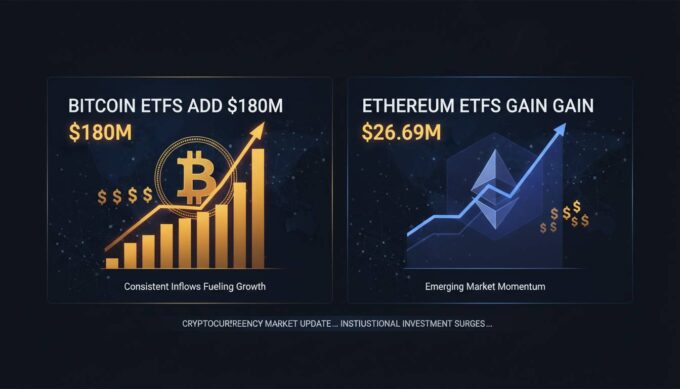
One of the clearest supports has been ETF demand. Data cited from SoSoValue show U.S. spot Bitcoin ETFs recorded a $458 million net inflow on March 2, one of the strongest sessions since February. Additional reports citing the same data show another roughly $167 million of inflows on March 9, suggesting institutional appetite has not disappeared even during a volatile macro stretch.
That matters because ETF flows have become one of the market’s most important short-term demand indicators. When inflows remain positive during periods of geopolitical stress, traders often interpret that as evidence that larger investors are treating pullbacks as buying opportunities rather than reasons to exit.
According to market commentary cited by Invezz, strengthening ETF flows and the disappearance of the Coinbase discount are “not characteristics of a market accelerating into a fresh leg lower.” While that is an analytical interpretation rather than a guarantee, it helps explain why sentiment has improved despite a difficult macro backdrop.
Oil shock raises risks, but not all roads lead lower for crypto
The oil story is still central to Bitcoin’s near-term outlook. A sustained move in Brent above $100 can tighten financial conditions, lift inflation expectations, and reduce the odds of near-term monetary easing. That would normally be a headwind for both equities and crypto. AP reported that Brent settled at $100.46 on March 11 after another sharp jump, while earlier in the week it briefly touched nearly $120.
Yet the relationship between oil and Bitcoin is not always straightforward. In some periods, Bitcoin trades like a high-beta risk asset. In others, it behaves more independently, especially when crypto-specific demand drivers dominate. The current environment appears to be one of those mixed phases.
There are two competing interpretations now shaping the market:
The bullish case
Supporters of the bullish view argue that Bitcoin’s ability to remain above $70,000 during an oil shock is itself a sign of strength. If the asset can avoid a deeper breakdown while macro conditions are hostile, it may be positioned to rally quickly if tensions ease, ETF inflows continue, or broader risk sentiment improves. Under that scenario, $80,000 becomes a plausible technical and psychological target rather than an aggressive stretch.
The cautious case
More conservative analysts point out that oil-driven inflation can still damage the setup. If energy prices stay elevated for weeks, central banks may have less room to cut rates, and investors may reduce exposure to volatile assets. In that case, Bitcoin’s resilience could prove temporary, especially if ETF flows reverse again.
Both views are grounded in observable market dynamics, which is why the next several trading sessions may be unusually important.
Institutional demand remains the market’s key signal
The strongest argument for Bitcoin’s durability is that institutional participation has not vanished. Reports citing SoSoValue data show U.S. spot Bitcoin ETFs posted back-to-back weekly inflows in early March, following a period of mixed and sometimes negative flows earlier in the year. That shift suggests some large investors are re-engaging after January and February volatility.
Earlier in 2026, ETF flows turned negative at times, including a reported $203.8 million outflow on February 23. But the more recent reversal is significant because it indicates demand has returned even as geopolitical stress has intensified. In practical terms, that means Bitcoin is not relying solely on retail momentum.
For U.S. investors, this is especially relevant. Spot ETFs have made Bitcoin exposure easier to access through traditional brokerage accounts, retirement platforms, and institutional mandates. As a result, daily flow data now carry more weight than they did in earlier crypto cycles.
According to SoSoValue-based reports, BlackRock’s IBIT has remained a major contributor to inflows on stronger days. That does not guarantee a sustained rally, but it does suggest that regulated investment vehicles continue to anchor demand when volatility rises.
What would need to happen for Bitcoin to reach $80,000
A push toward $80,000 is possible, but it is not automatic. Several conditions would likely need to align.
First, Bitcoin would need to hold the $70,000 area on a closing basis and avoid a deeper macro-driven breakdown. Stability matters because it signals that buyers are defending key levels rather than merely reacting to short-covering.
Second, ETF inflows would need to remain constructive. A few isolated positive days help sentiment, but a sustained run of inflows is more important because it reflects durable demand from larger allocators. Recent sessions have pointed in that direction, though the trend is not yet definitive.
Third, oil would likely need to stop accelerating higher. Markets can tolerate elevated crude prices more easily than a disorderly spike. If Brent stabilizes rather than surges again, pressure on inflation expectations may ease and give Bitcoin more room to trade on its own fundamentals.
Fourth, broader financial conditions cannot tighten too abruptly. Even without a rate cut, a stable policy outlook can be enough for crypto if investors believe the worst-case inflation scenario is not materializing.
Risks that could derail the rally
The path to $80,000 is far from guaranteed. Several downside risks remain in view:
- A renewed spike in oil prices above recent highs
- A sharp reversal in spot Bitcoin ETF flows
- Broader equity market weakness spilling into crypto
- Policy surprises tied to inflation or financial stability concerns
- A breakdown below the $70,000 area that damages momentum
Bitcoin’s recent performance is encouraging for bulls, but resilience is not the same as immunity. If geopolitical conditions worsen materially, correlations across risk assets could rise again and drag crypto lower.
There is also the issue of sentiment. Markets that hold up well during stress can rally sharply, but they can also become vulnerable if traders grow too confident too quickly. That makes incoming flow data and cross-asset volatility especially important over the next week.
Conclusion
Bitcoin’s ability to hold near $71,000 while oil prices swing violently and geopolitical tensions remain high is one of the more notable market developments of March 2026. Brent crude has traded above $100 and briefly approached $120, yet Bitcoin has avoided the kind of breakdown many traders would have expected in a classic risk-off environment. At the same time, renewed inflows into U.S. spot Bitcoin ETFs suggest institutional demand is still providing meaningful support.
That combination does not guarantee a breakout, but it does create a credible setup for a move toward $80,000 if macro conditions stabilize and ETF demand persists. For now, Bitcoin is not ignoring the global backdrop. It is simply absorbing it better than many expected. If that pattern continues, the next major test for the market may come sooner than skeptics anticipate.
Frequently Asked Questions
Why is Bitcoin holding up despite the oil surge?
Bitcoin appears to be benefiting from continued institutional demand, especially through U.S. spot Bitcoin ETFs, even as oil volatility pressures broader markets. Recent ETF inflows suggest some investors are still buying during macro uncertainty.
What is Bitcoin’s price right now?
As of March 14, 2026, Bitcoin is trading at about $70,915, with an intraday range of roughly $70,420 to $73,897.
Why does oil matter for Bitcoin?
Higher oil prices can lift inflation expectations and reduce the chance of easier monetary policy. That often hurts risk assets, including cryptocurrencies, because tighter financial conditions can reduce investor appetite for volatility.
What would support a move toward $80,000?
The main supports would be continued ETF inflows, price stability above key support levels near $70,000, and a moderation in oil-driven macro stress. A calmer cross-asset environment would give Bitcoin more room to trade on crypto-specific demand.
What are the biggest risks to the bullish outlook?
The biggest risks are another sharp jump in oil prices, worsening geopolitical tensions, renewed ETF outflows, and a broader sell-off in global risk assets. Any of those could weaken Bitcoin’s current support structure.

















Leave a comment