


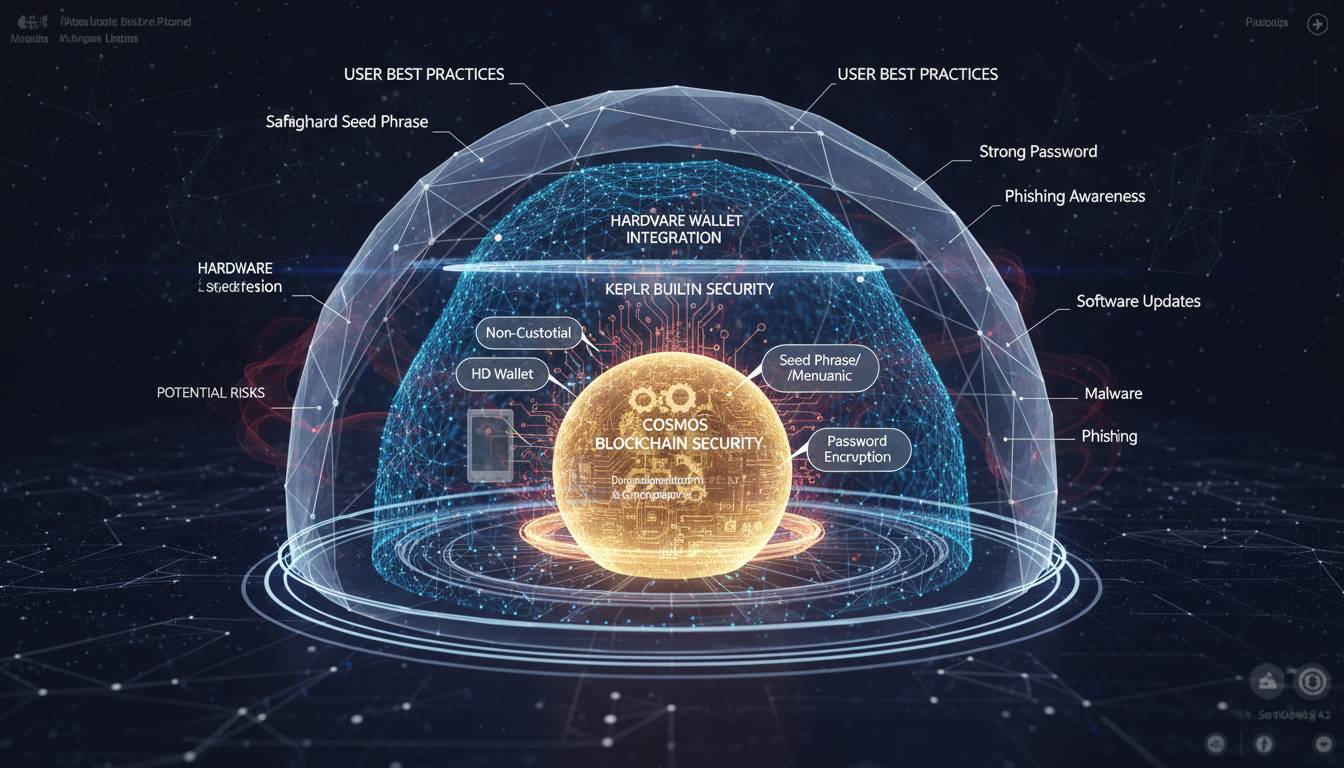
Keplr Wallet remains a widely used non‑custodial wallet in the Cosmos ecosystem, but recent user reports and expert reviews raise important questions about its security. This article examines the latest findings, user experiences, and technical safeguards to help you understand whether your crypto is truly safe with Keplr.
Key Security Features of Keplr Wallet
Keplr is a non‑custodial wallet, meaning users retain full control over their private keys and funds. The wallet generates and stores private keys locally on your device, encrypted using industry‑standard protocols. Keplr does not have access to your keys or assets, reducing counterparty risk.
Users can enhance security by connecting Keplr to hardware wallets such as Ledger or Keystone. This adds a layer of cold storage protection and mitigates risks associated with hot wallets.
Keplr also supports multi‑signature (multi‑sig) accounts, requiring multiple approvals for transactions. This feature is especially useful for organizations, DAOs, or shared accounts.
Keplr’s codebase is largely open source and undergoes regular security audits. The wallet uses local encryption and never uploads private keys to external servers.
Reported Issues and User Concerns
Despite its security architecture, Keplr has faced user complaints and reported vulnerabilities:
-
Several users reported missing balances after depositing BNB. In many cases, the issue stemmed from sending BEP‑20 tokens that Keplr did not recognize, rather than a hack. Users were advised to verify transactions on explorers like Mintscan or BscScan.
-
One user reported their wallet was compromised while traveling, despite using Google login with 2FA. Community members warned against using cloud‑based backups or social logins for sensitive wallets.
-
A Reddit user described a wallet being drained of funds despite not sharing credentials. The community speculated that signing unknown airdrop transactions or malware could be the cause.
-
Malware threats such as the Mars Stealer Trojan have been reported to target browser extensions like Keplr, stealing seed phrases if users click malicious links.
-
A known issue exists when using Keplr with Ledger for native INJ transactions: the Ledger device displays only a cryptic signature hash, preventing users from verifying transaction details.
Expert Reviews and Industry Perspective
Recent expert reviews generally affirm Keplr’s security, while noting areas for improvement:
-
Cryptonews describes Keplr as a secure non‑custodial wallet with local encryption, multi‑sig support, and hardware wallet compatibility. No hacks have been reported to date.
-
Cryptomaniaks conducted hands‑on testing in February 2026 and confirmed that private keys remain on the device, protected by encryption and biometric locks. They also highlighted Keplr’s open‑source nature and regular audits.
-
Cryptovantage emphasizes that Keplr’s security hinges on users safeguarding their seed phrase. The only reported hacks involved users sharing their seed phrases. Hardware wallet integration is strongly recommended.
Balancing Strengths and Risks
Keplr’s architecture offers strong security foundations:
- Non‑custodial design ensures users retain full control over assets.
- Local encryption and biometric protection safeguard private keys.
- Hardware wallet support and multi‑sig add robust layers of defense.
- Open‑source code and audits enhance transparency and trust.
However, risks persist:
- User error remains a leading cause of loss—especially through phishing, malware, or misconfigured transactions.
- Browser extension vulnerabilities and social login options can expose users to attacks.
- Certain integrations, like Ledger with INJ, still lack full transparency for transaction verification.
What to Watch Next
As the crypto landscape evolves, users should monitor:
- Improvements in hardware wallet integration, especially for better transaction verification.
- Enhanced phishing protection and scam detection within the wallet interface.
- Continued transparency around audits and security updates from Keplr’s development team.
Final Thoughts
Keplr Wallet offers a solid security foundation for users who understand and manage their own risks. Its non‑custodial design, local encryption, hardware wallet support, and open‑source audits make it a trustworthy option—provided users remain vigilant.
However, the wallet is not immune to threats. Many reported losses stem from user behavior, phishing, or malware—not flaws in Keplr’s core architecture. Users must:
- Never share seed phrases or private keys.
- Avoid cloud backups or social logins for wallet access.
- Use hardware wallets and multi‑sig for added protection.
- Verify transactions carefully, especially when using Ledger.
Keplr is safe—but only if you treat it with the same caution you would any high‑value asset.





















Leave a comment