


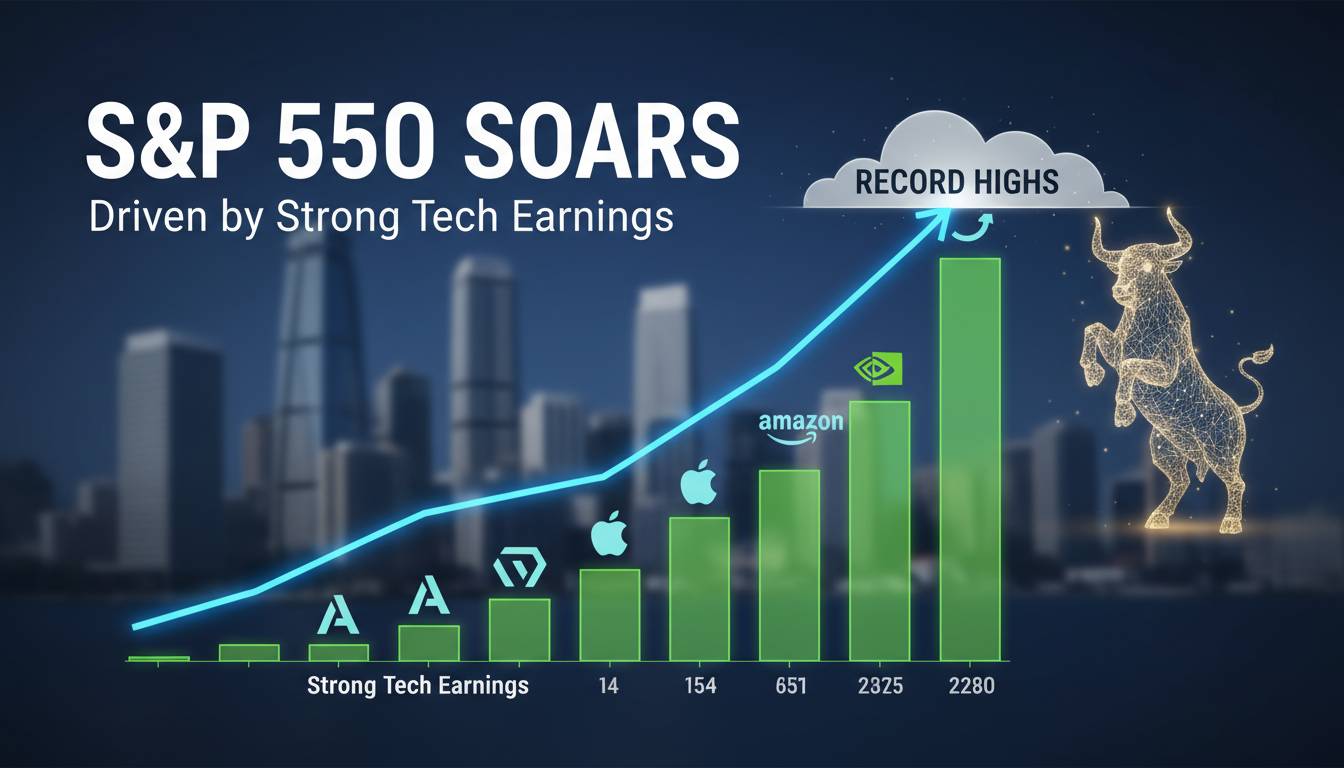
, with intraday peaks exceeding 7,000, marking a new high-water mark for U.S. markets.
Record-Breaking Rally Fueled by Tech Strength
Tech Earnings Drive Momentum
The January rally wasn’t random—it was powered by clear financial data. Leading tech companies reported robust earnings, reinforcing confidence in “AI-first” investments. This spike came amid steady economic growth, stable inflation, and supportive Fed policy, all of which created a near-ideal backdrop for stocks.
Yet, this rally has been quite narrow. Analysts estimate that about 70% of S&P 500 profits during this run were generated by its top 10 firms—predominantly mega-cap tech players.
A Two-Speed Market Emerges
Not everyone benefited from the rally. While AI-driven stocks soared, some sectors lagged. Healthcare insurers like UnitedHealth and Humana saw sharp declines on weak forecasts. Similarly, legacy semiconductor firms such as Intel struggled despite overall positivity.
This divergence highlights a growing imbalance: the S&P’s ascent has been powered by a few, not broadly shared across all industries.
Market Context and Moving Pieces
Interest Rates and Policy Tailwinds
The Federal Reserve’s decision to hold rates steady—from 3.5% to 3.75%—in late 2025 injected liquidity into the market. Combined with the new “One Big Beautiful Bill Act” (OBBBA), which stimulated consumer spending, these factors provided a supportive policy environment for equities.
Volatility and Caution Ahead
That said, markets weren’t without turbulence. On January 20, the S&P 500 dropped 2.1%—its worst day since October 2025—after tariff threats rattled global investors.
Sector rotation and underlying fragility remain. A recent sell-off in software stocks underscores the risks: the software sub-index fell roughly 27% since late October, with valuations now historically low.
Sector Divergence and Broader Trends
Energy stocks have exhibited leadership in early 2026, rising nearly 21% year-to-date due to robust oil prices, strong infrastructure, and high dividends.
But overall market gains are uneven. Despite the S&P 500 appearing flat for the year, over 60% of its components have outperformed it—a stark shift from recent years when gains were highly concentrated in the mega-tech names.
UBS has downgraded the IT sector amid concerns over delayed returns from hefty AI investments and softening capex trends, particularly in software and hyperscalers.
What’s Next? Key Catalysts to Track
Earnings from Key Tech Names
The upcoming earnings from heavyweight firms—Microsoft, Meta, Apple, and Nvidia—will be pivotal. If these reports exceed expectations, the S&P could once again challenge the 7,000 mark. But margin pressures or softer guidance could prompt a pullback.
Economic Indicators and Fed Policy
A U.S. inflation report may shift investor sentiment. Any sign of persistent inflation could prompt reassessment of Fed projections and market positioning.
Structural Shifts and Regulation
Longer term, the sustainability of this tech-driven rally is in question. Elevated valuations, regulatory scrutiny of AI giants, and concentrated market gains raise red flags. A more balanced, sector-diversified recovery would ease these concerns.
Concluding Thoughts
The S&P 500’s surge to record highs in January 2026 underscores the immense influence of tech earnings and a dovish macroeconomic backdrop. Yet, the gains are alarmingly concentrated, and broader structural risks persist—from narrow sector leadership to volatility and overvaluation. Investors should keep a close eye on upcoming tech earnings, economic data, and monetary policy shifts to gauge whether this rally can broaden or is poised for a correction.
FAQs
Why did the S&P 500 hit a record high?
A combination of strong tech earnings, AI optimism, supportive Fed policy, and fiscal tailwinds (like the OBBBA) drove the index to a new record in late January.
Is the rally broad-based across industries?
Not really. About 70% of gains came from the top 10 firms, mostly mega-cap tech names. Many other sectors, like healthcare and legacy tech, lagged behind.
What risks could derail the rally?
Volatility from geopolitical tensions, weaker-than-expected earnings, inflation surprises, and regulatory challenges around AI could all prompt market pullbacks.
Are gains limited to tech?
The rally has been tech-heavy, but energy has also performed well in 2026, supported by oil price strength and infrastructure demand.
How has market breadth changed?
There’s growing dispersion—over 60% of S&P 500 stocks have outperformed the index, revealing a wide performance gap and increased volatility.
















Leave a comment