


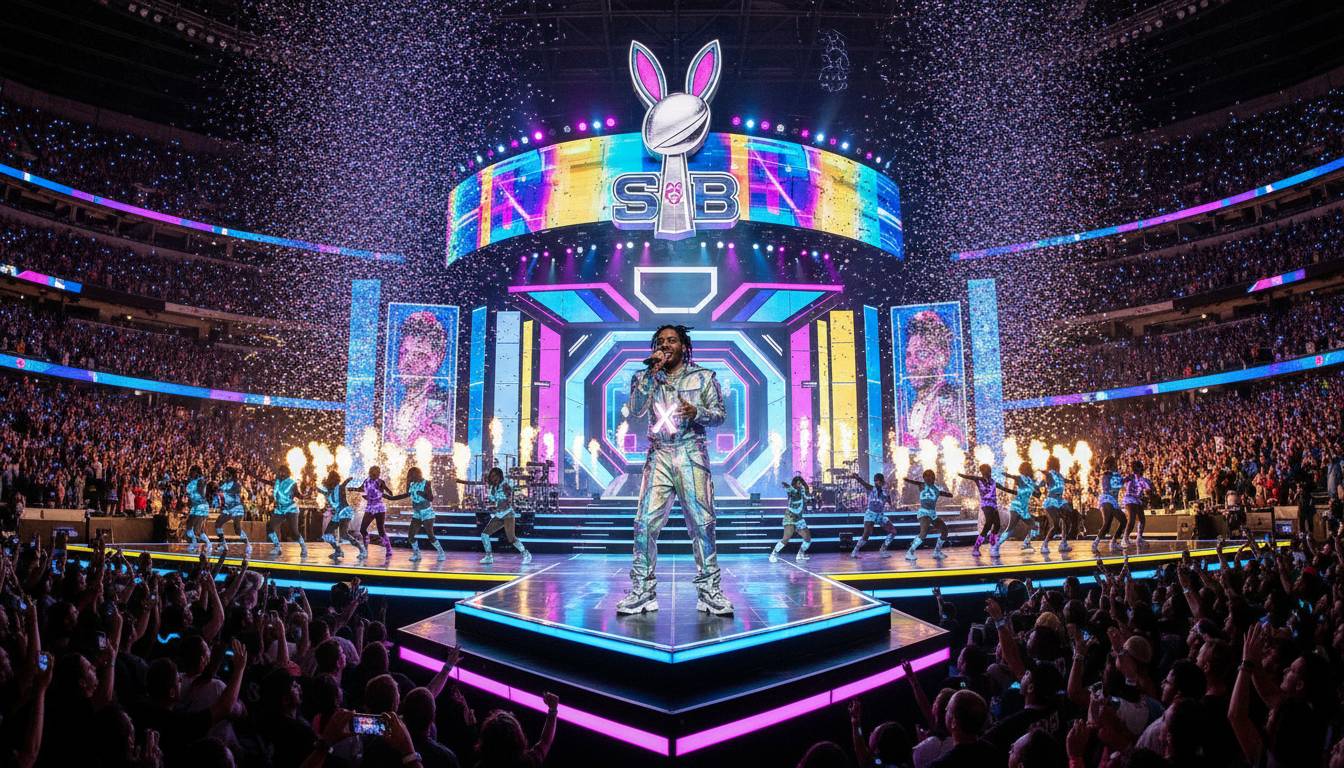
Bad Bunny rocked the Super Bowl halftime show in unforgettable style, blending reggaetón energy with slick visuals and star-studded cameos. He delivered a dynamic, culturally rich performance that stood out for its creativity, diversity, and raw excitement.
Pulsating Opening: A Bold Statement
The show kicked off with electrifying beats. Bad Bunny emerged under neon lights, immediately setting a high-energy tone. The stage design merged modern minimalism with tropical flair—vivid colors, bold patterns, and dynamic lighting. It felt fresh, yet deeply connected to his Puerto Rican roots.
From the first notes, the performance grabbed attention. The choreography blended street-style moves with traditional Latin dance. It was evident from the start that this wasn’t just a concert—it was a visual narrative. Beyond hype, he was making a statement: Latin music commands a global stage.
Highlight Tracks That Defined the Night
Several songs resonated hardest with viewers:
- “Callaíta” infused the moment with nostalgia and his signature understated swagger.
- “Yonaguni” brought a sultry, intimate energy that contrasted sharply with bouncy pop numbers.
- Medley magic—transitions between hits flowed naturally, keeping the momentum steady.
These selections showed range. They balanced party anthems with introspective tracks. It wasn’t just about spectacle—it was about storytelling through music, a real attention to pacing and emotion.
Stagecraft and Visual Storytelling
The visuals worked hard to amplify the music. Giant LED screens pulsed with rhythmic color shifts. Background dancers wore streetwear with pops of neon. Smoke, strobe lights, and confetti—used sparingly and strategically—peaked at key moments. It never overshadowed the music; it supported it.
This production felt high-end yet human. There were rough edges in the choreography that somehow added authenticity. It didn’t feel overproduced. Instead, it felt real, live, immediate. The audience connected with the rawness.
Surprise Guests and Cultural Moments
A Super Bowl halftime show is perfectly primed for surprise moments, and this one delivered:
- A cameo from a renowned Latin pop star lit up the crowd and added depth.
- A touch of Spanish-language banter gave a brief, intimate connection with fans at home.
- Traditional Latin percussion subtly joined in—an ode to heritage.
These felt like genuine moments, not forced star power. They rooted the show in cultural pride and genuine collaboration. That unpredictability made the experience feel alive and inclusive.
Tone & Flow: Raw Energy Meets Refined Rhythm
What stood out most was the performance’s pacing—high-octane bursts of energy balanced with smoother, sensual breaks. Just when the audience might feel the rush fading, a quiet chorus slipped in, pulling everything back together in a way that felt cohesive.
This back-and-forth rhythm reflected Bad Bunny’s flair—he flirts with aggression and introspection within the same breath. It was this contrast that made the halftime show stick in your mind, not just for a beat, but for the story it told.
“He merged pulsing reggaetón energy with stripped-down authenticity—never letting the visuals eclipse the music.”
That line nails it: authenticity with production polish. It wasn’t flashy for the sake of attention—it was curated.
What Made This Stand Out Among Halftimes
- It leaned into cultural storytelling without apology.
- The setlist cut across moods and tempos, not favoring continuous bangers over emotional chapters.
- Visuals supported, not overshadowed.
- Guest moments felt organic.
- Raw edges made it feel lived-in, not podium polished.
This was no mere performance—it was a show of cultural presence, musical versatility, and narrative command.
Strategic Insights for Content Creators
This halftime show offers a blueprint:
- Craft contrast: Alternate high energy peaks with moments of quiet or reflection.
- Prioritize authenticity: Raw, imperfect human moments can connect deeper than polished perfection.
- Reflect cultural roots: Lean into heritage or personal narrative—it binds audiences emotionally.
- Design visuals that support, not distract: Let production enhance, not dominate.
- Drop surprises wisely: Guest appearances work when they feel meaningful, not token.
These principles work beyond performances—think podcasts, live streams, video campaigns.
Conclusion
Bad Bunny’s Super Bowl halftime show wasn’t just a performance—it was a statement. It fused reggaetón’s raw energy with emotional storytelling, visual flair that spoke without shouting, and cultural pride rooted in authenticity. That balance made it memorable—both for casual viewers and devoted fans.
Takeaway: Great content feels alive. It pulses with contrast. It sheds perfection in favor of presence. It marries spectacle with soul.
FAQs
What songs did Bad Bunny perform at the Super Bowl halftime?
He mixed classics like “Callaíta” and “Yonaguni” with a medley of hits, balancing high-energy tracks with slower, introspective moments to play the full emotional range.
Did the visuals overpower the music?
Not at all. The visuals underlined the melody and mood. LED displays, lighting, and smoke added impact without stealing the spotlight from the performance.
Were guest appearances actually meaningful?
Yes—when they happened, they felt earned. Cameos from fellow Latin artists and subtle nods to cultural roots added depth, not distraction.
What made the performance feel authentic?
Deliberate imperfections: unpolished choreography, brief ad-libs, and spontaneous energy. Those raw elements grounded the spectacle in real human presence.
Can these insights help content creators?
Definitely. Using contrast, cultural storytelling, authenticity, visual support, and surprise creates richer, more engaging content—across media formats.
Why does this halftime show matter beyond the stage?
It showed how cultural identity and genre-blending can dominate mainstream platforms. It proved storytelling—wrapped in a vibrant production—can connect across genres and audiences.

















Leave a comment