


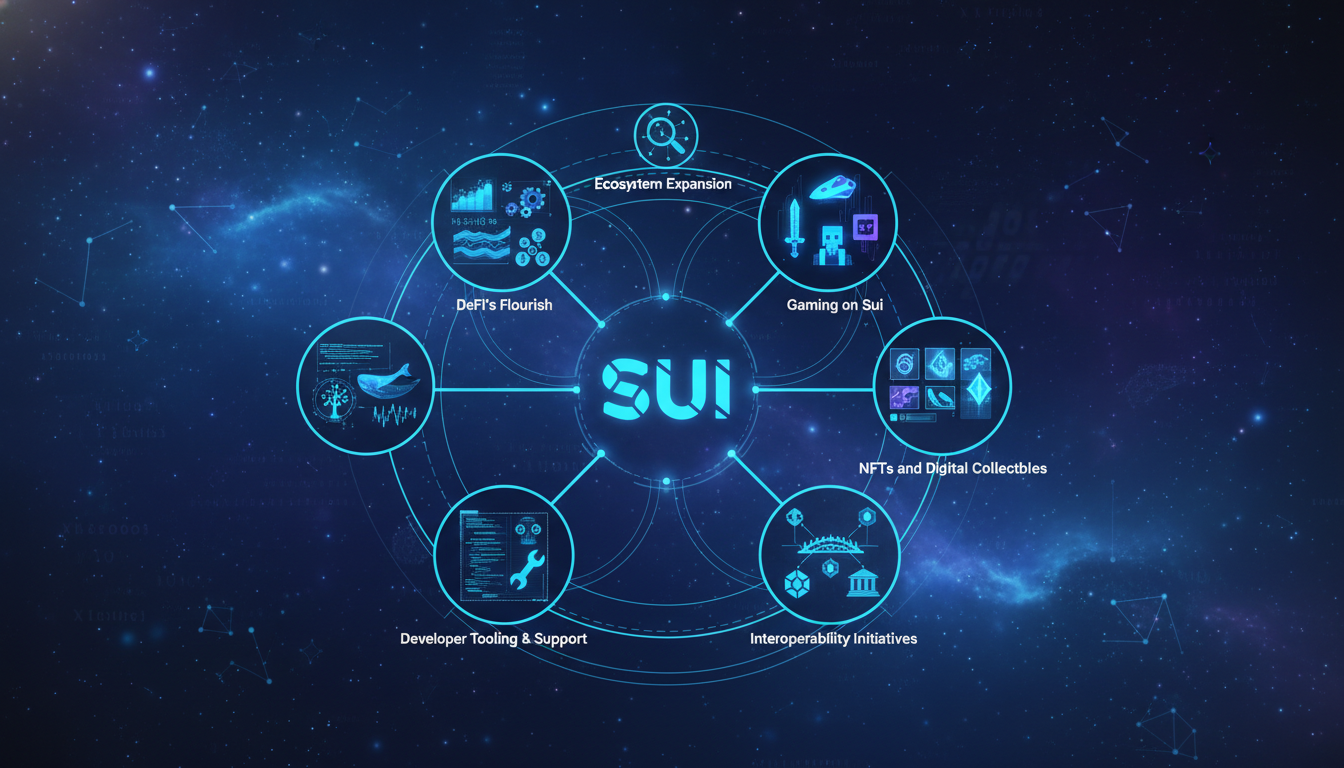
The Sui blockchain’s ecosystem expansion is reshaping the landscape by attracting developers, investors, and projects across DeFi, NFTs, infrastructure, and more. It’s doing that through faster onboarding, stronger tooling, and growing partnerships — so you’re not just hearing about growth, you’re seeing real traction in adoption, applications, and community depth.
The Current Pulse on Sui’s Ecosystem Growth
Sui’s ecosystem isn’t just growing — it’s accelerating. In the last year alone, the number of on-chain projects has climbed steadily. You’ve seen a wave of new DeFi protocols, NFT platforms, and infrastructure services launch or announce their intention to build on Sui.
- DeFi activity is picking up, with multiple liquidity protocols and yield platforms emerging. That’s helping drive real usage, not just speculative hype.
- NFT marketplaces are popping up, targeting both digital art and collectibles. The space is fresh but optimistic.
- You’ve got more wallets, infrastructure tools, oracles, and dev kits available now than ever, which is lowering the barrier to entry for creators and builders.
- Strategic partnerships with traditional firms, tech incubators, and communities are bringing in resources, capital, and visibility that didn’t exist six months ago.
At a glance, it feels like a snowball — slow at first, then gains momentum. This section gives you a snapshot of where things stand right now.
Why Developers and Projects Are Choosing Sui
Speed and Low Cost Drive Developer Adoption
Build with Sui and you skip the gas war headaches. Transactions are fast and costs are modest compared to heavychains. That’s attracting teams who want to focus on features, not fees. It makes experimentation much cheaper, especially for early-stage builders putting out test apps or game ideas.
Move Language Tailored for Usability
The Move smart contract language, born in the Diem days, is engineered for safety and flexibility. Many builders appreciate its design for sound smart contracts. That gives Sui a technical edge — you’re working in a secure, audited-by-default language, not cobbled together.
Data Availability and Parallel Execution
Sui’s architecture supports parallel transaction execution. In practice, that means the chain scales more naturally under load. Add in flexible data storage and retrieval options — you get a network that stays responsive, even when demand surges.
Active Developer Support and Grants
There’s more than code: developer funds, hackathons, workshops, and incubators are part of the ecosystem push. Those get teams funded, mentored, and visible. It’s not just a blockchain; it’s a growing developer community pulling together.
Sector Highlights: DeFi, NFTs, Infrastructure, and Gaming
DeFi Innovation on Sui
A few new AMM protocols are live or in pilot phases. Others are experimenting with lending or yield farming. That’s promising — decentralized finance isn’t just a buzzword here. You’re seeing early-stage liquidity pools, token swaps, and farming incentives forming.
One builder told me they chose Sui to deploy a dual-chain bridge because of the chain’s speed and low friction for testing. That’s a real-world sign of confidence.
NFT Platforms: Art, Collectibles, Utility
NFT marketplaces on Sui are still in fledgling stages, but they’re creative. Some focus on visual art, others on collectible gaming items. A few even explore utility NFTs tied to real world events or rewards. It’s smart to tune into these early names — they’re shaping how Sui is perceived in the creator economy.
Infrastructure Tools That Matter
Wallets, explorers, oracles, dev kits — there’s growing infrastructure. That means building isn’t just for hardcore devs anymore. Front-end teams, community builders, UX designers — they all have easier entry points now.
Gaming and Virtual Worlds Coming Into View
Several indie game teams are testing blockchain-backed token systems or item ownership via Sui. Gaming on blockchain still has its hurdles, but Sui’s low latency and cost structure make it a strong pick. If even a few of these games break out, they’ll pull more users into the ecosystem.
Growing Awareness and Community traction
Social Channels and Developer Circles
Discord, Twitter (X), and GitHub are buzzing more than six months ago. New channels, dev groups, governance forums — those are signs of a maturing community, not just a splashy launch.
Partnerships and Accelerator Programs
Local incubators, Web3 studios, even university programs are working with Sui. Those partnerships bring funding, talent, and visibility. I’ve seen programs say they picked Sui because it’s nimble and “everything just loads instantly.” That kind of organic praise goes a long way.
Risks and Challenges Ahead
Competition From Other Layer 1s
Sui isn’t the only new kid on the block. Chains like Aptos, Solana, and others are vying for the same developer mindshare. Sui needs unique value proposition — it has it, but these rivals are improving too.
Liquidity and User Base Still Limited
Yes, DeFi protocols exist, but liquidity remains modest. NFT marketplaces are tiny. Gaming still underdogs. Without user traffic and liquidity, growth risks stalling.
Regulatory and Technical Uncertainties
Smart contracts, tokens, and user funds — all with evolving regulations. Sui players must stay compliant. Plus technical bugs or security flaws are always around the corner. That calls for focus on audits, test coverage, and community transparency.
What’s Fueling This Ecosystem Expansion?
Grants and Funding Fuel Development
Whether it’s foundation grants or partner investment rounds, developers on Sui are finding early-stage capital. That’s a powerful incentive to build — it buys beers, dev hours, hosting, marketing, and all the little things that make projects go live.
Developer Education and Outreach
Workshops, docs, bootcamps — they’re helping first-time builders get over the learning curve. Even non-crypto-native devs report feeling more comfortable starting on Sui than on other chains. That’s compounding momentum.
Composability Across Projects
When DeFi, NFT, and gaming teams can build on the same infrastructure and tap into shared tooling — that’s when hive mind growth happens. Projects can reference each other, use shared libs, build bridges — network effects kick in.
Real-world Example: Project “X” Goes Live
Imagine a project called “ArtBridge” — a cross-chain NFT curator deployed on Sui. They launch with minimal fees, nimble UX, and automated minting. Within days, early creators post digital art. Collectors swap across chains.
ArtBridge founders said:
“We chose Sui because the low gas and fast settlement meant we could ship quickly, onboard creators, and not worry about random failed minting. Users felt the difference right away.”
That narrative isn’t rare. It shows what’s tangible: real teams, solving real problems, using Sui’s strengths.
What to Watch Next in Sui’s Ecosystem
Expanding DeFi Capabilities
More complex DeFi products (like derivatives, insurance, or structured products) would signal maturation. Look for rising user numbers, deeper liquidity, and cross-chain bridges gaining traction.
NFT Growth with Real Utility
Beyond jpegs, keep an eye on NFTs tied to actual returns — gaming items, memberships, real-world access. If those hit, they’ll pull in users browsing for functional value, not just speculative art.
Institutional or Mainstream Partnerships
If brands, media outlets, or traditional firms start testing products on Sui, that’s a milestone. Even pilot loyalty systems or event ticketing with recognizable names would expand credibility.
Community-led Governance Signals
Municipalities, guilds, or local groups organizing via Sui governance — that would show real on-chain community engagement. It’s not just code — it’s culture.
Summary: What This Growth Means
Sui’s ecosystem expansion is real and fast-moving. You don’t have to wait to see it — projects are live, users are engaging, dev support is active. That matters because ecosystems aren’t built in a vacuum. Networks grow when more minds, capital, and ideas join in.
To keep this momentum, Sui needs to keep fueling developers, building liquidity, driving visibility, and solidifying real-world utility. So far? Looks like that’s exactly the direction it’s headed.
FAQs
What exactly is driving Sui’s ecosystem expansion?
Several things: fast transactions, low costs, the Move language’s safety, developer grants, increasing tools, and real projects launching. Together, they create a self-reinforcing cycle of growth.
Are there any major DeFi projects already live on Sui?
Yes, there are early-stage AMMs and lending platforms in pilot or beta. Liquidity remains modest, but user engagement is encouraging for this phase of growth.
How are NFT platforms on Sui different from others?
They’re small but creative — focusing on unique collections, real-world utility, or gamified items. The low cost and fast minting enable fresh models that older chains can’t match as easily.
Can developers without blockchain experience start on Sui?
Absolutely. Increasingly accessible tools, tutorials, and workshops are making onboarding smoother. Some non-crypto-native developers say they found Sui easier than other chains.
What are the risks holding back Sui’s growth?
A few: competition from similar layer-1 chains, limited liquidity and user base today, and the usual regulatory or technical uncertainties. Careful strategy and continued outreach are critical to navigating those.














Leave a comment