


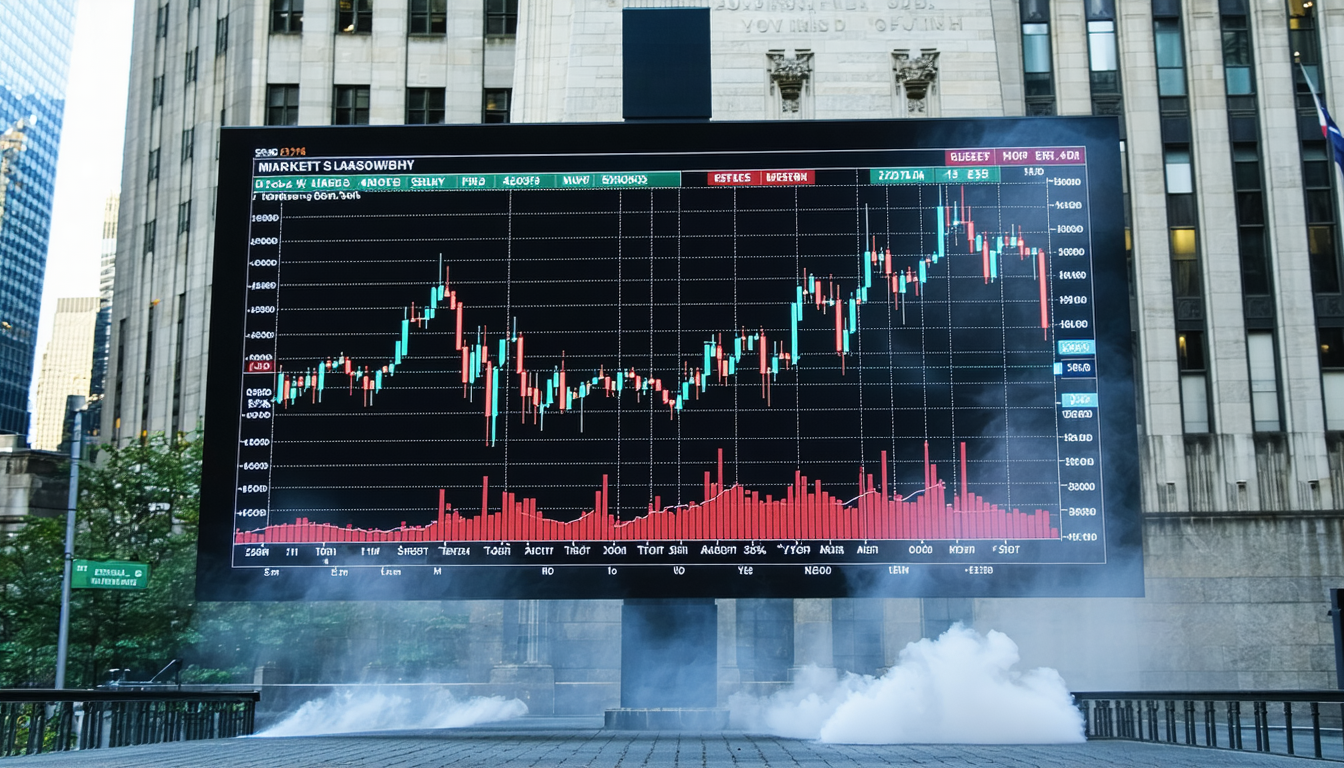
So, the markets are tumbling and everyone’s going, “Why is the market crashing?” It’s a question on nearly every investor’s mind these days—and understandably so. Stock prices can fluctuate, sure, but when multiple factors converge, they can spark serious downturns. Let’s unpack the most pressing reasons behind this recent market slide, weaving together expert views, real-time developments, and historical context with both clarity and a touch of conversational flair—because markets might be chaotic, but our analysis doesn’t have to be.
Macroeconomic Tensions and Policy Uncertainty
Tariffs, Trade War Fears, and Political Drama
The swift decline in stocks isn’t happening in a vacuum. On January 20, 2026, the U.S. markets plunged dramatically after President Trump’s shock threats of tariffs on NATO-aligned European nations, especially tied to his Greenland annexation push. This hit megacap tech hard—stocks like Nvidia, Tesla, Amazon, and Alphabet dropped between 3.4% and 4.4%, dragging the S&P 500 down roughly 2.1%—its worst day since October 2025 . These straight-from-the-headlines shocks turned up the dial on geopolitical risk, destabilizing investor confidence across the board.
On top of that, continued trade tensions with Canada, Mexico, and China have become a persistent headache. Tariff escalations continue to cloud global supply chains and consumer pricing alike . It’s a powerful reminder that political maneuvering can quickly ripple through global markets.
Inflation, Interest Rates, and Fed Uncertainty
Adding fuel to the fire is the specter of persistent inflation. Despite some gains, inflation remains well above the Fed’s 2% target, leading to elevated bond yields and rising borrowing costs . Analysts point out that if inflation continues unchecked, the Federal Reserve might have to reverse course and resume tightening—exactly when markets had started to hope for rate cuts .
Compounding this is the uncertainty around Federal Reserve leadership. With Jerome Powell’s term ending in May 2026 and a new chair appointment looming—including the possibility of Kevin Hassett stepping in—markets are jittery about the future direction of monetary policy .
Bubble-like Valuations and the AI Breakdown
Elevated Valuations and Bubble Warnings
Valuation metrics are flashing danger signs. The Shiller CAPE ratio, a long-trusted crash indicator, has soared to nearly 41—second only to the dot-com peak on record—suggesting markets are severely overheated . Whenever this ratio exceeds 30 historically, significant corrections have followed. So, it’s not hype to say valuations alone could be setting the stage for turbulence.
AI Mania Under Pressure
Meanwhile, the AI frenzy that powered market euphoria is showing cracks. Analysts at Capital Economics warn that a sharp rise in equity issuance by AI-heavy firms echoes patterns seen before the dot-com bust and the 2007 peak—clues that bubbles may be deflating . Erik Gordon from the University of Michigan even likened the current AI “bubble” to Jupiter in scale, warning that massive overinvestment and speculative fervor could trigger something worse than the dot-com crash .
Adding to that, GMO cautions that an influx of mega tech IPOs—think OpenAI, Anthropic, SpaceX—could overload supply, prompting fund reallocations away from existing equities and further weakening market prices. Their estimate is telling: even a 1% market cap rise from IPOs might prompt a 7.5% drop in broader market valuations .
Debt is another dark cloud overhead. The rapid buildup of debt to fuel AI infrastructure—estimated to exceed $1 trillion by 2028—raises added risk layers with margin calls and leverage potential in play .
Sentiment Shifts and Crash Triggers
Investor Psychology and Risk-Off Behavior
Sentiment matters—a lot. Frequent jumps into safe-haven assets amid tumbling markets show investors are growing skittish. U.S. stock futures fell sharply following a weekend crash in gold, silver, and Bitcoin—signaling a broader “risk-off” pivot . That ripple effect shows how stress in one asset class can trigger broader flight to safety.
Nithin Kamath—the founder of Zerodha—issued a stark warning that equity markets, much like gold and silver, are vulnerable to sudden collapses akin to 2008’s meltdown . And Andrew Ross Sorkin’s comparison of today’s market exuberance to the pre-1929 Roaring Twenties adds another dose of caution, highlighting speculative excess and lax safeguards .
Real-Time Setbacks: Earnings & Sector Rotation
Even giants aren’t immune. Microsoft’s earnings revealed ballooning AI infrastructure costs and slowing cloud growth. The result? A 10–12% single-day stock drop—the second worst in U.S. history—dragging down tech-heavy indices as investor appetite for AI began cooling . Other tech names like ServiceNow and Atlassian followed suit, showcasing how shifts in growth narratives can quickly deflate valuations.
Yet, not everything is collapsing. Travel, retail, and even defense sectors saw rallies—Southwest Airlines and Royal Caribbean jumped ~19% on optimistic projections, while gold and copper hit highs amid worsening geopolitical tensions . This defensive rotation underlines a classic pattern: as tech falters, investors seek stability and yield.
Conclusion
There’s no single villain behind the market crash. Rather, it’s an intricate tangle of macroeconomic stress, bubbling valuations, speculative excess, and investor sentiment shifts. Tariff threats and geopolitical disorder destabilize supply chains. Inflation and Fed policy uncertainty stir doubts. AI-related exuberance, leveraged debt, and IPO oversupply threaten to crack the euphoria. And when sentiment flips, it can snowball fast.
Yet, history teaches that markets are cyclical. Recognizing the confluence of risks—and the warning signs—can position us not just to navigate, but to adapt.
FAQs
Q: Could the AI bubble really lead to a crash worse than the dot‑com era?
It’s not impossible. Experts compare today’s AI valuation extremes to late-1990s tech mania. If earnings fail to match hype—or leverage becomes untenable—that analogy could turn soberingly real .
Q: How significant are the Greenland tariff threats for markets?
Quite significant. The sudden announcement triggered the sharpest U.S. market declines since late 2025, cutting the S&P 500 by roughly 2.1% in one day and showcasing how geopolitical risk can spook even robust bull markets .
Q: What does a Shiller CAPE of ~41 imply? Is this something to worry about?
Yes—a CAPE ratio above 30 historically precedes major corrections, and a reading near 41 is almost unheard of. It suggests stocks are priced rich relative to long-term earnings, raising the odds of a significant pullback .
Q: Can defensive sectors shield portfolios during crashes?
Absolutely. Especially when growth falters, investors flock to defensive areas like utilities, consumer staples, and airlines. These often offer stability and dividends that cushion broader market volatility .
Q: Is Fed leadership change a red flag for markets?
Yes. With Powell’s term ending soon and candidates like Kevin Hassett being considered, uncertainty about future policy direction adds jitteriness. Markets hate uncertainty—especially regarding rates amid inflationary pressure .
Q: Are rising equity issuances by AI firms a warning sign?
Indeed. Elevated equity offerings without sufficient demand have historically indicated bubble bursts. If IPO supply outstrips investor appetite—especially from AI-heavy firms—it could precipitate broader valuation declines .



















Leave a comment