


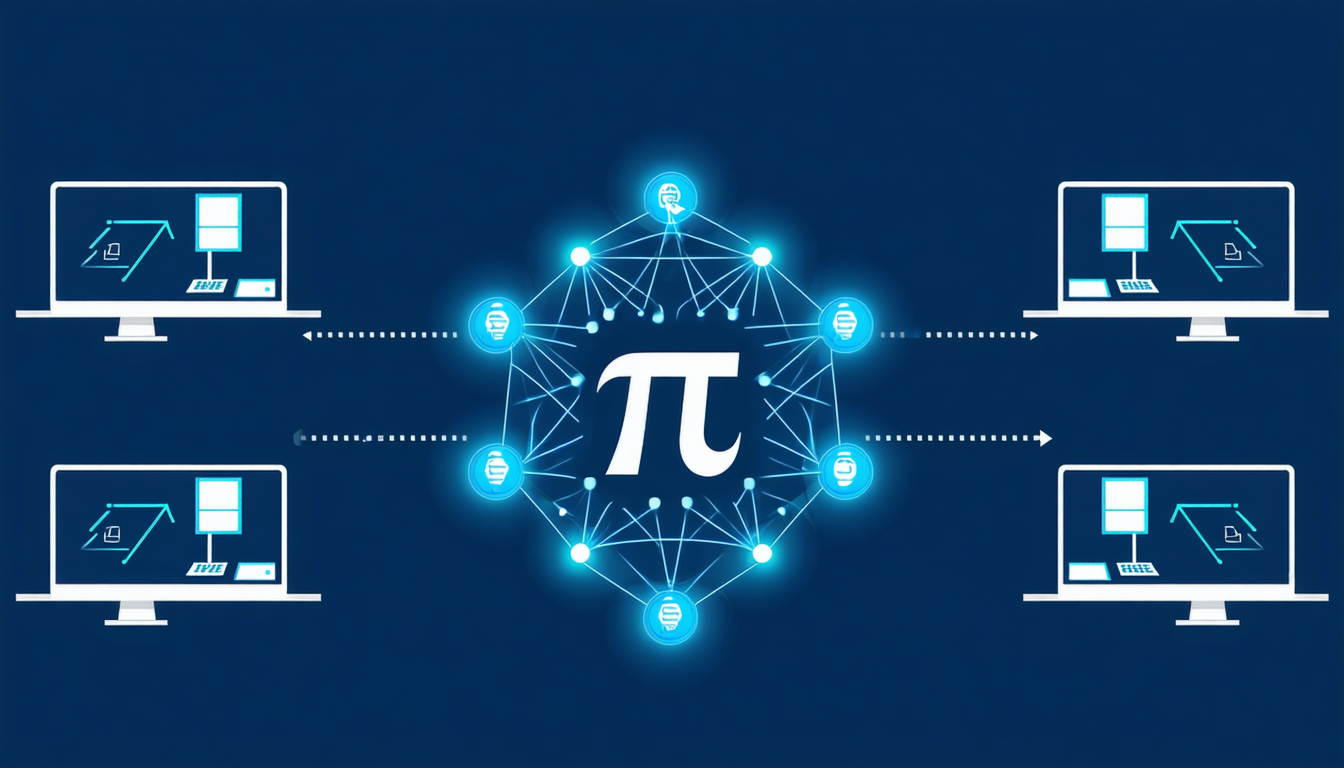
A curious blend of mobile accessibility, trust-based consensus, and community-driven design, Pi Network casts itself as a more accessible crypto alternative. Here’s the lowdown—warts, quirks, and all.
What Is Pi Network and Its Vision
Pi Network, launched on Pi Day , was created by Stanford PhDs who envisioned bringing cryptocurrency to everyday people—no fancy hardware or geeky setups required. It positions itself as “the first digital currency you can mine on your phone,” powered by an app that runs lightly on battery and is simple to use . It’s designed to be inclusive, aiming to build a friendlier, more distributed crypto ecosystem for Web3 .
The goal seems democratic: let users earn Pi by checking in daily, confirm trust via security circles, and eventually use Pi in real-world apps and marketplaces . But there’s more nuance to unpack.
How Pi Network Claims to Work
Mobile Mining Made Simple
Instead of resource-intensive operations like Bitcoin, Pi relies on mobile “mining.” You tap a button every 24 hours, and—boom—you earn Pi. It’s made to feel like mining but is really closer to a reward for consistent app interaction .
Trust Circles and Consensus
Pi doesn’t rely on solving complex hashes. Instead, it uses a trust-graph-based mechanism: the Stellar Consensus Protocol, where users build “Security Circles” of trusted people. This network of mutual trust helps validate activity and throttle fake or bot accounts, without draining battery life or raising your electricity bill .
Roles in the Ecosystem
To keep the system running, there are distinct roles:
- Pioneers – daily tap-miners.
- Contributors – those who build security circles.
- Ambassadors – who invite others.
- Node Operators – who run the blockchain backbone on computers .
The Transition to Real Value
Pi entered its “Enclosed Mainnet” in December 2021, meaning transfers required KYC. The Open Mainnet launched on February 20, 2025—allowing Pi to be traded on exchanges like OKX, MEXC, and Bitget, with external connectivity enabled . Tokenomics include a 100 billion total cap—65% for community mining, 20% for the core team, 10% ecosystem, and 5% liquidity .
Real-World Reception—The Doubts and Critiques
Accessibility vs. Substance
Sure, it’s accessible: no miners, no fan noise, just a daily tap. But critics say it’s closer to a gamified voucher system than “mining.” You’re not validating blocks; you’re just proving you’re a human—and inviting others to tap along too .
Data, Ads, and Skepticism
Some users accuse Pi of being a data-harvesting exercise, since the app can show ads, collect KYC data, and rely on referral loops. It begs the question: are you mining Pi—or mining data? .
MLM Comparisons
The incentive structure can feel pyramid-esque: invite someone, boost your earning rate; they invite others, you earn more. Not a financial investment in the classic sense, but a referral heavy model that raises red flags for some .
Transparency and Security Concerns
Despite the rise to Open Mainnet, concerns remain about code transparency, central control, and data security, especially given the KYC data centralized servers hold. Additionally, with limited real-world utility so far, some warn Pi risks being a digital souvenir more than a functional currency .
Navigating the Pros and Cons
| Pros | Cons |
|——|——|
| Highly accessible—tap to earn from a smartphone. | No real mining happening; more app check-in than blockchain work. |
| Low energy/battery usage. | Referral-heavy growth model feels MLM-like. |
| Mobile-first Web3 appeal. | Skepticism over utility and transparent governance. |
| Live Open Mainnet and exchange listings. | Data collection and centralized control raise privacy alarms. |
“What makes Pi unique is its attempt to solve cryptocurrency’s biggest hurdles—user engagement and energy efficiency—through a socially rooted, mobile-first architecture.” — Blockchain educator and industry analyst
That quote nails the ambition, though the execution is still a work in progress.
Where Things Stand Now—and What to Watch Next
Pi has reached tangible landmarks: Open Mainnet, exchange trading, and a large user base reportedly in the tens of millions . Its tokenomics are transparent in their distribution goals. Yet, the value of Pi remains volatile, real utility is sparse, and trust issues linger due to the centralized handling of data and governance.
To watch:
- Expansion of Pi-powered apps with real use cases.
- Adoption by merchants or platforms accepting Pi in day-to-day commerce.
- Improved transparency from the core team—open-source code, verifiable audits.
- Strengthened data protection and user privacy assurance.
Conclusion
Pi Network is an intriguing experiment in democratizing crypto: a smartphone-first, trust-based system promising accessibility and low barriers. Yet most of its shine is still aspirational. While its Open Mainnet brings Pi closer to being a tradable asset, critical questions around transparency, value, and security remain unresolved.
For now, it’s fair to participate with curiosity, but with caution—and realistic expectations: Pi is evolving, but it’s not yet the everyday currency it aspires to be.
FAQs
What exactly is mobile “mining” in Pi Network?
It’s more a daily check-in than real mining. Tapping once in the app—no complex computations, just proving presence .
How do Security Circles work?
Users select trusted contacts to form small, overlapping groups. This trust graph helps validate activity and reduce fake accounts via Stellar’s consensus mechanism .
When did Pi become tradable on exchanges?
Pi transitioned to Open Mainnet on February 20, 2025, after which trading on exchanges like OKX, MEXC, and Bitget became possible for KYC-verified users .
Is Pi Network a scam or pyramid scheme?
Not in the strict financial sense—you’re not investing money. But referral incentives and skepticism around its data practices raise concerns about whether it’s overly promotional or privacy-intrusive .
What’s needed for Pi to become truly useful?
Wider adoption in commerce, transparent governance, open-source auditing, and strong user privacy safeguards are needed before Pi can be relied on as a functional currency.
Should I trust Pi with personal data?
Only if you accept the privacy trade-offs. KYC is necessary for full participation, and some concerns exist around centralized data handling. Proceed with deliberate caution.




















Leave a comment