



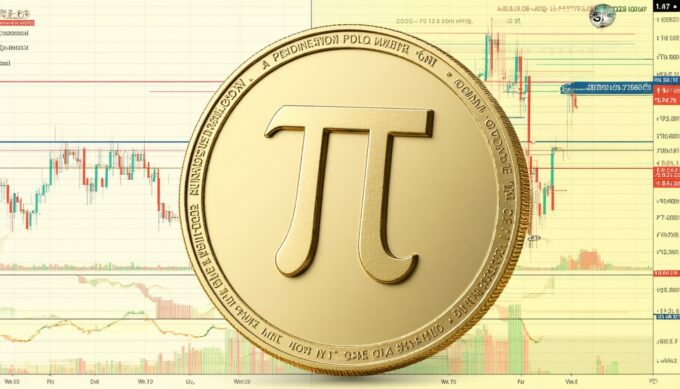
Get the latest on Pi Network price: key value updates, real-time market trends, and insightful predictions. Explore what drives Pi’s potential as the project approaches open mainnet.
Contextualizing the Pi Network: A Newcomer Shaping Crypto Conversation
Pi Network has emerged as one of the most talked-about blockchain projects, largely because of its unique approach to cryptocurrency mining via mobile devices. Since its 2019 launch, Pi has attracted a vast global community, with tens of millions of users mining on smartphones. Yet, as Pi Network garners attention and curiosity, central questions persist: What is the value of the Pi coin, how is its price determined, and what does the future hold for this ambitious project?
Unlike established cryptocurrencies, Pi Network’s official coin (PI) is not yet tradable on open markets, and its “Enclosed Mainnet” status means external price discovery is constrained. Still, users and observers attempt to estimate its worth, and the project’s transition toward an “open mainnet” could fundamentally alter its market perception.
Understanding Pi Network Price: Availability, Speculation, and Barriers
For most cryptocurrencies, price is dictated by the interplay of trading activity, demand-supply forces, and liquidity across exchanges. However, Pi Network’s situation remains unique.
The Current State of PI Coin Value
As of mid-2024, PI does not have an official market price established by recognized centralized exchanges (CEXs) such as Binance or Coinbase. Instead, its “Enclosed Mainnet” stage restricts coin movement to internal peer-to-peer transfers within the Pi app ecosystem. No open trading against fiat or cryptocurrencies—like Bitcoin or Ethereum—is permitted.
Despite these constraints, speculative activity persists in fringe markets and OTC (over-the-counter) negotiations. Some online communities report notional exchange rates, often ranging from a few dollars to higher double-digit values per PI. These unofficial values should be approached with skepticism due to lack of regulatory oversight and substantial counterparty risk.
“PI’s current value is speculative and not established through transparent, trusted markets. Prospective users and investors should be cautious about any price claims until official exchange support is announced.”
— Blockchain Industry Analyst
Factors Influencing PI’s Perceived Price
Beyond speculative trading, several elements shape the evolving conversation surrounding Pi’s value:
- Ecosystem Development: The number of apps, services, and merchants supporting PI within the Pi ecosystem directly influences its perceived utility.
- User Base Growth: With a reported tens of millions of engaged miners, Pi’s network effect could create robust demand if real utility develops.
- Mainnet Transition Timeline: The anticipated transition from “Enclosed” to “Open” mainnet—when users can trade PI freely—stands as the defining catalyst for authentic price discovery.
As these factors change, so too does PI’s theoretical worth.
Market Trends: Comparing Pi Network and Peer Cryptocurrencies
The popularity of Pi Network fits into a broader phenomenon: community-driven, application-focused cryptocurrencies that gain early traction through accessibility.
Social Mining and Network Effects
Pi Network’s “social mining” model differentiates it from energy-intensive blockchains like Bitcoin. Instead of competition, Pi rewards user engagement, team-building, and community verification. This approach enabled rapid user growth, reminiscent of early airdrop campaigns or viral meme coins, but with a stronger emphasis on utility applications.
Evolution of Utility Tokens and Real-World Use
Real-world usage is a major signal of long-term value. The rise and sustained attention on tokens like Solana (SOL) and Polygon (MATIC) demonstrate that thriving ecosystems underpin meaningful market capitalizations. For PI, creating tangible merchant integrations, apps, and digital services—rather than hype alone—will be critical.
Numerous projects have struggled to convert large user counts into lasting value, as seen with earlier “mobile mining” coins like Electroneum. Whether Pi can avoid these pitfalls depends on execution as mainnet access expands.
Regulatory Environment and Market Entry
The regulatory environment adds complexity. Crypto exchanges tend to list new assets only after thorough due diligence on compliance, security, and legal standing. Without clarity on KYC processes and network decentralization, major listing remains a guarded possibility.
Predictions: Scenarios for PI Coin Value After Open Mainnet
Forecasting Pi Network’s future price involves addressing both technical and behavioral uncertainties.
Key Variables Impacting Price Post-Launch
When PI becomes tradable, potential outcomes could vary:
-
Initial Hype Spike
Like many anticipated listings, a surge driven by pent-up demand and media attention is likely. Early exchange rates—if accessible—could be erratic and volatile. -
Supply Pressure and Sell-Offs
Millions of users may attempt to cash out, increasing supply and potentially dampening price unless offset by inbound demand from external investors. -
Utility-Driven Support
If Pi successfully launches well-adopted dApps or fosters active merchant participation, real economic activity could stabilize prices beyond the speculative phase.
Risks and Uncertainties
Several risks could temper optimism:
– Lack of Exchange Listings: If major exchanges delay or deny listings, price discovery will remain fragmented and unreliable.
– Regulatory Scrutiny: Authorities in large markets may examine Pi for compliance, especially regarding KYC/AML standards.
– Project Execution: Delays or unmet promises risk eroding community trust, a critical asset in any social-driven crypto.
A Measured Outlook
While bold prediction headlines circulate online, responsible observers emphasize the need for patience.
“Pi Network faces a classic crypto test: Can it convert massive user numbers and social buzz into real value once assets are freely tradable? Only a proven open ecosystem and clear listings will settle the question.”
— Crypto Market Commentator
Conclusion: What Matters Most for Pi Network Price
Despite ongoing speculation, the authentic price of PI remains to be seen. As the Pi Network approaches its open mainnet milestone, fundamentals—network activity, ecosystem growth, and broad exchange access—will ultimately define its valuation.
For existing Pi community members, the best strategy is to stay informed, exercise caution with unofficial trading venues, and closely follow announcements from Pi Network’s core team. For those looking at Pi as a potential investment, awaiting official market listing and rigorous due diligence is prudent.
FAQs
What is the current market price of Pi Network (PI) coin?
Currently, PI does not have an official market price, as it isn’t listed on major cryptocurrency exchanges. Any price information circulating is based on informal or peer-to-peer trades, which are not regulated.
Can I sell or trade my PI coins now?
At present, Pi Network coin transfers are restricted to the app’s internal ecosystem. Trading PI for fiat or other cryptocurrencies on public exchanges is not supported as of the enclosed mainnet phase.
When will Pi Network open for trading on exchanges?
There is no confirmed date for PI’s listing on major exchanges. The core team suggests open mainnet—and exchange trading—will come after further development and compliance steps.
How is Pi’s value being determined before open trading?
Any quoted prices are speculative, based on private negotiations or unregulated platforms. Real price discovery will only occur via public order books and liquid markets once trading is officially enabled.
What factors will influence Pi Network’s real-market price?
Key drivers include demand for PI within its ecosystem, the breadth of real-world use cases, network participation rates, and how quickly major exchanges list and support the coin.
Could the initial PI price be volatile after mainnet launch?
Yes, early trading phases for new cryptocurrencies often see high volatility, especially when market supply and demand dynamics are untested. Caution is advised for anyone considering early trades.


















Leave a comment