


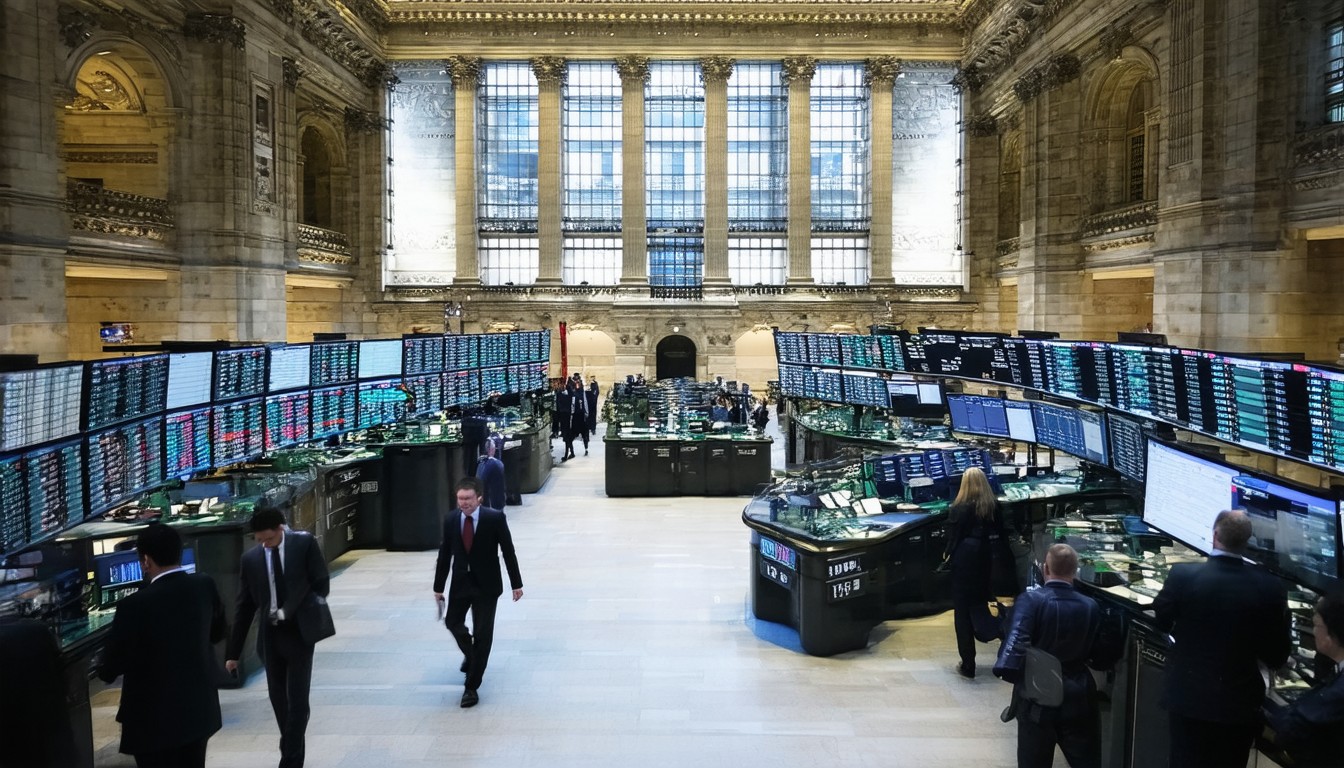
For over three centuries, the London Stock Exchange (LSE) has stood as a cornerstone of international capital markets. As one of the world’s oldest and most influential exchanges, the LSE not only powers the UK’s financial engine but also serves as a barometer for global market sentiment. Every trading day, billions of pounds flow through its sophisticated platforms, impacting investors, companies, and economies around the globe. Understanding live share prices, the stream of market news, and evolving trading patterns on the LSE provides invaluable insights for seasoned professionals and retail investors alike.
The Structure of the London Stock Exchange
Main Market and AIM: Two Pathways for Companies
The LSE hosts a rich ecosystem, primarily split between its flagship Main Market and the Alternative Investment Market (AIM). The Main Market lists some of the largest and most established firms—ranging from FTSE 100 giants like HSBC and Unilever to major international corporations. It is renowned for rigorous regulatory standards, attracting institutional investors seeking stability and high liquidity.
AIM, on the other hand, was established in 1995 as a growth platform for smaller and high-potential companies. Its relatively flexible requirements make it attractive to startups looking for capital and visibility.
“London’s dual-market structure allows for both mature multinationals and ambitious young companies to thrive, supporting continuous innovation across sectors,” says an LSE markets analyst.
This nuanced offering positions the LSE as a prime venue for companies across their entire growth lifecycle.
Trading Hours, Systems, and Global Reach
Trading on the LSE runs from 8:00 a.m. to 4:30 p.m. GMT, with pre- and post-market sessions providing further flexibility. Its electronic order book, SETS, ensures efficient and transparent matching of orders, enabling real-time price discovery. Importantly, international companies—from Europe, North America, Asia, and beyond—opt for secondary listings in London, underlining the city’s global financial magnetism.
Live Share Prices: Real-Time Insights and Volatility
Interpreting Real-Time Price Data
At its core, the London Stock Exchange is a marketplace for shares, bonds, ETFs, and other securities. Live share prices, updated instantaneously, reflect the ebb and flow of market sentiment and are critical for:
- Investors: Making buy/sell decisions on the fly
- Traders: Exploiting intra-day volatility and market inefficiencies
- Companies: Assessing the effectiveness of investor relations and news flow
Numerous platforms—including the LSE’s official website, Bloomberg, and Reuters—offer up-to-the-second share price feeds. For example, during major political events or earnings season, high trading volumes can lead to rapid price swings, as witnessed during post-Brexit market reactions or Central Bank rate announcements.
Factors Influencing LSE Share Prices
Share prices on the LSE are influenced by a complex interplay of:
- Corporate results: Earnings reports, dividend changes, and guidance
- Economic indicators: Inflation, GDP growth, and employment data
- Market sentiment: Global events, policy changes, and investor psychology
- Sector trends: Shifts in energy prices or technology adoption
During the COVID-19 pandemic, for instance, healthcare and technology stocks listed in London saw significant gains, while travel and leisure suffered steep declines. Such swings highlight the interconnectedness of the exchange with macroeconomic trends.
Market News: Tracking Developments and Anticipating Moves
Real-Time News Flow
Market news is the lifeblood of the LSE. From regulatory updates by the Financial Conduct Authority (FCA) to company press releases and global economic data, a constant stream of information shapes trading behavior.
Major newswire services such as Reuters, Bloomberg, and the LSE’s Regulatory News Service (RNS) provide timely announcements, ensuring transparency and facilitating immediate market reactions. Investors monitor corporate actions, mergers and acquisitions, and legislation affecting sectors like banking or mining.
Notable Market Moments
- Brexit Referendum (2016): The FTSE 100 initially fell sharply but rebounded in the ensuing weeks, displaying the resilience and international exposure of the index.
- COVID-19 Outbreak (2020): Volatility surged, with trading volumes peaking as investors sought safety and recalibrated portfolios.
- ESG Integration: Recent years have seen environmental, social, and governance factors significantly impact share prices, with sustainable investment themes gaining traction.
Trading Insights: Modern Strategies and New Frontiers
Evolving Trading Patterns
Technological advancements have transformed trading on the LSE. Algorithmic and high-frequency trading (HFT) now account for a large share of daily volume. Retail investors also play a growing role, leveraging digital platforms and fractional shares.
Key Trading Approaches
- Long-term investing: Favoring blue-chip stocks and steady dividends (e.g., British American Tobacco, Diageo)
- Momentum trading: Chasing price and volume patterns in trending stocks, often during news releases
- Value investing: Targeting undervalued shares among the FTSE 250 or AIM
Amid market volatility, tools like stop-loss orders, limit orders, and ETF diversification have gained popularity for managing risk.
Regulatory and Market Reforms
The LSE continues to adapt its rules and infrastructure. Reforms to boost IPO activity, streamline disclosure, and enhance liquidity keep London competitive with New York, Hong Kong, and other global exchanges. Notably, London has increased its appeal to tech IPOs and SPAC listings in recent years.
“London remains agile by continually updating listing standards to attract high-growth companies in fintech, biotech, and clean energy,” notes a senior advisor at a global investment bank.
Real-World Example: AstraZeneca and the Power of News
AstraZeneca, a pharmaceutical giant listed on the LSE, exemplifies the market impact of live news. In 2021, rapid updates on the company’s COVID-19 vaccine trials led to dramatic share price moves, massive trading volumes, and real-time shifts in investor sentiment. This scenario highlighted the critical importance of monitoring both live prices and headline news for informed trading decisions.
Conclusion
The London Stock Exchange sits at the crossroads of history and modern finance. Its diverse range of companies, real-time price transparency, and dynamic trading ecosystem make it an indispensable platform for global investors. As technology and regulation continue to evolve, the LSE’s commitment to innovation and trust ensures it remains a leading force in the future of capital markets. For traders and investors, proactive engagement with live share prices, timely news, and thoughtful trading strategies is essential for success on this storied exchange.
FAQs
What are the official trading hours for the London Stock Exchange?
The main trading session runs from 8:00 a.m. to 4:30 p.m. GMT, with additional pre-market and post-market sessions extending trading opportunities for investors.
How can investors access live LSE share prices?
Live share prices are available through the LSE’s website, major financial news platforms like Bloomberg and Reuters, as well as various brokerage apps providing real-time data.
What makes AIM different from the Main Market on the LSE?
AIM is tailored for smaller, fast-growing companies with more flexible requirements, while the Main Market features larger, established firms under stricter regulations.
Why do global companies choose to list on the LSE?
The LSE attracts international firms thanks to its deep pools of capital, robust regulatory framework, and gateway to European and global investors.
What factors can cause significant price moves in LSE-listed shares?
Company earnings, economic announcements, regulatory decisions, and major world events can all lead to rapid price changes in LSE securities.
How has technology changed trading on the London Stock Exchange?
Advances like electronic trading platforms and algorithms have increased speed, efficiency, and access, transforming both institutional and retail participation on the LSE.


















Leave a comment