


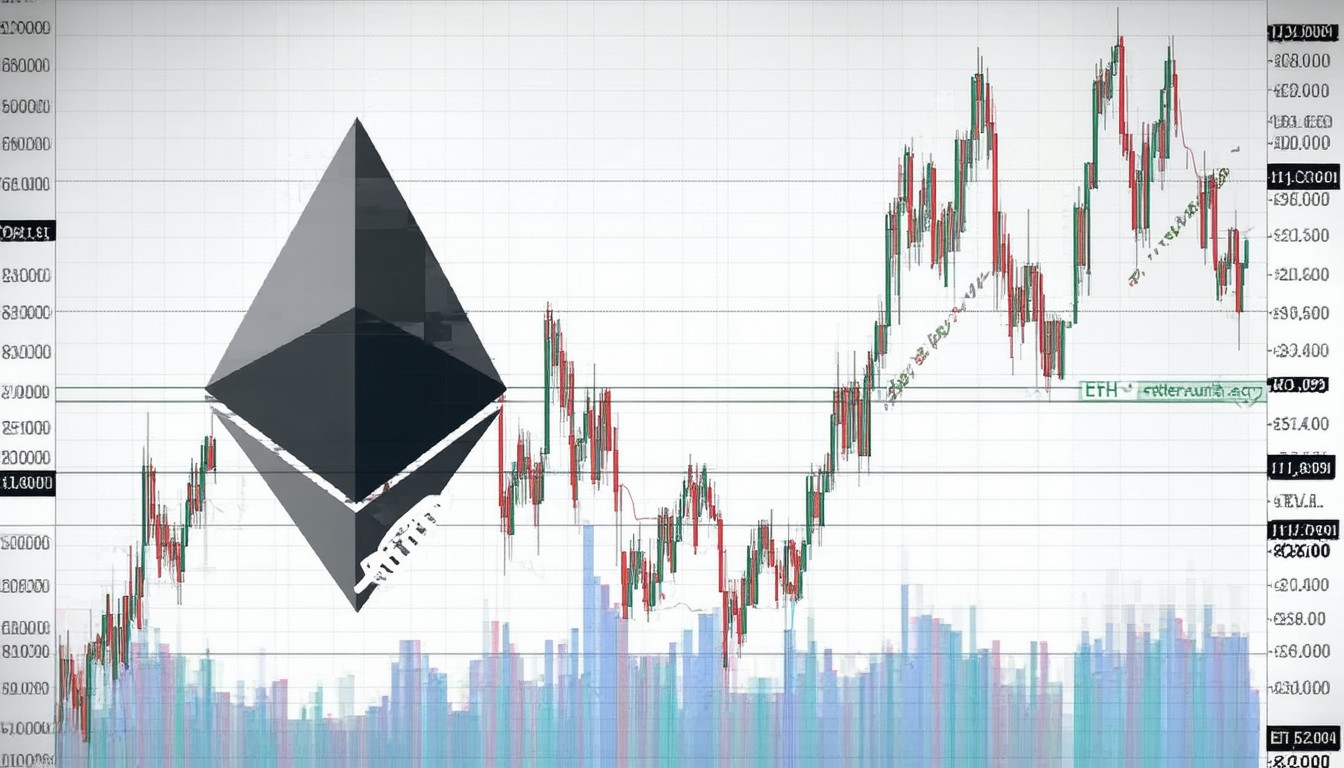
Ethereum has long held its position as the second-largest cryptocurrency by market capitalization, standing just behind Bitcoin. As blockchain technology matures and decentralized finance (DeFi) expands, many investors, technologists, and financial analysts have sharpened their focus on the future of Ethereum. Today, “Ethereum price forecast” is one of the most searched phrases in the crypto space—reflecting both the coin’s volatility and its strategic significance in shaping the Web3 ecosystem. With regulatory developments, technology upgrades, and shifting market sentiment all influencing ETH’s valuation, forecasting its price involves both art and science.
Recent Performance and Volatility: Setting the Context
Understanding Ethereum’s Price Swings
Ethereum has experienced periods of dramatic price swings, influenced by crypto market cycles, macroeconomic conditions, and major protocol updates. Over the past year, ETH’s price has moved within wide bands—often surging during periods of positive sentiment such as the rollout of “The Merge” (Ethereum’s shift to proof-of-stake in 2022), and retreating in the face of broader risk-off moves in financial markets.
For example, Ethereum reached an all-time high above $4,800 in November 2021, only to correct sharply during the cryptocurrency bear market that followed. By 2023, prices had stabilized in a lower range, although daily volatility remained a hallmark of ETH trading.
Comparing ETH to Other Major Cryptocurrencies
Unlike some rivals, Ethereum offers a robust smart contract platform supporting thousands of decentralized applications. This utility—and the transition to more energy-efficient operations—has set it apart from other coins such as Bitcoin (which primarily serves as a store of value) and alternative layer-1 blockchains. Still, performance comparisons fluctuate;
- ETH often moves in tandem with Bitcoin but at a greater amplitude.
- During periods of developer innovation (e.g., during the rise of NFTs and DeFi), ETH frequently outpaced other top assets.
Core Drivers of Ethereum’s Price Forecast
Technology Upgrades and Network Development
The technology roadmap is central to any Ethereum price forecast. Major milestones, like “The Merge” and subsequent scalability upgrades (“sharding”), are seen as potential catalysts that could drive price appreciation by enabling higher throughput and reducing transaction fees.
“Ethereum’s transition to proof-of-stake demonstrated the network’s adaptability, fundamentally altering supply dynamics and energy consumption,” notes blockchain analyst Laura Shin. “But Ethereum’s future price action depends on continued real-world utility and sustained developer engagement.”
The impact of these upgrades is tangible. After the shift to proof-of-stake, Ethereum reduced its energy consumption by over 99%. This move has attracted positive attention from ESG-focused institutional investors, potentially broadening ETH’s appeal.
Macro Trends and Regulatory Shifts
Broader economic indicators—ranging from interest rates to inflation commentary—routinely impact crypto sentiment. For Ethereum, however, the regulatory climate is particularly influential. Ongoing debates in the US and EU regarding the classification of Ether (as a security versus a commodity) have introduced waves of uncertainty, affecting both short-term volatility and long-term adoption prospects.
In practice, clearer regulations could unlock significant institutional demand, while overly restrictive policies might dampen enthusiasm or force innovation to friendlier jurisdictions.
Demand from DeFi, NFTs, and Layer 2 Solutions
Ethereum remains the backbone for most DeFi protocols and high-profile NFT collections. The total value locked (TVL) across DeFi projects built on Ethereum consistently sets the benchmark for the industry. Growth in NFT trading, decentralized exchanges, and new Layer 2 scaling solutions (like Optimism and Arbitrum) continue to generate unprecedented network activity.
- Surges in gas fees during spikes of activity sometimes spark criticism, but also underline Ethereum’s centrality in emerging digital economies.
- Ongoing adoption by mainstream players—such as global banks using Ethereum for settlement—fuels both utility and speculative demand.
Market Forecasts: What Are Analysts Predicting for ETH?
Short- and Medium-Term Price Predictions
Forecasts for Ethereum’s price in the coming months remain split. Some analysts highlight strong technical support zones and believe further upgrades—such as Proto-Danksharding—could set the stage for renewed rallies. Others urge caution, emphasizing that macro headwinds (such as potential rate hikes or regulatory crackdowns) could limit upside potential.
- Support and resistance levels noted by technical analysts often circle around round-number psychological thresholds such as $2,500, $3,000, and $4,000.
- Many long-term bulls argue that Ethereum’s reduced supply growth post-Merge creates a deflationary dynamic, supportive of higher prices in robust demand environments.
Longer-Term Outlook: Bullish and Bearish Scenarios
For investors with a multi-year horizon, Ethereum’s price forecast is a function of its ongoing dominance in blockchain application development. If Layer 2 solutions successfully absorb transactional load, ETH could serve as the settlement layer for an expansive decentralized economy, supporting bullish price estimates. Conversely, credible competition from other blockchains, technological stagnation, or regulatory intervention could curb Ethereum’s potential.
Key variables to watch include:
– Developer activity and on-chain metrics (active addresses, transaction throughput)
– Integration with traditional finance (tokenized assets, CBDCs on Ethereum)
– Geopolitical and regulatory shifts
Real-World Examples and Industry Perspectives
Institutional Adoption and Product Innovations
Recent years have seen several blue-chip institutions—such as JPMorgan and Visa—experimenting with Ethereum-based settlement chains and tokenized bonds. Meanwhile, leading DeFi protocols like Uniswap, Aave, and MakerDAO continue to handle billions of dollars in transactions, demonstrating real-world usage beyond mere speculation.
Expert Insights on Navigating Uncertainty
“For serious investors, understanding Ethereum’s ecosystem health is as important as tracking price charts. The protocol upgrades, regulatory signals, and user growth all matter,” emphasizes crypto portfolio manager Alex Krüger.
Such multi-factor analysis helps separate short-lived price action from sustainable growth trends.
Conclusion: Strategy and Uncertainties Ahead
Ethereum’s price forecast remains dependent on a fluid set of technological and market dynamics. As on-chain adoption grows and the technology stack matures with ongoing upgrades, the prospects for ETH remain robust—albeit subject to significant short-term volatility. For investors and businesses, continuous monitoring of both external market signals and network fundamentals is crucial. Diversification and measured risk management are advisable while the regulatory landscape and macroeconomic conditions remain in flux.
FAQs
What factors influence Ethereum’s price the most?
Ethereum’s price is shaped by a blend of technology upgrades, network demand, regulatory changes, and overall crypto market sentiment. Major event-driven catalysts—like major protocol updates or big regulatory decisions—can cause swift price reactions.
How did “The Merge” impact Ethereum’s valuation?
The Merge transformed Ethereum from a proof-of-work to a proof-of-stake system, significantly cutting energy use and altering ETH’s supply dynamics. While it was viewed as positive for the network’s sustainability, its immediate price impact was mixed, reflecting broader market conditions at the time.
Are predictions for Ethereum’s future reliable?
While expert forecasts draw on technical and fundamental analysis, cryptocurrency markets remain highly volatile and are influenced by unpredictable factors. Thus, any forecast should be considered a guideline rather than a guarantee.
What role do NFTs and DeFi play in ETH’s price?
DeFi protocols and NFT activity drive a large share of demand for Ethereum’s network, both boosting transaction volumes and keeping Ethereum central to crypto innovation. This utility helps support ETH’s price, especially during growth cycles in these sectors.
Could regulation decrease Ethereum’s price?
Regulations that restrict access or classify ETH as a security could negatively impact its value. However, clear and supportive regulation has the potential to unlock broader adoption, especially among institutional players.
Is Ethereum’s long-term outlook still positive?
Most analysts continue to view Ethereum as a leading platform for decentralized applications. Its ability to innovate, scale, and attract developer talent will influence whether it can sustain its market position in the coming years.



















Leave a comment