


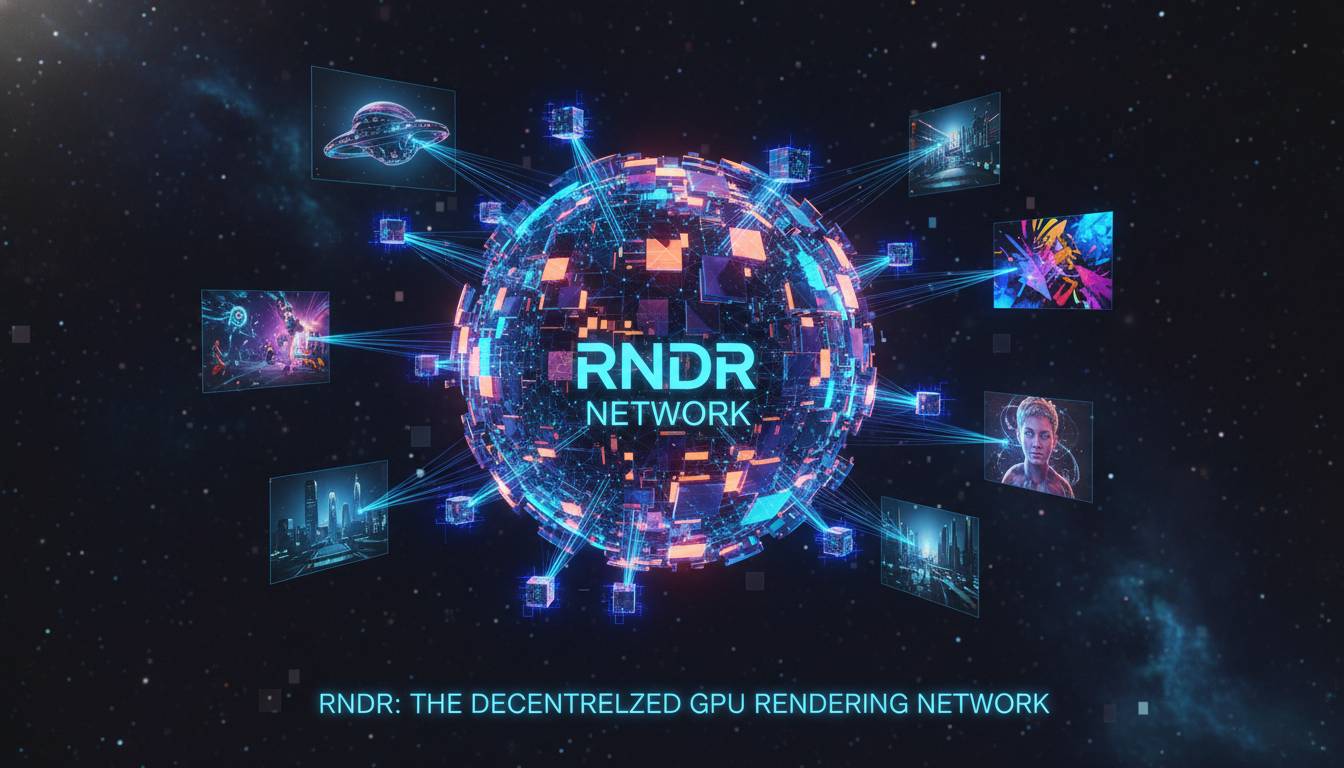
Render has remained one of the more closely watched crypto projects in the decentralized compute segment, especially as demand for GPU power expands across artificial intelligence, 3D graphics, gaming, and digital content creation. For investors searching for Render (RNDR) Price Prediction 2026, 2027 – 2030: Long-Term Forecast and Growth Outlook, the central question is whether the network’s real-world utility can translate into sustained token value over the next several years. The answer depends on adoption, token economics, broader crypto market cycles, and execution in a highly competitive market.
Render, now widely referenced as RENDER after its token migration and rebrand from RNDR, operates as a decentralized GPU marketplace that connects users needing rendering or compute resources with node operators supplying idle GPU capacity. CoinMarketCap notes that the project has migrated from RNDR to RENDER, while Render Network materials state that RNDR is no longer maintained for network use and that major centralized exchanges have migrated to the Solana-based token.
What Render Does and Why It Matters
Render’s investment case starts with utility. The network was built to support distributed GPU rendering, helping creators and developers access compute power without relying entirely on centralized cloud providers. Binance Academy describes Render as a decentralized network that connects users who need rendering services with those who have unused GPUs, with token-based payments coordinating activity across the ecosystem.
That positioning matters because GPU demand has become a structural theme in technology markets. AI inference, model deployment, 3D design, visual effects, virtual production, and immersive media all require substantial compute resources. In theory, a decentralized marketplace can improve utilization of underused hardware while lowering costs for end users. That is one reason Render is often discussed alongside the broader DePIN, or decentralized physical infrastructure, category. Messari’s research on related compute infrastructure highlights how GPU shortages, idle compute, and high public cloud pricing have created room for decentralized alternatives.
For long-term valuation, however, utility alone is not enough. Investors also watch whether network usage grows fast enough to support token demand, whether developers continue building on the platform, and whether Render can defend its niche against centralized hyperscalers and rival decentralized compute projects.
Render (RNDR) Price Prediction 2026, 2027 – 2030: Key Drivers
Any serious Render (RNDR) Price Prediction 2026, 2027 – 2030: Long-Term Forecast and Growth Outlook should focus on drivers rather than certainty. Crypto forecasts are inherently speculative, and no publication can verify future prices as facts. What can be assessed are the variables most likely to influence valuation.
1. Network adoption
If Render expands usage among artists, studios, AI developers, and enterprise users, the token could benefit from stronger transactional demand and improved market confidence. Adoption is the clearest bullish catalyst.
2. Token migration and ecosystem clarity
The shift from RNDR to RENDER has been an important structural change. CoinMarketCap lists the asset as Render with a migration from RNDR, and Render’s own safety documentation says RNDR is no longer maintained by the foundation for network use. That reduces confusion over time, but market participants still need to track exchange support, liquidity, and ticker conventions carefully.
3. Supply metrics
CoinMarketCap currently lists Render with a circulating supply of about 518.7 million tokens, a total supply near 533.5 million, and a maximum supply of roughly 644.2 million. Supply expansion, emissions, and unlock dynamics can affect long-term price performance, especially if demand growth slows.
4. Crypto market cycles
Render does not trade in isolation. Bitcoin liquidity cycles, Federal Reserve policy, ETF-driven capital flows, and risk appetite across digital assets can all shape price action. Even fundamentally strong projects often decline during broad market contractions.
5. Competition
Render competes not only with decentralized compute networks but also with major cloud providers. If centralized GPU pricing falls sharply or enterprise buyers prefer traditional vendors, long-term upside could be capped.
Current Market Snapshot
As of CoinMarketCap’s latest listed data, Render trades around $1.51, with a market capitalization of roughly $783.8 million, 24-hour trading volume near $56.8 million, and a circulating supply of approximately 518.7 million tokens. CoinMarketCap also notes that the asset’s all-time high was recorded under its historical market cycle, though current pricing remains well below prior peak levels.
Those figures matter for forecasting because they frame the scale of upside required for future targets. For example:
- A move from $1.51 to $3 would roughly double market value.
- A move to $5 would imply a market cap in the multi-billion-dollar range, depending on circulating supply at that time.
- A return to prior cycle highs would likely require both project-specific growth and a favorable macro crypto environment.
This is why long-term forecasts should be framed as scenarios rather than promises.
Scenario-Based Forecast for 2026
A balanced Render (RNDR) Price Prediction 2026, 2027 – 2030: Long-Term Forecast and Growth Outlook begins with 2026 because that year may reflect whether the project can convert AI and GPU demand into durable on-chain activity.
Bearish case for 2026
In a weaker scenario, Render faces slower-than-expected adoption, softer crypto market conditions, and pressure from competing compute platforms. In that environment, the token could remain range-bound or revisit lower valuation bands, potentially trading between $1.20 and $2.50.
Base case for 2026
In a more neutral scenario, Render maintains relevance in decentralized GPU infrastructure, benefits from moderate ecosystem growth, and participates in a stable digital asset market. Under that setup, a plausible range is $2.50 to $4.50.
Bullish case for 2026
If AI-related demand accelerates, network usage expands materially, and crypto sentiment improves, Render could re-rate more aggressively. In that case, a $4.50 to $7.00 range becomes conceivable.
These are scenario estimates, not factual future prices. They are based on current market structure, token supply data, and the project’s utility narrative.
Forecast Outlook for 2027 Through 2030
Longer-dated forecasts require even more caution, but they can still be useful when framed around adoption and market structure.
2027 outlook
By 2027, investors will likely judge Render less on narrative and more on measurable throughput, developer traction, and enterprise-grade usage. If the network proves it can support sustained demand for rendering and AI-related workloads, the token may trade in a broader $3.00 to $8.50 range. A weaker execution path could keep it below that band.
2028 outlook
The 2028 outlook may depend heavily on whether decentralized compute becomes a durable category rather than a cyclical theme. If DePIN infrastructure matures and Render remains a leading name, valuation support could strengthen. A broad scenario range of $3.50 to $10.00 is reasonable for long-term modeling.
2029 outlook
By 2029, token value would likely reflect a combination of network utility, treasury and governance credibility, and macro crypto conditions. In a strong market with clear adoption, Render could test $5.00 to $12.00. In a weaker market, it may remain far below those levels.
2030 outlook
For 2030, the widest uncertainty applies. If Render becomes a core decentralized GPU marketplace with meaningful real-world demand, a bullish scenario could place the token in a $6.00 to $15.00 range. If adoption disappoints or the sector consolidates around larger rivals, prices could stay much lower.
Risks That Could Change the Forecast
Long-term crypto forecasts can fail quickly if key assumptions break. The main risks include:
- Execution risk: The network may not scale usage as expected.
- Competitive risk: Centralized cloud providers and rival crypto projects may capture demand.
- Token risk: Supply growth or weak token utility could pressure valuation.
- Regulatory risk: U.S. and global crypto policy could affect exchange access and investor sentiment.
- Market risk: A broad digital asset downturn can overwhelm project fundamentals.
These risks are especially relevant because Render’s valuation is tied not just to technology, but also to liquidity conditions and investor appetite for speculative growth assets.
What Analysts and Investors Should Watch
For readers evaluating Render (RNDR) Price Prediction 2026, 2027 – 2030: Long-Term Forecast and Growth Outlook, several indicators deserve close attention over the next few years:
- Growth in active network usage and completed jobs
- Expansion into AI and inference-related workloads
- Exchange liquidity and post-migration market structure
- Token supply changes and governance decisions
- Partnerships, developer activity, and enterprise adoption
- Relative performance versus other DePIN and compute tokens
According to Render Network guidance, investors should also rely on official announcements for migration and token-related updates, given the continued confusion that can surround RNDR versus RENDER branding.
Conclusion
Render remains one of the more compelling projects in decentralized GPU infrastructure, but its long-term price path is far from guaranteed. The project has a clear utility narrative, exposure to AI and graphics demand, and a recognized position in the DePIN conversation. At the same time, it faces meaningful competition, token-structure questions, and the volatility that defines the broader crypto market.
For investors considering Render (RNDR) Price Prediction 2026, 2027 – 2030: Long-Term Forecast and Growth Outlook, the most credible view is a scenario-based one. If adoption grows and crypto market conditions remain supportive, Render has room to appreciate meaningfully over time. If execution or market conditions weaken, returns could fall well short of bullish expectations. In short, Render offers notable upside potential, but that potential remains closely tied to real usage, not narrative alone.
Frequently Asked Questions
Is RNDR the same as RENDER?
Not exactly. The project has migrated and rebranded from RNDR to RENDER, and official Render materials state that RNDR is no longer maintained for network use, while major exchanges have migrated to the Solana-based token.
What does Render do?
Render is a decentralized GPU network that connects users who need rendering or compute services with providers offering unused GPU capacity. It is designed to support graphics, 3D rendering, and related compute-intensive workloads.
What is the biggest factor in Render’s long-term price outlook?
The biggest factor is adoption. If more creators, developers, and AI-related users rely on the network, token demand and investor confidence may improve over time.
Can Render reach new highs by 2030?
It is possible, but not certain. Reaching new highs would likely require strong network growth, favorable crypto market conditions, and continued relevance in decentralized compute.
Is Render a low-risk investment?
No. Render is a crypto asset and remains highly volatile. Investors face market, execution, regulatory, and competitive risks.
Why is Render often linked to AI themes?
Render is linked to AI because GPU infrastructure is essential for many AI workloads, and decentralized compute networks are increasingly discussed as alternatives or complements to traditional cloud resources.













Leave a comment