



A fresh surge in oil prices is reviving a familiar macroeconomic fear across financial markets: higher energy costs could keep inflation elevated, force the Federal Reserve to delay interest-rate cuts, and pressure risk assets from stocks to cryptocurrencies. For Bitcoin, the stakes are especially high. Analysts and market strategists have increasingly warned that if an oil shock feeds through to inflation and tighter financial conditions, the world’s largest cryptocurrency could face a deep correction, with downside scenarios reaching as much as 45% from current levels.
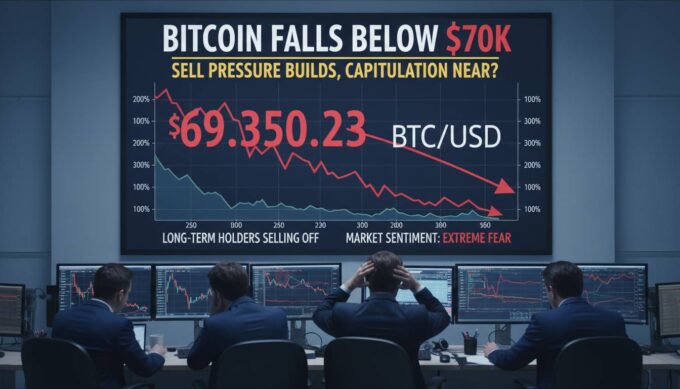
Bitcoin traded near $69,880 on March 6, 2026, according to market data cited by Fortune, while Brent crude recently climbed into the low-$80s after geopolitical disruptions in the Middle East pushed oil sharply higher. At the same time, Federal Reserve officials have continued to stress that policy remains data dependent, with inflation still central to the rate outlook. That combination has sharpened investor focus on whether an energy-driven inflation rebound could derail expectations for easier monetary policy in 2026.
Oil prices jump as markets reassess inflation risk
The immediate catalyst is the move in crude. In recent days, Brent crude rose above $79 and then roughly $83 as conflict-related supply concerns rattled energy markets, while U.S. benchmark WTI also posted a sharp advance. The Associated Press reported that the jump in oil and gasoline prices has renewed concern about inflation and the broader U.S. economic outlook.
That matters because energy prices can quickly affect headline inflation, consumer sentiment, and inflation expectations. While central bankers often focus more heavily on core inflation measures that exclude food and energy, oil shocks still influence the policy debate when they are large enough or persistent enough. Federal Reserve Chair Jerome Powell has previously said policymakers closely monitor oil markets because disruptions have historically played a role in recessions and inflation surges, even if the U.S. economy is now less oil-intensive than it was decades ago.
According to the minutes of the Federal Open Market Committee’s January 27–28, 2026 meeting, participants broadly saw inflation easing under appropriate policy, but they also acknowledged uncertainty around the outlook. Some policymakers favored lowering rates, while others remained more concerned about inflation staying elevated. That split is important because a renewed oil spike could strengthen the case for patience rather than near-term easing.
Why an oil shock could send Bitcoin down 45% if Fed delays cuts
The phrase “oil shock could send bitcoin down 45% if price surge forces fed to delay cuts” reflects a macro chain reaction rather than a direct link between crude and crypto. The logic is straightforward:
- Higher oil prices can lift headline inflation.
- Higher inflation can reduce the Fed’s room to cut rates.
- Higher-for-longer rates can push Treasury yields and the U.S. dollar upward.
- Tighter financial conditions usually weigh on speculative and liquidity-sensitive assets, including Bitcoin.
Bitcoin has often traded as a hybrid asset: part alternative monetary asset, part high-beta risk trade. In periods when liquidity expands and real yields fall, Bitcoin has tended to benefit. When markets price in tighter policy or delayed easing, crypto frequently comes under pressure alongside growth stocks and other risk assets. That does not mean Bitcoin always moves in lockstep with macro variables, but it does mean Fed expectations remain one of the most important drivers of short-term price action. This is an inference based on the interaction between Fed policy expectations, inflation risk, and Bitcoin’s observed sensitivity to broader financial conditions.
A 45% decline from roughly $69,880 would imply a move toward about $38,400. That level would not be unprecedented in Bitcoin’s history. The asset has repeatedly experienced drawdowns of that size or larger during periods of macro stress, tighter liquidity, or market deleveraging. The point of the warning is less about a precise target and more about the scale of downside risk if the market has to rapidly reprice the path of U.S. interest rates.
The Fed’s dilemma: growth support versus inflation control
The Federal Reserve enters March 2026 facing a delicate balance. Minutes from the January meeting show that officials were weighing signs of labor-market softening against the risk that inflation could remain too high for too long. Some participants argued that the policy rate was still meaningfully restrictive and that labor-market downside risks deserved more attention. Others were less comfortable easing too soon.
That debate becomes harder when oil rises quickly. According to Powell’s earlier remarks on oil shocks, higher energy prices now have more mixed effects on the U.S. economy than in the 1970s because the United States is a major producer. Even so, he has also said oil shocks can still lower real household incomes, restrain demand, and complicate the inflation picture.
In practical terms, the Fed does not automatically respond to every move in crude. Policymakers usually want to determine whether an energy spike is temporary or whether it risks feeding into broader price pressures and inflation expectations. If oil stabilizes quickly, the impact on policy may be limited. If it keeps climbing and gasoline prices rise materially, the bar for rate cuts could move higher.
What it means for investors and the crypto market
For crypto investors, the current setup creates a more complex backdrop than a simple bullish or bearish narrative. Bitcoin still has structural supporters who view it as a scarce digital asset and a hedge against long-term fiat debasement. But in the near term, it remains exposed to liquidity conditions, real rates, and shifts in institutional risk appetite.
Several market signals now deserve close attention:
- Brent and WTI crude prices: A sustained move higher would keep inflation concerns alive.
- U.S. gasoline prices: These affect consumers directly and can influence inflation expectations.
- Fed communications: Statements, minutes, and press conferences will shape rate-cut expectations.
- Bitcoin’s correlation with risk assets: If equities weaken on higher-rate fears, crypto may struggle as well. This is an inference drawn from broader market behavior rather than a direct statement from a single source.
The bullish case is that oil prices retreat, inflation remains contained, and the Fed still finds room to ease later in 2026. The bearish case is that energy costs stay elevated long enough to delay cuts, tighten financial conditions, and trigger a broader repricing across speculative assets. In that scenario, the warning that an oil shock could send Bitcoin down 45% if price surge forces Fed to delay cuts would look less like a headline exaggeration and more like a realistic stress test.
Broader significance for U.S. markets
The issue extends beyond crypto. An oil-driven inflation scare would affect equities, bonds, consumer spending, and corporate margins. Higher fuel costs act like a tax on households, while delayed rate cuts can raise borrowing costs across the economy. That is why energy markets are once again central to the outlook for U.S. monetary policy and financial assets.
For Bitcoin, the macro environment may matter as much as crypto-specific developments over the coming weeks. If investors conclude that the Fed must stay restrictive for longer, the asset could face renewed volatility despite its long-term adoption narrative. If inflation fears fade, Bitcoin may regain support from expectations of easier policy and improved liquidity conditions.
Conclusion
The warning that an oil shock could send Bitcoin down 45% if Fed delays cuts captures a real market risk at a moment when energy prices, inflation, and monetary policy are tightly linked. Brent crude has surged into the low-$80s, Bitcoin is trading near $69,880, and the Federal Reserve remains divided over how quickly it can ease policy. If oil prices keep climbing and inflation proves sticky, the path to lower rates could narrow sharply, leaving Bitcoin and other risk assets vulnerable to a significant correction.
Frequently Asked Questions
Why would higher oil prices hurt Bitcoin?
Higher oil prices can push inflation higher, which may cause the Federal Reserve to delay interest-rate cuts. When rates stay higher for longer, liquidity tightens and speculative assets such as Bitcoin often come under pressure.
Is the 45% drop a forecast or a scenario?
It is better understood as a downside scenario or stress case rather than a guaranteed forecast. Bitcoin has a history of large drawdowns, and a sharp repricing of Fed expectations could create that scale of decline.
What is Bitcoin’s price now?
Fortune cited Bitcoin at about $69,879.66 on March 6, 2026. Crypto prices move continuously, so the market level can change quickly.
What are oil prices doing right now?
Recent reports show Brent crude rising from the high-$70s to roughly $83 a barrel this week as geopolitical tensions disrupted energy markets.
Will the Fed definitely delay rate cuts because of oil?
Not necessarily. The Fed will assess whether the oil move is temporary or persistent and whether it feeds into broader inflation. But a sustained energy shock would make cuts harder to justify in the near term.

















Leave a comment