


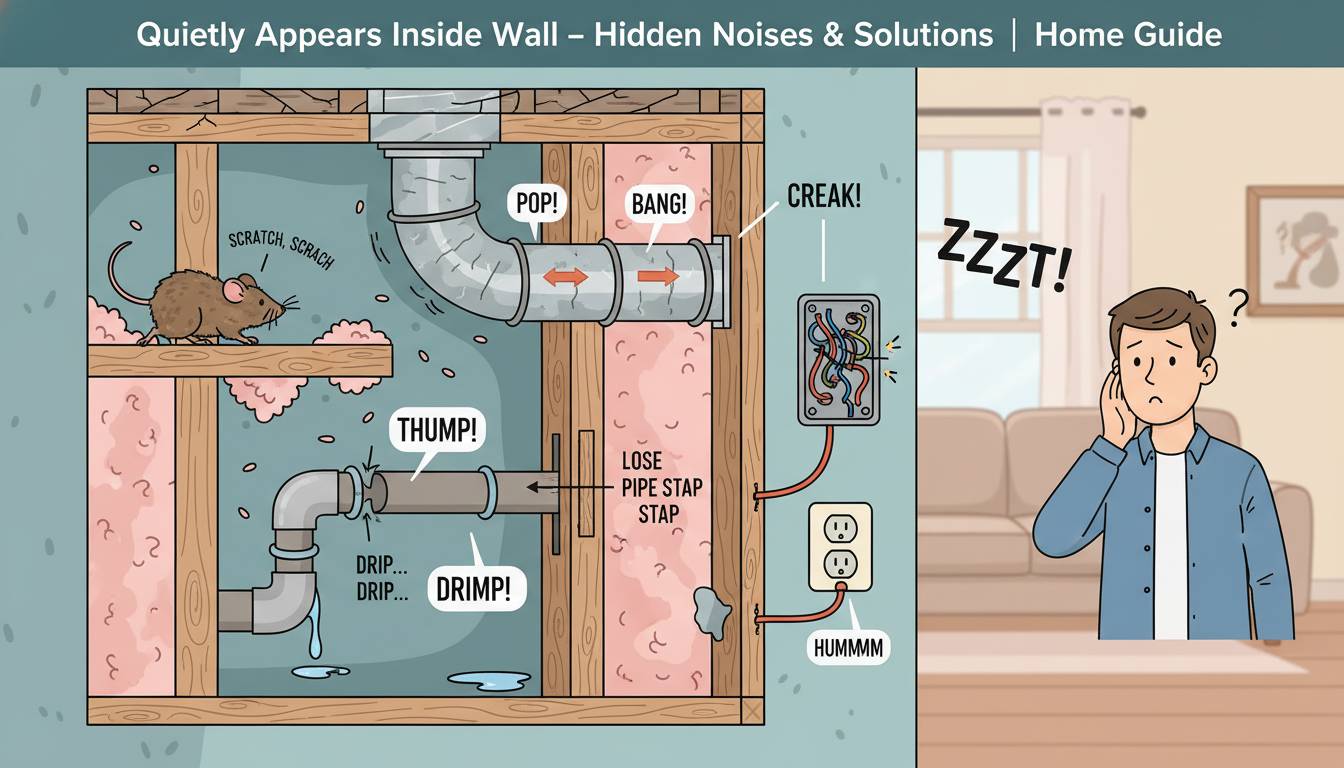
An unsettling sound that quietly appears inside wall spaces can disrupt peace and raise concerns about hidden issues. Whether it’s faint scratching, tapping, or rustling, these noises often signal underlying problems—from pests to structural shifts. This article explores common causes, expert insights, and practical solutions to help homeowners in the U.S. address these mysterious wall sounds effectively.
Common Causes of Noises That Quietly Appear Inside Wall
Pest Activity and Wildlife Intrusion
Many homeowners discover that noises emerging from within walls are caused by pests or wildlife. Rodents such as mice and rats are frequent culprits. Their nocturnal gnawing, scurrying, and nesting can produce scratching or chewing sounds that are particularly noticeable at night .
Insects like termites and carpenter ants also generate subtle clicking or tapping noises as they tunnel through wood . Termites, for instance, may produce a faint clicking as soldier termites bang their mandibles against wood .
Larger animals—squirrels, raccoons, birds—can create rustling, scratching, or chirping sounds, depending on their size and activity patterns .
Structural and Environmental Factors
Not all noises stem from living creatures. Temperature fluctuations cause building materials like wood, drywall, and metal pipes to expand and contract, resulting in creaks, pops, or tapping sounds .
Homes settling over time can also produce audible shifts as framing and foundations adjust, especially in newly constructed or renovated buildings .
HVAC systems and ductwork may vibrate or rattle, transmitting noise through walls and ceilings .
Electrical or Mechanical Sources
Occasionally, clicking or buzzing sounds may originate from electrical components—loose wiring, switches, or circuit breakers—or from appliances and plumbing fixtures interacting with the wall structure .
Expert Insights on Noises That Quietly Appear Inside Wall
According to The Environmental Literacy Council, temperature-induced expansion of metal pipes against wooden studs often causes tapping or clicking sounds as the materials shift .
Grace Built Home Improvement notes that clicking noises may result from loose components, damaged wiring, or normal house settling, in addition to pest activity .
Colonial Pest Control highlights that carpenter ants produce a distinctive scratching or “crinkling” noise as they excavate wood for nesting galleries—often compared to the sound of cereal being poured into milk .
Impact on Homeowners and Property
- Stress and Sleep Disruption: Persistent noises, especially at night, can disturb sleep and cause anxiety. Homeowners often report frustration when the source remains elusive.
- Potential Damage: Rodents may chew through wiring, increasing fire risk. Termites and carpenter ants can weaken structural wood. Early detection is crucial to prevent costly repairs .
- Health and Safety Concerns: Insect infestations or trapped wildlife can introduce allergens, odors, or disease risks. Prompt resolution is essential for maintaining a safe living environment.
Practical Solutions for Noises That Quietly Appear Inside Wall
Identification and Inspection
- Track Timing and Patterns: Note when noises occur—day or night, seasonal changes, or HVAC cycles—to narrow down possible causes .
- Visual Clues: Look for droppings, frass, mud tubes, or damaged wood near walls. Pets showing interest in specific areas may also indicate hidden activity .
- Professional Assessment: Pest control or wildlife removal experts can use tools like endoscopes or thermal imaging to inspect wall cavities safely.
Remediation Steps
- Pest Removal: Engage licensed professionals to humanely remove animals or treat infestations. Avoid sealing entry points while pests are still inside to prevent trapping them .
- Structural Repairs: Secure loose pipes, add insulation, or install resilient channels to reduce noise transmission .
- Soundproofing Enhancements: Apply mass-loaded vinyl, acoustic foam, or soundproof paint to dampen noise. Use furniture or bookshelves as additional sound buffers .
Future Considerations and Prevention
- Regular Maintenance: Schedule routine pest inspections and structural assessments to catch issues early.
- Home Design Improvements: During renovations, consider using sound-dampening materials and sealing potential entry points for pests.
- Monitoring Systems: Install motion sensors or acoustic monitors in areas prone to noise to detect early signs of intrusion or structural movement.
Conclusion
When a sound quietly appears inside wall, it can be more than just a nuisance—it may signal pests, structural shifts, or mechanical issues. Identifying the source through careful observation and professional help is the first step. Addressing the root cause, whether through pest removal, repairs, or soundproofing, protects both your peace of mind and your property. Proactive maintenance and thoughtful design can prevent future disturbances and ensure a quiet, safe home environment.
Frequently Asked Questions
What are the most common causes of noises inside walls?
Rodents, insects (like termites and carpenter ants), wildlife (birds, squirrels), temperature-related expansion, house settling, and mechanical or electrical components can all produce noises inside walls.
How can I tell if the noise is from pests or structural issues?
Pest noises often include scratching, gnawing, or rustling and may occur at specific times (e.g., night for rodents). Structural noises like creaks or pops often coincide with temperature changes or HVAC cycles.
Should I seal holes immediately if I hear noises?
No. Sealing holes while pests are inside can trap them, leading to odor or further damage. First, identify and remove the source, then seal entry points.
When should I call a professional?
If noises persist, you notice signs of damage (e.g., frass, droppings, hollow wood), or suspect wildlife, contact licensed pest control or wildlife removal experts.
Can soundproofing eliminate these noises?
Soundproofing can reduce noise transmission but won’t address the underlying cause. Use it alongside remediation efforts like pest removal or structural repairs.
What preventive measures can I take?
Seal gaps around pipes and vents, maintain your home’s exterior, schedule regular inspections, and use sound-dampening materials during renovations to minimize future noise issues.






















Leave a comment