


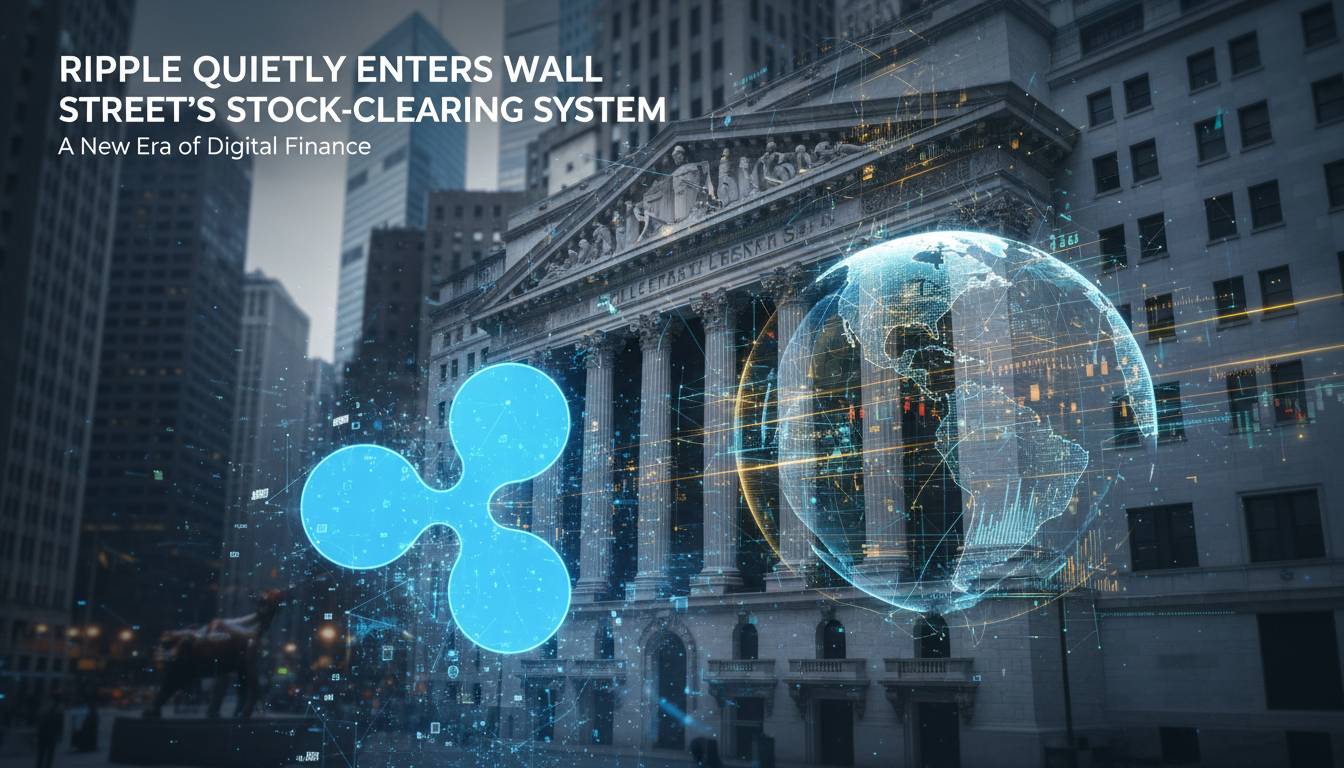
Ripple has taken a significant, low‑key step toward deeper integration with traditional finance. On March 2, 2026, the Depository Trust & Clearing Corporation’s (DTCC) National Securities Clearing Corporation (NSCC) updated its MPID directory to include “Hidden Road Partners CIV US LLC,” a Ripple‑owned entity, under the OTC column. A day later, Ripple announced that its payments platform now offers end‑to‑end services—from collection to payout—for both fiat and stablecoin flows. These developments mark a strategic push to align Ripple’s infrastructure with institutional workflows.
A Quiet Entry into Wall Street’s Clearing Infrastructure
Ripple’s appearance in the NSCC directory is more than symbolic. The NSCC underpins U.S. post‑trade clearing, handling trillions in annual transactions. By listing Hidden Road (now Ripple Prime), Ripple gains visibility within the systems that route trades and manage counterparties—an essential step for institutional adoption.
This move follows Ripple’s October 2025 acquisition of Hidden Road for approximately $1.25 billion, rebranded as Ripple Prime. The acquisition granted Ripple access to prime brokerage infrastructure, enabling services across FX, digital assets, derivatives, and fixed income.
Expanding the XRP Payments Platform
On March 3, Ripple unveiled enhancements to its payments platform, now offering a unified workflow for collecting, holding, exchanging, and paying out in both fiat and stablecoins. The expansion leverages two recent acquisitions: Palisade, which strengthens custody and treasury automation, and Rail, which powers virtual accounts and collections.
Ripple emphasized its global footprint: Ripple Payments is live in over 60 markets, has processed more than $100 billion in volume, and holds over 75 licenses and money transmitter registrations—including a New York Department of Financial Services trust charter.
Significance for Institutions and XRP
These developments signal Ripple’s intent to embed itself within institutional workflows without forcing XRP to be the centerpiece. Instead, XRP becomes an optional rail within a broader suite that includes fiat and stablecoins. This optionality is key for operations and risk teams who resist being locked into a single asset.
Ripple’s strategy addresses a critical gap: while on‑chain stablecoin activity is substantial, actual stablecoin‑based payments remain a tiny fraction of global volume—estimated at just 0.02%. By packaging payments, custody, and virtual accounts into one platform, Ripple aims to reduce friction and make stablecoin usage more practical for corporate treasuries.
What to Watch Next
- Will Ripple Prime’s NSCC listing translate into meaningful integration with clearing workflows? Visibility is only the first step; operational connectivity matters.
- Will enterprises adopt Ripple’s end‑to‑end payments platform at scale? Key indicators include uptake of virtual accounts, stablecoin payouts, and repeatable cross‑border corridors.
- Will XRP Ledger (XRPL) settlement gain traction alongside fiat and stablecoins? XRPL’s 3–5 second settlement speed could offer liquidity efficiencies, but adoption depends on institutional comfort and use cases.
Conclusion
Ripple’s dual announcements in early March 2026—its NSCC directory listing and expanded payments platform—represent a strategic push to bridge crypto infrastructure with traditional finance. By embedding Ripple Prime into Wall Street’s clearing system and offering a comprehensive payments workflow, Ripple positions itself as an operations‑first provider. XRP, while not mandatory, becomes a viable tool within a broader institutional toolkit. The coming months will reveal whether these structural moves translate into tangible adoption and whether Ripple can shift from crypto fringe to financial infrastructure.
Frequently Asked Questions
What does Ripple’s NSCC listing mean?
It means a Ripple‑owned entity, Hidden Road Partners (now Ripple Prime), is now recognized in the DTCC’s NSCC directory, giving it visibility within U.S. post‑trade clearing infrastructure.
Does this mean DTCC is using XRP Ledger for settlement?
No. The listing does not imply DTCC has adopted blockchain settlement. It simply shows Ripple Prime is now part of the directory used for routing and clearing trades.
What is included in Ripple’s expanded payments platform?
Ripple now offers end‑to‑end services—collection, custody, exchange, and payout—for both fiat and stablecoins. This is powered by acquisitions of Palisade (custody/treasury) and Rail (virtual accounts/collections).
How does XRP fit into Ripple’s institutional strategy?
XRP is positioned as an optional settlement rail within a broader platform that includes fiat and stablecoins. Its fast settlement time (3–5 seconds) offers liquidity benefits, but institutions can choose when to use it.
What are the next steps to watch?
Key indicators include whether Ripple Prime integrates into clearing workflows, enterprise adoption of the payments platform, and real‑world use of XRPL settlement alongside traditional rails.
Why is this important for institutional finance?
These moves reduce operational friction and offer regulated, integrated tools that align with existing workflows—making blockchain‑based payments more accessible to corporate treasuries and financial institutions.


















Leave a comment