


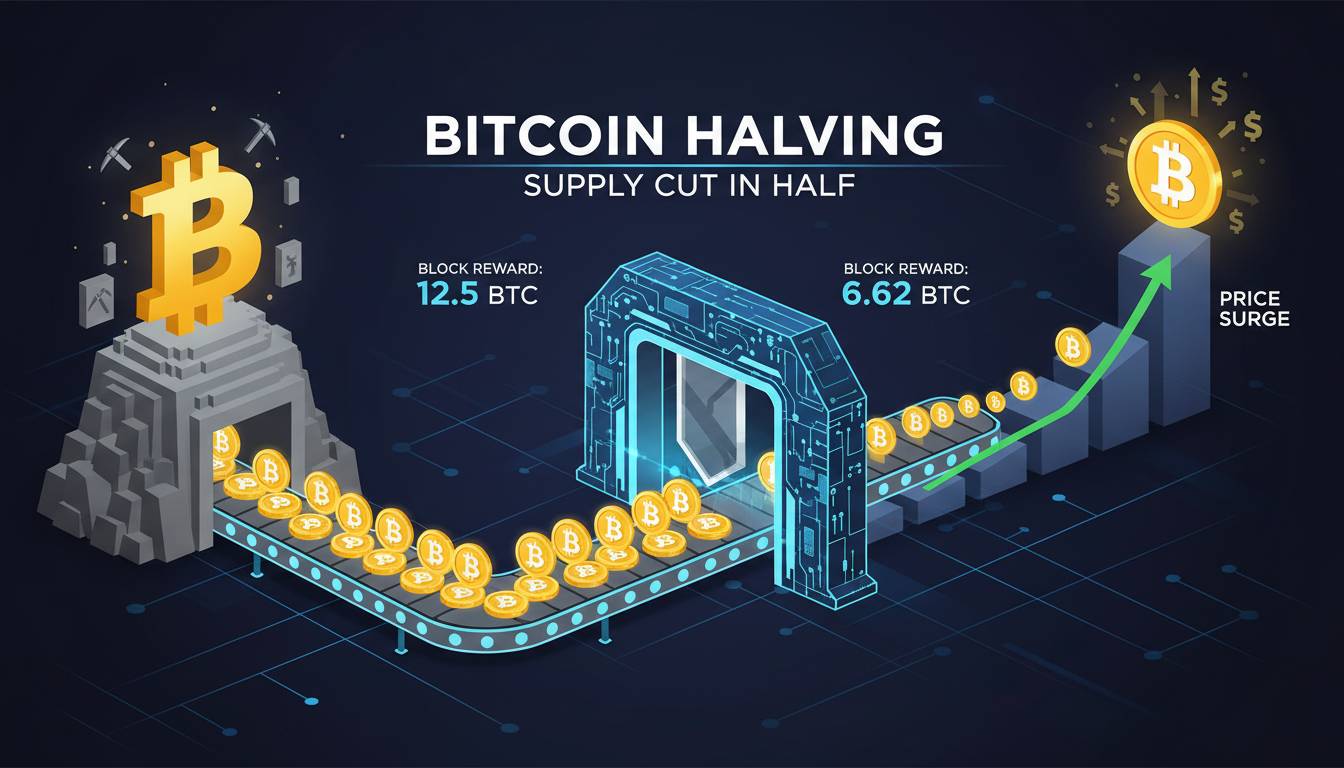
Bitcoin halving is a pivotal event in the cryptocurrency world, and its latest iteration in April 2024 has sparked renewed interest across markets. This article explores what the halving entails, its historical and current impact on price, mining, and market dynamics, and what it could mean for the future.
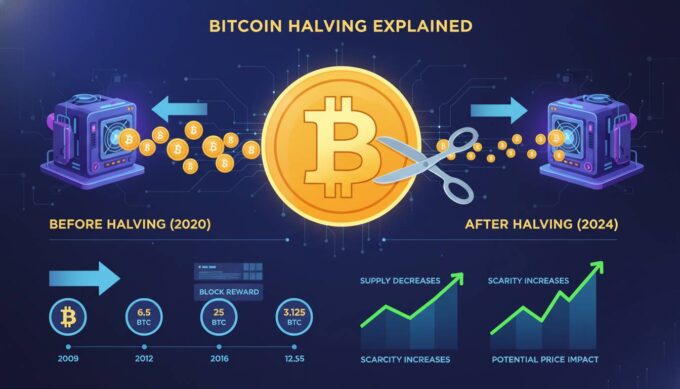
Bitcoin halving occurs approximately every four years—specifically every 210,000 blocks—when the reward miners receive for validating transactions is cut in half. This built-in mechanism enforces scarcity and reduces the rate at which new bitcoins enter circulation. The most recent halving in April 2024 reduced the block reward from 6.25 BTC to 3.125 BTC .
What Is Bitcoin Halving?
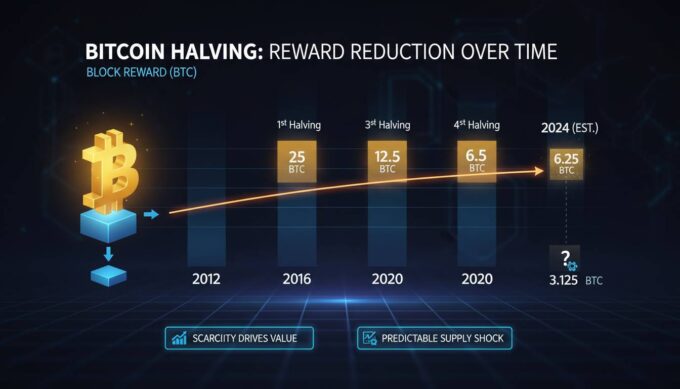
Bitcoin halving is a protocol-level event embedded in the cryptocurrency’s code. It occurs every 210,000 blocks—roughly every four years—and halves the reward miners receive for adding a new block to the blockchain. The reward has dropped from 50 BTC at Bitcoin’s inception in 2009, to 25 BTC in 2012, 12.5 BTC in 2016, 6.25 BTC in 2020, and most recently to 3.125 BTC in April 2024 .
This mechanism ensures that Bitcoin’s total supply remains capped at 21 million coins, reinforcing its scarcity and deflationary nature. As fewer new coins are created over time, each remaining bitcoin becomes relatively more valuable—assuming demand remains steady or increases .
Historical Price Trends Following Halvings
Bitcoin’s past halving events have often preceded significant price rallies:
- 2012 Halving: Price rose from around $12 to over $1,000 within a year—a gain of approximately 8,200% .
- 2016 Halving: Price climbed from about $650 to $2,500 over the following year—an increase of around 285% .
- 2020 Halving: Price surged from approximately $8,600 to over $60,000 in the year after—about a 600% rise .
- 2024 Halving: Early data suggests a rise from around $60,000 to approximately $109,800 by May 2025—an increase of about 83% .
These patterns underscore the halving’s role as a catalyst for price momentum, though the magnitude of gains has varied across cycles.
Why Halving Influences Price
Supply Shock and Scarcity
Halving cuts the supply of new bitcoins entering the market by 50%, creating a supply shock. If demand remains constant or grows, economic theory suggests that prices should rise . This enforced scarcity reinforces Bitcoin’s positioning as “digital gold,” appealing to investors seeking a hedge against inflation .
Market Psychology and Media Attention
Halving events attract significant media coverage and investor attention. This heightened visibility often drives speculative demand, amplifying price movements . Institutional interest, particularly through Bitcoin ETFs, has intensified this effect. For instance, ETFs launched in early 2024 have attracted over $12 billion in inflows, purchasing around 2,500 BTC per day—far exceeding the new supply of roughly 900 BTC per day, which will drop to 450 BTC post-halving .
Miner Economics and Network Impact
Halving reduces miners’ revenue from block rewards, squeezing profitability. Less efficient operations may shut down, reducing network hash rate and potentially increasing volatility . This dynamic can create short-term downward pressure on price as miners liquidate holdings to cover costs .
2024 Halving: A New Landscape
The 2024 halving occurred in a markedly different environment compared to previous cycles. The rise of Bitcoin ETFs in the U.S. has introduced substantial institutional demand, altering supply-demand dynamics. ETFs have already absorbed more BTC daily than is newly mined, intensifying scarcity and supporting price .
Moreover, research using synthetic control methods indicates that the 2024 halving had a positive causal effect on Bitcoin’s price three months later—accounting for about one-fifth of the total price change from April 2023 to July 2024 .
However, some analysts argue that the halving’s price influence is diminishing. CryptoQuant reports that long-term holders are accumulating BTC at a rate far exceeding new issuance—about 200,000 BTC per month versus 28,000 BTC issued—suggesting demand dynamics now play a larger role than supply shocks alone .
Impact on Stakeholders
- Miners: Face tighter margins and must optimize operations or rely more on transaction fees. Some may exit the market if unprofitable .
- Investors: Benefit from scarcity-driven price appreciation, but must navigate increased volatility and speculative sentiment .
- Institutions: ETFs have become major buyers, influencing supply-demand balance and legitimizing Bitcoin as an investable asset .
- Market Dynamics: Price cycles remain, but are now shaped by a broader set of factors including macroeconomic trends, regulatory developments, and institutional flows .
Future Outlook
Looking ahead, Bitcoin’s scarcity model remains intact, with halvings continuing until the 21 million cap is reached—expected between 2134 and 2140 . Future halvings may yield smaller price impacts as markets mature and demand becomes more diversified.
Institutional adoption, regulatory clarity, and macroeconomic conditions will increasingly influence price. The halving remains a key event, but its effects are now interwoven with broader market forces.
Conclusion
Bitcoin halving is a foundational mechanism that enforces scarcity and has historically triggered significant price rallies. The April 2024 halving occurred amid unprecedented institutional demand, particularly via ETFs, amplifying its impact. While supply reduction remains central, demand dynamics now play a dominant role in shaping price. Miners face new challenges, investors must manage volatility, and institutions continue to reshape the landscape. As Bitcoin matures, future halvings will remain important—but their effects will unfold within a more complex and evolving ecosystem.
Frequently Asked Questions
What is Bitcoin halving?
Bitcoin halving is a protocol event that cuts the mining reward in half every 210,000 blocks—roughly every four years—reducing the rate at which new bitcoins enter circulation.
Why does halving affect Bitcoin’s price?
Halving reduces supply, creating scarcity. If demand remains steady or rises, economic principles suggest that price should increase. Media attention and investor sentiment also amplify this effect.
How has Bitcoin’s price responded to past halvings?
After the 2012 halving, Bitcoin rose over 8,000%; after 2016, about 285%; and after 2020, around 600% within a year. The 2024 halving saw an approximate 83% increase by May 2025.
How does the 2024 halving differ from previous ones?
The 2024 halving occurred amid strong institutional demand via ETFs, which have absorbed more BTC daily than is newly mined, intensifying scarcity and price support.
What impact does halving have on miners?
Halving reduces miners’ revenue, forcing them to improve efficiency or rely more on transaction fees. Less efficient miners may shut down, affecting network hash rate and volatility.
Will future halvings continue to drive price increases?
While halvings enforce scarcity, their price impact may diminish as markets mature. Future price movements will increasingly depend on institutional adoption, regulation, and macroeconomic trends.













Leave a comment