


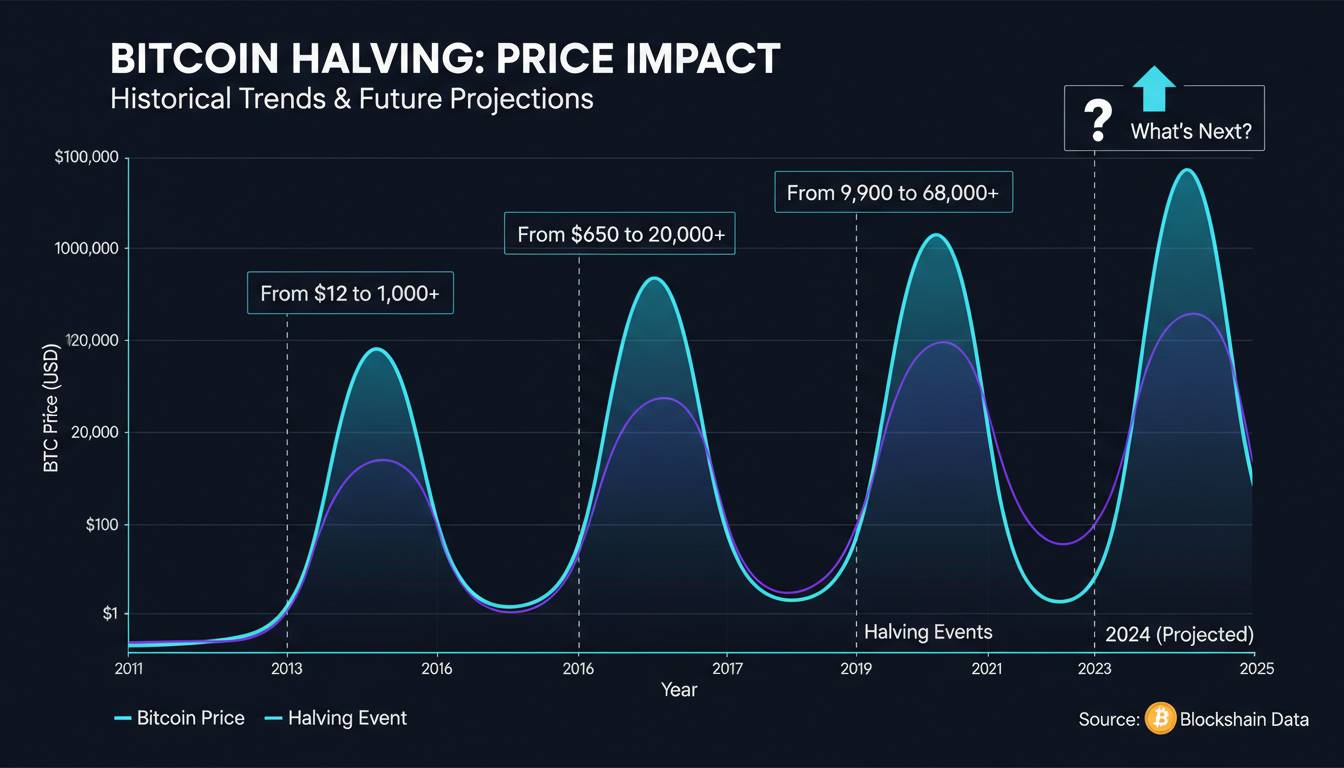
The 2024 Bitcoin halving, which occurred on April 20, 2024, marked a pivotal moment in the cryptocurrency’s programmed supply reduction. This article explores the event’s mechanics, its implications for miners and markets, expert forecasts, and what lies ahead for U.S. investors and the broader crypto ecosystem.
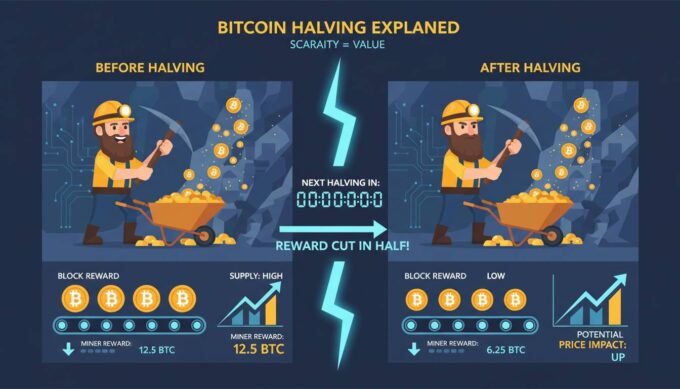
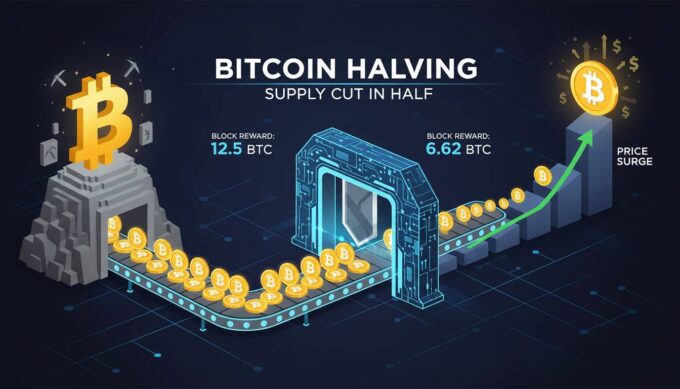
Bitcoin’s halving is a pre-programmed event that cuts the block reward for miners in half every 210,000 blocks—approximately every four years. The most recent halving reduced the reward from 6.25 BTC to 3.125 BTC per block . This mechanism enforces scarcity, as only 21 million bitcoins will ever exist .
What Happened in April 2024
On April 20, 2024, at 12:09 UTC, the Bitcoin network executed its fourth halving, reducing miner rewards to 3.125 BTC per block . This halving cut the daily issuance of new bitcoins from roughly 900 to 450 . The immediate effect was a sharp reduction in supply entering the market.
Significance for Miners and Market Dynamics
Mining Sector Impact
The reward cut significantly affects miner profitability. Smaller or less efficient operations may struggle to remain viable. Analysts expect consolidation, with larger, more efficient miners gaining market share . In the U.S., which accounts for nearly 38% of global hash rate, the halving may accelerate infrastructure upgrades and push miners toward renewable energy sources .
Market Supply and Demand
With new supply halved, the imbalance between supply and demand could drive prices upward—historically, this has been the case . The arrival of spot Bitcoin ETFs in early 2024 added significant demand, with institutional funds buying around 2,500 BTC daily—far exceeding the 900 BTC newly mined pre-halving .
Expert Forecasts and Cautionary Views
Bullish Predictions
- Fred Thiel, CEO of Marathon Digital, anticipates Bitcoin could reach $120,000 post-halving, citing finite supply and ETF-driven liquidity .
- Michael Novogratz (Galaxy Digital) and Tom Lee (Fundstrat) project prices around $150,000, driven by institutional adoption and reduced supply .
- Anthony Scaramucci expects a rise to $170,000 within 18 months .
- Bernstein Research forecasts a peak of $90,000 in 2024 and $150,000 in 2025, attributing optimism to ETF momentum .
Cautionary Perspectives
- Goldman Sachs and JPMorgan warn against assuming past halving cycles will repeat, citing current macroeconomic conditions and potential overpricing .
- Arthur Hayes, former BitMEX CEO, suggests the bullish narrative may be fully priced in, and U.S. tax season could trigger liquidity-driven selling around the halving .
- Analyst De Maere argues that increasing illiquidity—more Bitcoin held long-term—dampens the halving’s impact on price. The 2024 halving saw weaker post-event performance compared to prior cycles .
Academic Insight
A recent study using synthetic control methods finds a positive causal effect of the 2024 halving on Bitcoin’s price three months later—accounting for about one-fifth of the total price change from April 2023 to July 2024 .
U.S. Market Implications
The U.S. plays a central role in the halving’s impact. High hash rate concentration means American miners will feel the effects most acutely . Meanwhile, institutional demand via ETFs has surged, with over $12 billion in inflows since January 2024 . This demand-supply dynamic could shape price trajectories more than in previous cycles.
Looking Ahead: What to Expect
Short-Term Trends
- Volatility is expected around the halving, with potential corrections or consolidation before any sustained rally .
- ETF-driven demand may continue to support price, even if supply tightens .
Medium-Term Outlook
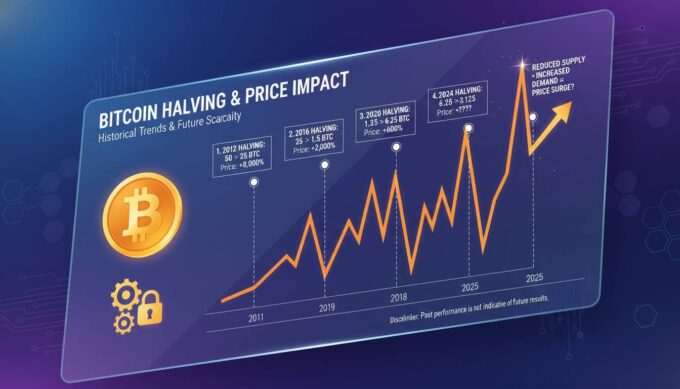
- If historical patterns hold, Bitcoin could reach new highs within 12–18 months post-halving .
- However, macroeconomic headwinds and market maturity may moderate gains.
Long-Term Perspective
- The next halving is expected in early 2028, reducing block rewards to approximately 1.625 BTC .
- Analysts anticipate continued institutional adoption and regulatory clarity could drive future cycles, though diminishing returns per cycle are possible .
Conclusion
The April 2024 Bitcoin halving marked a critical juncture in the cryptocurrency’s supply dynamics. While reduced issuance and ETF-driven demand suggest bullish potential, macroeconomic uncertainty and market maturity introduce caution. Expert forecasts range from $90,000 to $170,000 in the coming months, yet some warn gains may already be priced in. For U.S. stakeholders, the halving underscores the importance of infrastructure efficiency, regulatory developments, and institutional participation. As the market evolves, the halving remains a defining event—one that continues to shape Bitcoin’s trajectory in complex and nuanced ways.
Frequently Asked Questions
What is a Bitcoin halving?
A Bitcoin halving is a programmed event that cuts the miner block reward in half every 210,000 blocks—roughly every four years. The most recent occurred on April 20, 2024, reducing the reward to 3.125 BTC per block .
Why does halving matter?
Halving enforces scarcity by slowing new Bitcoin issuance. If demand remains steady or grows, reduced supply can exert upward pressure on price .
How did the 2024 halving affect miners?
The reward cut squeezed profitability, especially for smaller or inefficient miners. It prompted consolidation and infrastructure upgrades, particularly in the U.S., where mining activity is concentrated .
Will Bitcoin’s price rise after halving?
While historical cycles often saw post-halving rallies, current macro conditions and market maturity may temper gains. Expert forecasts vary widely—from $90,000 to $170,000—but caution remains .
When is the next halving?
The next Bitcoin halving is expected in early 2028, reducing block rewards to around 1.625 BTC .
How do ETFs influence halving dynamics?
Spot Bitcoin ETFs have introduced substantial institutional demand, buying more BTC daily than is newly mined. This demand-supply imbalance may amplify or sustain price momentum post-halving .
















Leave a comment