


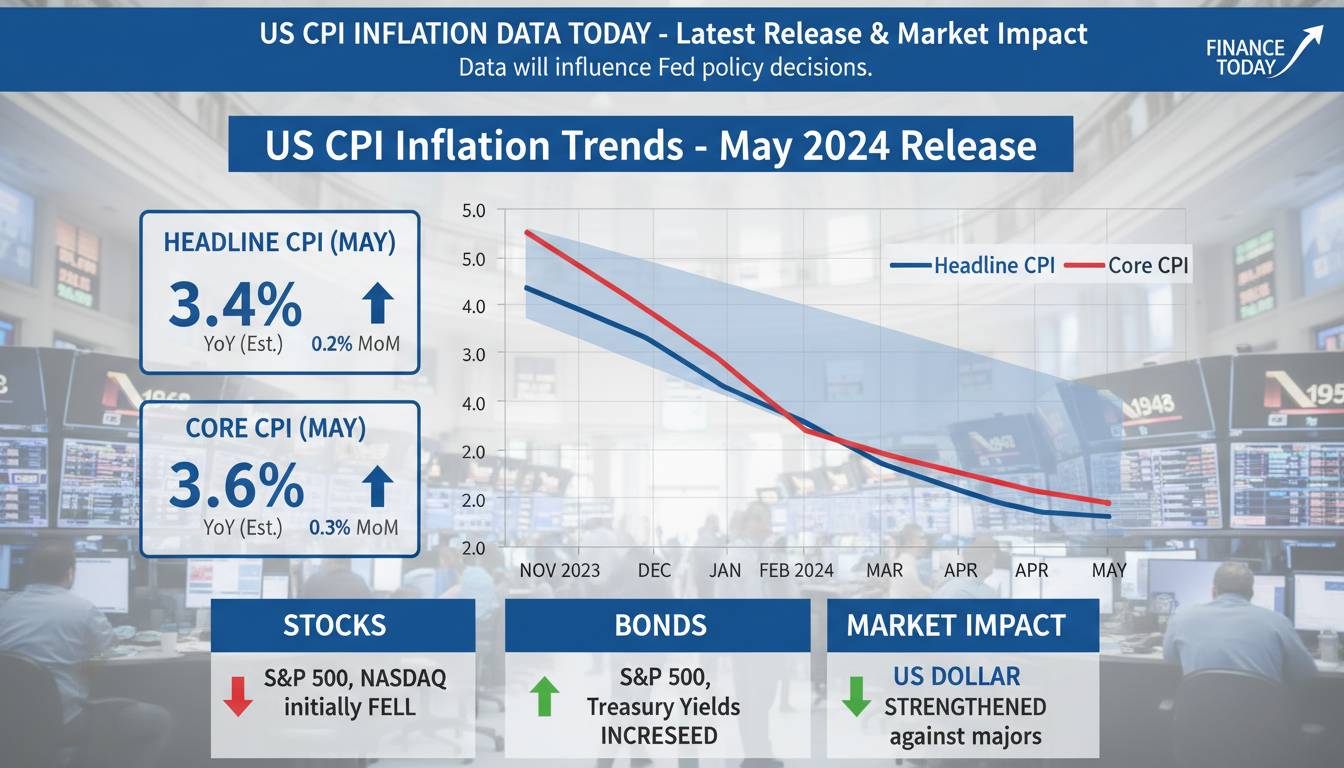
US CPI Inflation Data Today is in focus on Wednesday, March 11, 2026, as investors, policymakers, and households watch for the latest reading on consumer prices. The Bureau of Labor Statistics is scheduled to publish the Consumer Price Index for February 2026 at 8:30 a.m. Eastern Time, making it one of the most closely followed economic releases of the month. The report matters because it helps shape expectations for Federal Reserve policy, Treasury yields, stock prices, and the outlook for borrowing costs across the US economy.
Why US CPI Inflation Data Today Matters
The Consumer Price Index, or CPI, tracks changes in prices paid by urban consumers for a broad basket of goods and services. It is one of the most widely used gauges of inflation in the United States, even though the Federal Reserve formally targets inflation using the Personal Consumption Expenditures price index rather than CPI. Still, CPI often drives the immediate market narrative because it is released earlier and offers a detailed snapshot of price pressures across categories such as shelter, food, energy, transportation, and medical care.
US CPI Inflation Data Today carries added significance because inflation has remained central to the policy debate since the sharp price surge that followed the pandemic era. Markets now treat each monthly CPI release as a test of whether disinflation is continuing, stalling, or reversing. According to the Federal Reserve’s research on macro news, investor attention can amplify market reactions to major data releases, especially when inflation is a dominant concern.
For consumers, the CPI report is more than a market event. It influences cost-of-living adjustments, wage negotiations, and public perceptions of whether household budgets are improving or still under pressure. A softer reading can support hopes that price growth is easing. A hotter reading can renew concern that essentials such as rent, groceries, and insurance may remain expensive for longer.
Release Timing and What Is Confirmed Today
The most important confirmed fact is the release schedule. The Bureau of Labor Statistics states that the Consumer Price Index for February 2026 is scheduled for release on Wednesday, March 11, 2026, at 8:30 a.m. ET. That timing is listed both in the archived January CPI release and in the agency’s 2026 release calendar.
The latest fully published CPI report before today was the January 2026 release, issued on February 13, 2026. In that report, the chained CPI for all urban consumers, or C-CPI-U, increased 2.2% over the prior 12 months and rose 0.4% on a not seasonally adjusted monthly basis. The same BLS release also noted that several index titles changed with the publication of January data and that revised seasonal adjustment factors were incorporated, affecting seasonally adjusted indexes for the previous five years.
That technical detail matters for analysts comparing month-to-month trends. Seasonal revisions can alter previously reported monthly changes, which means traders and economists often recheck recent inflation patterns after the annual update. In practical terms, US CPI Inflation Data Today is not just about one month’s number. It is also about how the latest report fits into a revised inflation trend.
What Markets Usually Watch in the CPI Report
When the CPI report is released, markets usually focus on several key figures at once:
- Headline CPI month over month: the broad monthly change in consumer prices.
- Headline CPI year over year: the annual inflation rate.
- Core CPI month over month: inflation excluding food and energy.
- Core CPI year over year: a closely watched measure of underlying price pressure.
- Shelter inflation: often one of the largest contributors to core inflation.
- Services inflation: important because it can be stickier than goods inflation.
These figures matter because they can shift expectations for Federal Reserve interest-rate decisions. A stronger-than-expected CPI reading tends to push Treasury yields higher and can pressure equities, especially rate-sensitive sectors such as technology and housing. A weaker reading often has the opposite effect, supporting stocks and lowering yields as traders price in a greater chance of easier monetary policy. CME Group’s market commentary on prior CPI releases shows that inflation surprises can quickly alter expectations reflected in Fed funds futures.
According to Federal Reserve Governor Christopher Waller, progress on inflation is especially meaningful when core monthly readings moderate, because that can signal broader easing in underlying price pressures rather than a temporary move in volatile categories. His earlier remarks on inflation trends underscore why core measures remain central to policy interpretation.
The Federal Reserve Angle
US CPI Inflation Data Today arrives at a time when markets remain highly sensitive to any sign that inflation is either moving closer to the Fed’s goal or proving stubborn. While the Fed targets PCE inflation, CPI still shapes near-term expectations because it can influence forecasts for the PCE report and broader inflation momentum. The Federal Reserve’s March 2025 projections showed policymakers expected inflation to continue moderating over time, though not necessarily in a straight line.
That means today’s CPI release could affect more than one trading session. It may influence how investors think about the path of interest rates over the coming months, especially if the data materially differ from consensus expectations. If inflation cools faster than expected, markets may interpret that as giving the Fed more room to consider rate cuts later in 2026. If inflation remains firm, expectations for policy easing could be pushed further out.
There is also a broader credibility issue. After several years in which inflation repeatedly surprised forecasters, each CPI report now serves as a reality check for both Wall Street and Washington. That helps explain why the release often triggers immediate moves in bond yields, the US dollar, equity index futures, and commodities.
Impact on Households, Businesses, and Investors
For households, the practical impact of US CPI Inflation Data Today lies in what it says about purchasing power. Inflation that remains elevated can keep pressure on rent, food, transportation, and insurance costs. Even if the annual rate slows, consumers may still feel strain because prices remain much higher than they were a few years ago.
Businesses also watch CPI closely. Retailers, manufacturers, and service providers use inflation data to assess pricing power, wage pressure, and demand conditions. A cooling inflation trend can reduce input-cost anxiety, but it can also signal softer consumer demand in some sectors. For lenders and borrowers, the report matters because inflation expectations feed into interest rates on mortgages, auto loans, credit cards, and corporate debt.
Investors tend to break the impact into three broad channels:
- Bonds: Higher inflation can push yields up and bond prices down.
- Stocks: Lower inflation can support valuations, especially for growth shares.
- Currencies and commodities: Inflation surprises can move the dollar, gold, and oil depending on how traders reassess Fed policy and growth expectations.
What to Watch After the Release
Once the data are published, the first question will be whether the February 2026 CPI figures show continued disinflation or renewed stickiness. The second question will be composition: are price pressures concentrated in volatile categories, or are they broad-based across services and shelter? The third question will be whether markets interpret the report as changing the likely path of Federal Reserve policy.
Investors will also look ahead quickly to the next major inflation-related release. The Bureau of Labor Statistics has already indicated that the Producer Price Index for February 2026 is scheduled for March 18, 2026, after a delay tied to the effects of the federal government shutdown on data collection timing. That means today’s CPI report will be followed by another important inflation checkpoint next week.
In addition, analysts will compare today’s CPI figures with wage growth, employment data, and consumer spending trends. Inflation does not operate in isolation. A moderate CPI reading paired with resilient job growth can reinforce the view that the economy is cooling without slipping into recession. A hotter CPI print, however, could revive concern that inflation is becoming entrenched.
Conclusion
US CPI Inflation Data Today is one of the most important economic events on the March 11, 2026 calendar. The Bureau of Labor Statistics is set to release the February 2026 CPI report at 8:30 a.m. ET, and the data are likely to shape market sentiment, policy expectations, and the broader inflation debate in the United States.
The report matters because it offers a timely measure of whether price pressures are easing, persisting, or reaccelerating. For the Federal Reserve, it is a key input into the inflation outlook. For investors, it can reset expectations for rates and asset prices. For households, it provides a fresh signal on the cost of living. As soon as the numbers are released, attention will turn from anticipation to interpretation, and the market impact could be immediate.
Frequently Asked Questions
What time is the US CPI inflation report released today?
The Bureau of Labor Statistics schedules the Consumer Price Index for February 2026 for release at 8:30 a.m. Eastern Time on Wednesday, March 11, 2026.
What does US CPI Inflation Data Today measure?
It measures changes in prices paid by urban consumers for a broad basket of goods and services, including food, housing, energy, transportation, and medical care.
Why do markets react so strongly to CPI data?
CPI can change expectations for Federal Reserve interest-rate policy. That can quickly affect Treasury yields, stock valuations, the US dollar, and commodity prices.
Is CPI the same as the Fed’s inflation target?
No. The Federal Reserve targets inflation using the Personal Consumption Expenditures price index, but CPI is still closely watched because it is timely and influential in markets.
What was the latest CPI-related figure before today’s release?
In the January 2026 CPI release, the chained CPI for all urban consumers rose 2.2% over the previous 12 months and increased 0.4% on a monthly not seasonally adjusted basis.
What comes after today’s CPI report?
The next major inflation release is the Producer Price Index for February 2026, which the BLS says is scheduled for March 18, 2026.



















Leave a comment