


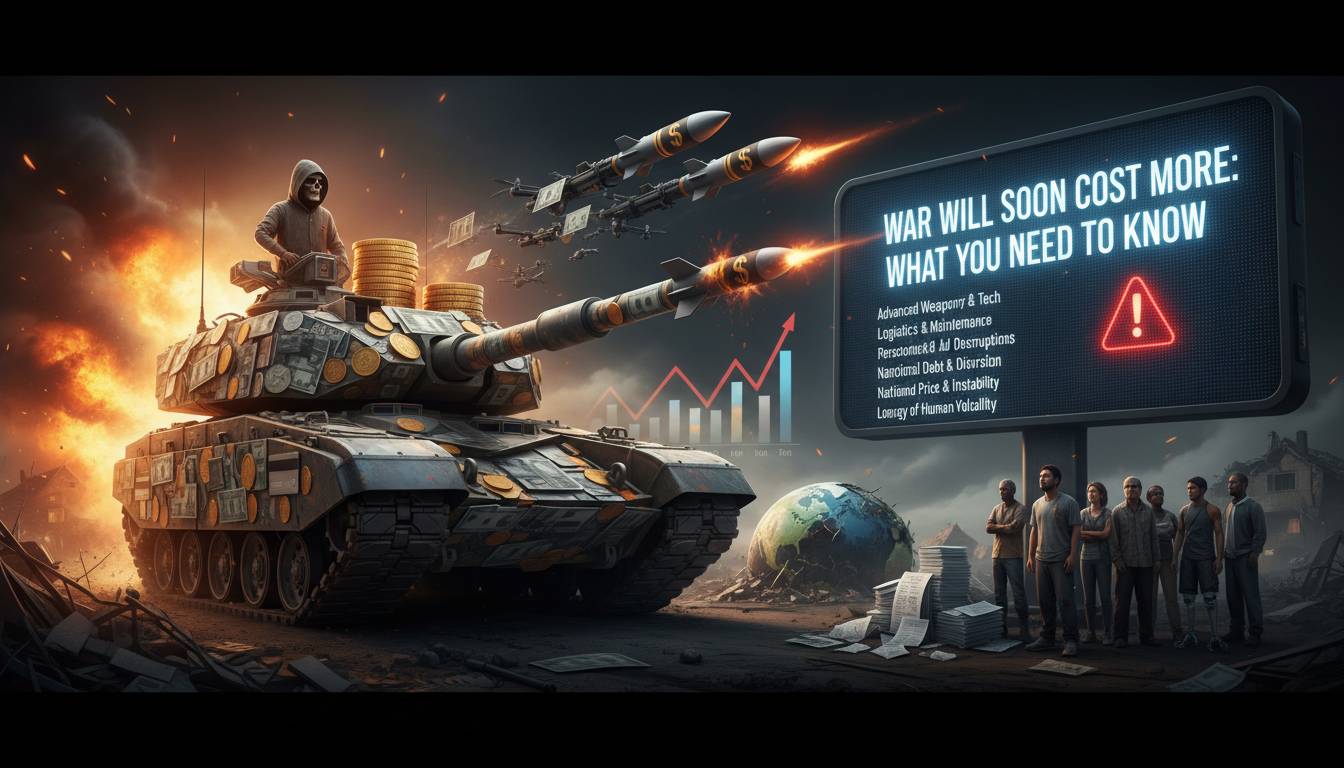
The United States faces a mounting financial burden as the true cost of war continues to escalate. From long-term veterans’ care to future defense commitments, the phrase war will soon cost more than ever encapsulates a growing fiscal reality. This article explores the latest projections, economic implications, and what lies ahead for U.S. taxpayers.
Rising Price Tag of Past and Ongoing Conflicts
The financial toll of post-9/11 wars remains staggering. The Costs of War Project at Brown University estimates that U.S. operations from 2001 through 2022 cost approximately $8 trillion, with an additional $2.2 trillion earmarked for veterans’ care over the next 30 years . These figures include direct military spending, Department of Homeland Security costs, and long-term care obligations .
Economist Linda J. Bilmes of Harvard University estimates that U.S. military actions in the broader Middle East from October 2023 through September 2025 have added between $9.65 billion and $12.07 billion to the total cost .
Future Defense Commitments: A Growing Financial Horizon
Looking ahead, the Congressional Budget Office (CBO) projects that operating, sustaining, and modernizing U.S. nuclear forces from 2025 to 2034 will cost approximately $946 billion—an average of $95 billion per year . This includes modernization of delivery systems, command infrastructure, and contingency allowances for cost overruns .
Meanwhile, the U.S. Navy’s long-term shipbuilding plan faces significant cost overruns. The CBO estimates that building the future fleet will cost 17% more than Navy projections, averaging $40 billion annually over the next 30 years . Operating and maintaining this fleet, along with aircraft and weapons, could push the Navy’s budget from $255 billion today to $340 billion by 2054 .
Strategic Risks Could Drive Costs Even Higher
A report by the American Enterprise Institute warns that a Russian victory in Ukraine could force the U.S. to ramp up defense spending by more than $800 billion through 2029 . This underscores how geopolitical shifts can rapidly escalate fiscal demands.
Why War Will Soon Cost More
Long-Term Obligations
- Veterans’ care: The $2.2 trillion set aside for future care reflects decades of medical and disability obligations .
- Interest on debt: Borrowing to finance wars adds significant interest costs over time, further inflating the total price tag .
Modernization and Readiness
- Nuclear modernization: Upgrading delivery systems and infrastructure is a multi-hundred-billion-dollar endeavor .
- Naval expansion: Building and maintaining a modern fleet comes with steep, long-term costs .
Geopolitical Uncertainty
- Emerging threats: Conflicts like Ukraine or tensions with China and Russia could trigger unplanned expenditures .
- Missile defense systems: Ambitious projects like the proposed “Golden Dome” could cost anywhere from hundreds of billions to trillions, depending on scope .
Impacts on Stakeholders
Taxpayers and the Federal Budget
The growing cost of war places pressure on federal spending, potentially diverting funds from domestic priorities like healthcare, education, and infrastructure.
Military and Defense Industry
Defense contractors benefit from sustained demand, but cost overruns and inefficiencies—such as those seen in shipbuilding—raise concerns about budget discipline .
Veterans and Families
Long-term care obligations reflect the human cost of war. Ensuring adequate support for veterans remains a moral and fiscal imperative.
Geopolitical Stability
Underinvestment in defense could embolden adversaries, while overinvestment may strain the economy. Balancing readiness with fiscal responsibility is critical.
What Lies Ahead
- Budget transparency: Calls for clearer reporting on war-related costs are growing, as current estimates often omit long-term obligations .
- Strategic recalibration: Policymakers may need to reassess defense priorities in light of mounting costs and evolving threats.
- Fiscal sustainability: Managing the debt and interest burden will be essential to avoid crowding out other national investments.
Conclusion
The phrase war will soon cost more is not hyperbole—it reflects a fiscal reality shaped by long-term obligations, modernization needs, and geopolitical uncertainty. With trillions already spent and more on the horizon, the U.S. faces a pivotal moment in balancing national security with economic sustainability. Transparent budgeting, strategic foresight, and prudent policymaking will be essential to navigate this complex landscape.
Frequently Asked Questions
What does “war will soon cost” refer to?
It refers to the increasing financial burden of war, including direct military spending, veterans’ care, modernization, and interest on debt.
How much has the U.S. already spent on post‑9/11 wars?
Approximately $8 trillion in operations through 2022, plus $2.2 trillion projected for future veterans’ care .
What are the projected future costs?
The CBO estimates $946 billion for nuclear forces (2025–2034) and $40 billion annually for naval shipbuilding over 30 years .
Could new conflicts increase costs further?
Yes. For example, a Russian victory in Ukraine could trigger over $800 billion in additional U.S. defense spending through 2029 .
Why are veterans’ costs so high?
They include long-term medical care, disability benefits, and support obligations that extend for decades after conflicts end.
What can be done to manage these costs?
Improving budget transparency, reassessing defense priorities, and ensuring fiscal discipline are key to balancing security needs with economic health.




















Leave a comment