


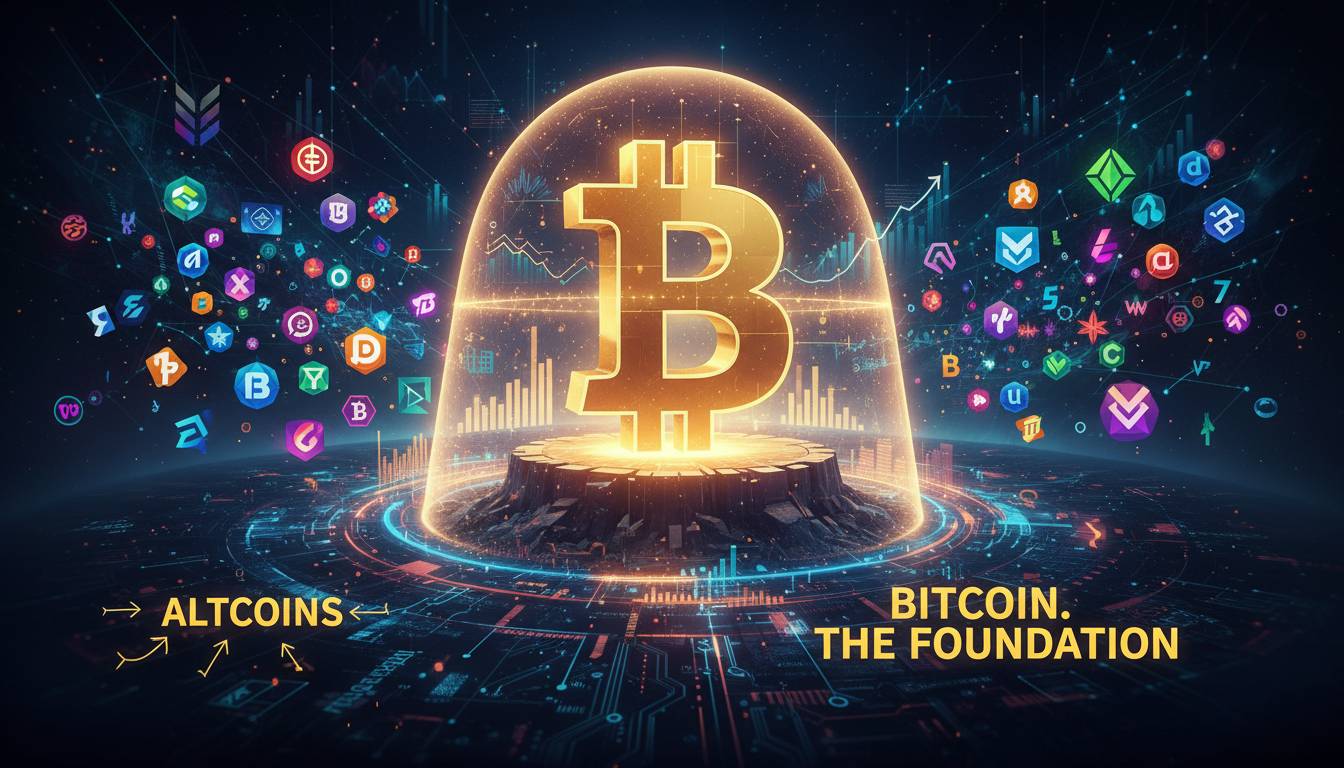
An increasing number of investors are asking whether they may not need altcoins at all—and whether focusing solely on Bitcoin could offer a more secure, streamlined, and effective strategy. This article explores the latest data, expert insights, and market trends to explain why a Bitcoin-only approach may be gaining traction in the U.S. crypto landscape.
The Case for “May Not Need Altcoins”
Bitcoin stands out as the most established and secure cryptocurrency, often referred to as “digital gold.” Its capped supply of 21 million coins, robust Proof-of-Work network, and widespread institutional adoption make it a compelling long-term store of value .
By contrast, altcoins—while offering innovation—carry significantly higher risks. Many fail due to weak fundamentals, regulatory scrutiny, or speculative hype . Economist Fred Krueger argues that most altcoins underperform Bitcoin over time, likening them to outdated tech or even pyramid schemes, and emphasizing the simplicity and conviction that comes with a Bitcoin-only strategy .
Data-Driven Insights: Bitcoin’s Dominance
Recent market data reinforces the argument that investors may not need altcoins. By December 2025, the Altcoin Season Index—a metric tracking how many altcoins outperform Bitcoin over 90 days—stood at just 18%. That means only 18% of the top 100 altcoins beat Bitcoin in that period .
Meanwhile, Bitcoin-focused strategies delivered an 86% annual return from 2020 to 2025, with a Sharpe ratio of 1.68—far outperforming traditional 60/40 portfolios. Altcoin-heavy portfolios, in contrast, suffered from higher volatility and lower correlation with Bitcoin’s macroeconomic appeal .
Why “May Not Need Altcoins” Resonates with Investors
Security and Stability
Bitcoin’s network security is unmatched. Its massive hash rate makes attacks prohibitively expensive, and its decentralized governance ensures resilience . Altcoins, especially smaller ones, often face vulnerabilities like 51% attacks or smart contract exploits .
Regulatory Clarity
In the U.S., Bitcoin is generally treated as a commodity, enabling regulated financial products like ETFs and futures. Altcoins, however, often face classification as securities, exposing them to heightened regulatory risk .
Simplified Strategy
Krueger highlights that evaluating altcoins demands constant research and due diligence. A Bitcoin-only approach simplifies decision-making and reduces the risk of falling prey to scams or fleeting hype .
Portfolio Efficiency
Bitcoin’s lower volatility and high liquidity make it a reliable anchor for crypto portfolios. It serves as a benchmark asset with systemic stability, while altcoins act as high-beta, speculative plays .
When Altcoins Still Matter
That said, altcoins are not without merit. They drive innovation in areas like smart contracts, DeFi, NFTs, and high-speed transactions . For investors seeking growth or exposure to emerging sectors, selective altcoin allocation can offer upside—if grounded in strong fundamentals .
Strategic Takeaways for U.S. Investors
- Prioritize Bitcoin as the core holding for stability, security, and regulatory clarity.
- Consider altcoins only when the Altcoin Season Index is high (e.g., above 50), and focus on projects with real-world adoption and institutional backing .
- Use disciplined strategies like dollar-cost averaging and regular rebalancing to manage volatility .
- Stay informed on regulatory developments, especially in the U.S., to avoid exposure to high-risk altcoins .
Conclusion
For many U.S. investors, the notion that they may not need altcoins is gaining credibility. Bitcoin’s unmatched security, regulatory clarity, and long-term performance make it a compelling foundation for crypto portfolios. While altcoins offer innovation and potential growth, their risks and complexity often outweigh the benefits—especially for investors prioritizing simplicity and reliability. A Bitcoin-first strategy, supplemented by selective altcoin exposure when conditions align, may offer the best balance of safety and opportunity.
Frequently Asked Questions
What does “may not need altcoins” mean?
It suggests that investors might achieve their goals by focusing solely on Bitcoin, given its stability, security, and regulatory clarity, without the added risk and complexity of altcoins.
Are altcoins always a bad investment?
No. Altcoins can offer high growth potential and innovation, especially in areas like DeFi and smart contracts. However, they carry higher volatility and regulatory risk, so they should be chosen carefully.
How often do altcoins outperform Bitcoin?
As of December 2025, only 18% of the top 100 altcoins outperformed Bitcoin over a 90-day period, indicating that such outperformance is relatively rare .
What makes Bitcoin more secure than altcoins?
Bitcoin’s massive hash rate, decentralized network, and long-standing codebase make it highly resistant to attacks. Many altcoins lack this level of security and decentralization .
Is regulatory risk higher for altcoins?
Yes. In the U.S., Bitcoin is generally treated as a commodity, while many altcoins are viewed as securities, exposing them to stricter regulatory scrutiny .
How should investors approach altcoins if they still want exposure?
Use disciplined strategies like dollar-cost averaging and rebalancing. Only invest in altcoins with strong fundamentals and institutional support, and consider exposure during favorable market cycles .





















Leave a comment