


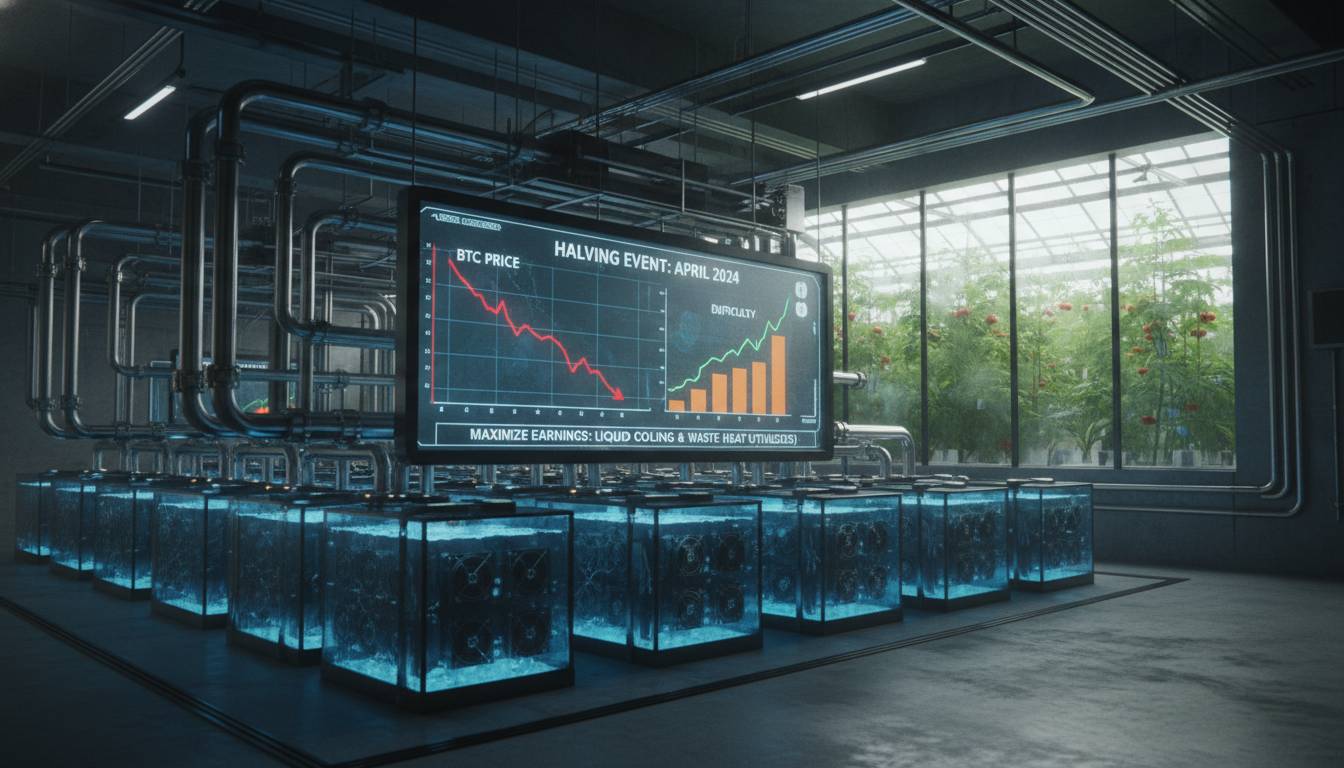
Bitcoin mining profit plummets across the U.S. as a perfect storm of declining prices, rising production costs, and extreme weather squeezes margins. This article explores the causes, consequences, and survival strategies for miners navigating this challenging environment.
Bitcoin mining profitability has collapsed to its weakest level in over a year. CryptoQuant’s Miner Profit & Loss Sustainability Index dropped to 21 in early 2026—the lowest since November 2024—signaling widespread operational losses.
A severe winter storm in the eastern U.S. disrupted mining operations, contributing to a sharp fall in daily mining revenue—from approximately $45 million to just $28 million, marking a yearly low.
Meanwhile, Bitcoin’s price has fallen nearly 50% since its October 2025 peak of $126,210, now hovering around $67,000.
Causes of the Collapse
Falling Bitcoin Prices and Rising Costs
Bitcoin’s decline from its October 2025 high has slashed mining revenue. The average all-in cost to mine one Bitcoin now stands at approximately $87,000—well above the current market price of around $67,000—leaving miners operating at a 20% loss.
Extreme Weather and Operational Disruptions
A U.S. winter storm triggered a 12% drop in network hashrate—the largest since China’s 2021 mining ban—causing daily revenue to plunge to $28 million and miner output to fall sharply.
Elevated Difficulty and Hashrate
Despite the hashrate decline, network difficulty remains high, limiting relief. The CryptoQuant index’s fall to 21 underscores that many miners are “extremely underpaid” under current conditions.
Impact on Stakeholders
Publicly Traded Miners
Shares of U.S.-listed miners such as Marathon Digital (MARA), CleanSpark, and Riot Platforms have dropped by double digits amid the downturn.
American Bitcoin, a Trump-backed miner, reported a $59 million quarterly loss and a $227 million unrealized write-down, with its stock plunging nearly 90% in 2026.
Smaller and Inefficient Operators
Miners with electricity costs above $0.08 per kWh and outdated hardware are likely unprofitable and may be shutting down operations.
Market Dynamics and Miner Behavior
As miners struggle to cover costs, many are selling Bitcoin reserves, creating a feedback loop that further depresses prices and profitability. Glassnode reports a 23% increase in miner outflows, with 8,200 BTC sold in January 2026 alone—the highest monthly total since the FTX collapse.
Silver Linings and Strategic Responses
Difficulty Adjustments Offer Relief
The February 2026 difficulty adjustment dropped by approximately 11%—the largest single decline since 2021—offering some margin relief.
JPMorgan’s research suggests that if difficulty falls further to 115 trillion (from 141 trillion in January), efficient miners could break even at current prices.
Hashrate Decline Benefits Survivors
As weaker miners exit, remaining operators capture a larger share of block rewards. Historical patterns suggest survivors can enjoy outsized profitability during recovery cycles.
Pivoting to AI and HPC
Many mining firms are repurposing infrastructure for AI and high-performance computing. Bitfarm plans to exit crypto mining entirely by 2027 to focus on AI data centers.
Other U.S. operators—including Core Scientific, Riot, and CleanSpark—are also shifting toward AI and HPC services to diversify revenue.
What Lies Ahead
Consolidation and Efficiency
The mining industry is entering a consolidation phase. Only operators with low energy costs, modern hardware, and strong liquidity are likely to survive.
Potential for Recovery
If Bitcoin prices rebound and difficulty continues to ease, efficient miners could regain profitability. However, the era of easy mining profits is over.
Structural Shift in Mining
The pivot toward AI and HPC may redefine the mining landscape. Future upcycles may favor diversified operators rather than pure-play miners.
Conclusion
Bitcoin mining profit plummets have exposed the fragility of the industry. A combination of falling prices, high production costs, extreme weather, and elevated difficulty has pushed many miners into the red. Public firms face steep losses, while smaller operators are exiting the market. Yet, relief may come through difficulty adjustments, consolidation, and strategic pivots toward AI and HPC. The survivors will emerge leaner, more efficient, and better positioned for the next cycle.
Frequently Asked Questions
What caused the recent collapse in bitcoin mining profit?
A steep drop in Bitcoin’s price—from over $126,000 in October 2025 to around $67,000—combined with high production costs (~$87,000 per BTC), extreme weather disruptions, and elevated difficulty levels led to a sharp decline in mining profitability.
How low did mining profitability fall?
The Miner Profit & Loss Sustainability Index dropped to 21—the lowest since November 2024—indicating widespread losses across the mining sector.
Can miners recover profitability soon?
Yes, if network difficulty continues to fall and Bitcoin prices stabilize or rise, efficient miners could return to breakeven or profitability. JPMorgan estimates that a difficulty drop to 115 trillion could make mining viable again at current prices.
Why are mining firms shifting to AI and HPC?
With Bitcoin mining margins under pressure, firms are leveraging their power infrastructure and data center capacity to tap into more stable and lucrative AI and high-performance computing markets.
Are small miners still profitable?
Only those with very low electricity costs (below $0.06/kWh) and efficient hardware may still operate profitably. Many others are shutting down or operating at a loss.
What does this mean for the future of Bitcoin mining?
The industry is consolidating. Survivors will be leaner, more efficient, and diversified. The next mining cycle may favor operators with hybrid models—combining crypto mining with AI and HPC services.




















Leave a comment