


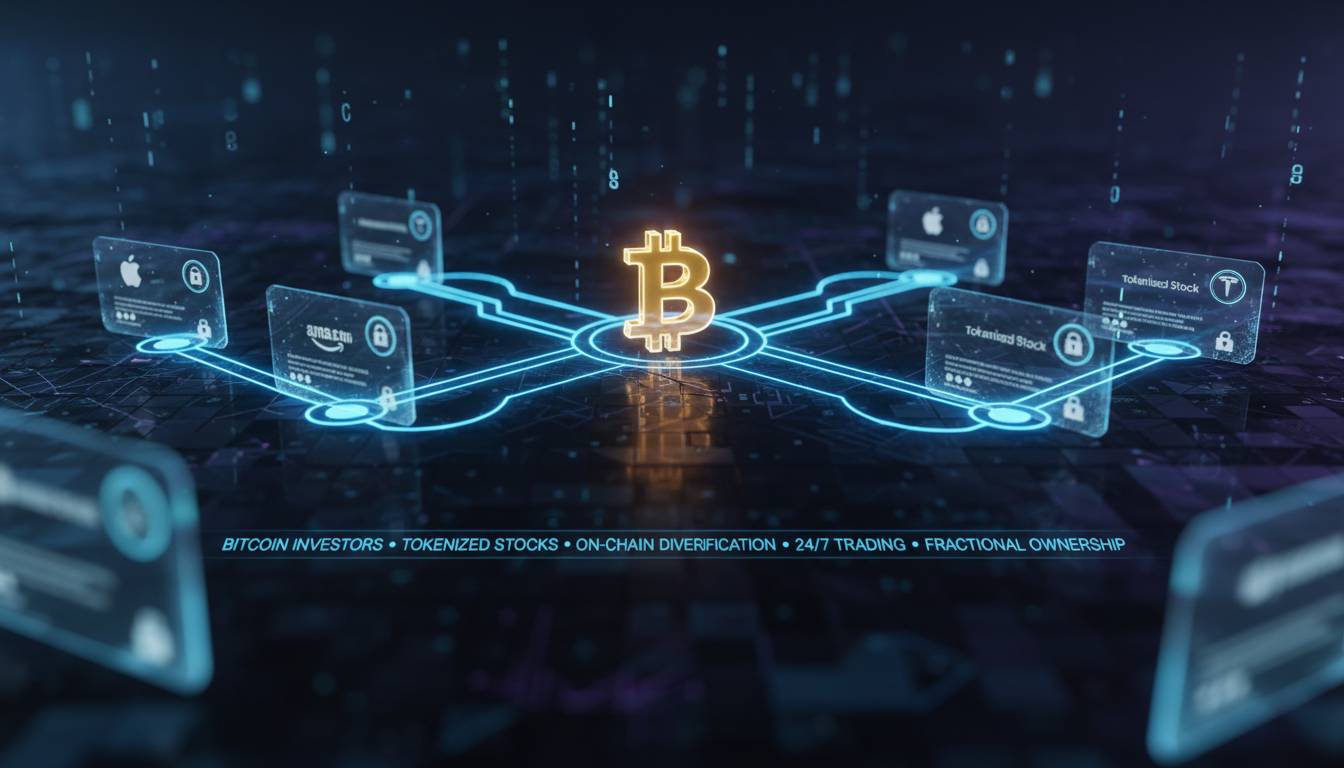
An emerging shift in the crypto landscape suggests that bitcoin investors may not need altcoins to diversify if tokenized stocks move on‑chain. As traditional equities increasingly become accessible via blockchain, the long-standing reliance on altcoins for portfolio diversification is being reexamined. This article explores the latest developments, regulatory milestones, and implications for investors in the U.S.
Tokenized Stocks Gain Traction
Major infrastructure players are building the rails to bring stocks, bonds, and funds onto blockchain ledgers, using stablecoins for settlement. This convergence could redefine how bitcoin investors diversify their portfolios.
In December 2025, the U.S. Securities and Exchange Commission issued a no‑action letter to the Depository Trust & Clearing Corporation (DTCC), authorizing a three‑year pilot to tokenize equities, U.S. Treasuries, and ETFs on approved blockchains. This represents a significant regulatory breakthrough.
Coinbase CEO Brian Armstrong highlights the transformative potential of tokenized stocks: enabling 24/7 trading, fractional ownership, real‑time settlement, perpetual futures, and on‑chain governance. Last month, tokenized equity transfers reached approximately $2.46 billion.
Securitize, a leading issuer of tokenized assets, has issued over $4 billion on‑chain, including $400 million in tokenized equity (Exodus) and $2.8 billion in tokenized treasuries.
The New York Stock Exchange is developing a 24/7 trading venue for tokenized stocks and ETFs, integrating blockchain with its existing matching engine. The platform, expected later this year, will preserve dividend rights and corporate governance.
Why Bitcoin Investors May Shift Away from Altcoins
Altcoins have often failed to deliver true diversification. In February 2026, Coin Metrics data showed that during a bitcoin drawdown, Ethereum and Solana fell by roughly 34% and 35%, respectively—mirroring bitcoin’s volatility rather than offsetting it.
By contrast, traditional equities like the S&P 500 have delivered more stable returns. From January 2024 to early March 2026, the S&P 500 rose nearly 45%, while Ethereum and Solana declined 6% and 10%, respectively.
Tokenized stocks offer a seamless bridge between crypto and traditional assets. Investors can hold bitcoin for crypto exposure and allocate the rest to tokenized equities—without juggling multiple platforms or custodians.
Regulatory and Institutional Momentum
The DTCC’s pilot program, set to launch in the second half of 2026, marks a pivotal moment in institutional adoption of tokenized securities.
Nasdaq has proposed rule changes to enable trading and settlement of tokenized securities on its exchange, signaling growing institutional interest.
Internationally, Ondo Finance received approval from Liechtenstein’s Financial Market Authority to offer tokenized U.S. stocks across the European Economic Area, opening access to over 500 million investors.
Despite progress, concerns remain. The World Federation of Exchanges warns that tokenized stocks are “mimics” that may not meet investor protection standards, citing liquidity fragmentation and regulatory arbitrage.
Impact on Stakeholders
Bitcoin Investors
Tokenized stocks offer a compelling alternative to altcoins for diversification. With on‑chain equities, investors can access traditional markets while staying within the crypto ecosystem.
Traditional Financial Institutions
Institutions like DTCC, Nasdaq, and NYSE are embracing blockchain to modernize trading infrastructure. This shift may reduce reliance on legacy systems and expand market access.
Regulators
U.S. regulators are cautiously supportive, enabling pilot programs under controlled conditions. International regulators are also exploring frameworks to balance innovation with investor protection.
Crypto Platforms
Platforms like Coinbase, Securitize, and Backed Finance are at the forefront of tokenized equity issuance and trading. Their success will shape the broader adoption of on‑chain securities.
Challenges and Considerations
- Ownership Rights: Some tokenized stocks lack voting rights or direct ownership, resembling derivatives rather than true equity.
- Liquidity: On‑chain markets may face fragmentation and limited liquidity, especially outside traditional trading hours.
- Regulatory Clarity: While pilots are underway, full regulatory frameworks are still evolving. Investors must monitor developments closely.
Future Outlook
Tokenized stocks are poised to reshape how bitcoin investors diversify. As infrastructure matures and regulatory clarity improves, on‑chain equities could become a mainstream alternative to altcoins.
Institutional adoption will likely accelerate, with traditional exchanges and custodians integrating blockchain solutions. Retail investors may benefit from improved access, lower fees, and seamless settlement.
However, success hinges on addressing liquidity, legal rights, and investor protection. Balanced regulation and transparent structures will be essential to build trust and drive adoption.
Conclusion
The rise of tokenized stocks presents a compelling diversification strategy for bitcoin investors. With regulatory momentum, institutional backing, and technological innovation, tokenized equities may soon offer a more stable and accessible alternative to volatile altcoins. As this trend unfolds, investors and institutions alike must navigate evolving frameworks to harness the full potential of on‑chain traditional assets.
Frequently Asked Questions
What are tokenized stocks?
Tokenized stocks are digital tokens on a blockchain that represent shares of real-world equities, often backed 1:1 by the underlying asset and tradable 24/7.
How do tokenized stocks benefit bitcoin investors?
They offer exposure to traditional equities within the crypto ecosystem, enabling diversification without leaving blockchain platforms.
Are tokenized stocks legally equivalent to owning shares?
Not always. Some tokenized stocks lack voting rights or direct ownership, depending on the structure and issuer.
What regulatory progress has been made in the U.S.?
The SEC granted DTCC a no-action letter in December 2025 for a pilot to tokenize equities, bonds, and ETFs. Nasdaq has also proposed rule changes to support tokenized securities.
Will tokenized stocks replace altcoins?
They may not replace altcoins entirely but offer a more stable diversification option. Altcoins still play a role in DeFi and speculative strategies.
What risks should investors consider?
Key risks include limited liquidity, unclear ownership rights, and evolving regulatory frameworks. Investors should conduct due diligence before participating.


















Leave a comment