



Bitcoin halving is a pivotal event in the cryptocurrency world, and understanding its mechanics, implications, and effects is essential for investors, miners, and anyone interested in digital assets. This article unpacks the latest developments, historical context, and what the halving means for you in the U.S.
Bitcoin halving occurs approximately every four years (every 210,000 blocks), reducing the reward miners receive for validating transactions by half. The most recent halving took place in April 2024, cutting the block reward from 6.25 BTC to 3.125 BTC . This programmed scarcity is central to Bitcoin’s design, limiting its total supply to 21 million coins and reinforcing its deflationary nature .
How Bitcoin Halving Works
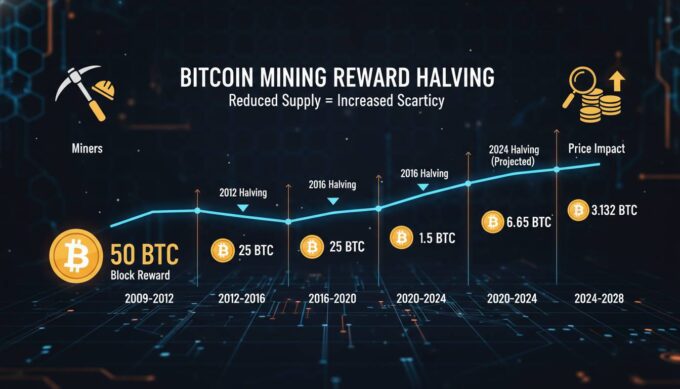
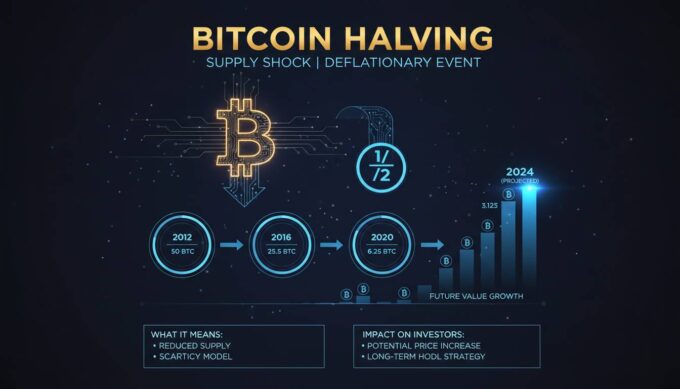
Bitcoin’s protocol automatically halves the mining reward every 210,000 blocks—roughly every four years. When Bitcoin launched in 2009, miners received 50 BTC per block. That reward dropped to 25 BTC in 2012, 12.5 BTC in 2016, 6.25 BTC in 2020, and most recently to 3.125 BTC in April 2024 .
This mechanism slows the issuance of new Bitcoin, delaying the moment when the total supply reaches its cap of 21 million. Estimates suggest that the final Bitcoin will be mined between 2134 and 2140 .
Significance of the Halving
Halving events serve multiple purposes:
- Scarcity and Inflation Control: By reducing the rate at which new Bitcoin enters circulation, halving enforces scarcity and curbs inflation—unlike fiat currencies, which can be printed at will .
- Market Psychology: Halvings attract media attention and investor interest, often triggering speculative buying and price rallies .
- Mining Economics: Halving slashes miner revenue, pressuring less efficient operations and potentially leading to industry consolidation .
Impact on Stakeholders
Miners
Miners are directly affected by halving events. With rewards cut in half, profitability drops unless offset by higher Bitcoin prices or lower operational costs. Many smaller or inefficient miners may shut down, while larger, more efficient operations survive or expand .
For example, after the April 2024 halving, daily Bitcoin issuance dropped from approximately 900 BTC to about 450 BTC . This reduction increases the breakeven cost per Bitcoin, making efficient hardware and low electricity costs critical .
Network Security and Hash Rate
A decline in miner participation can temporarily reduce the network’s hash rate, potentially slowing block times and affecting security. However, history shows that hash rate typically rebounds post-halving as the network adjusts .
Investors and Market Dynamics
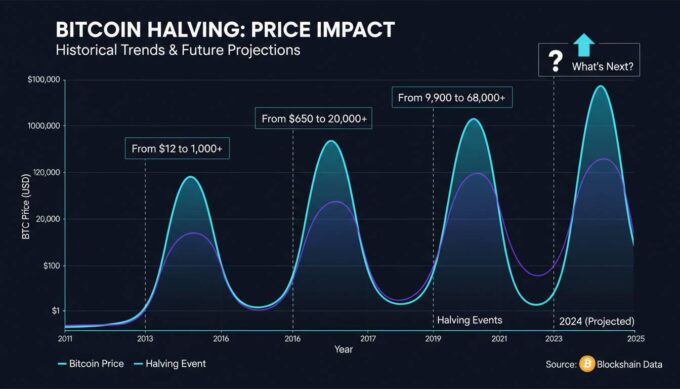
Halvings often precede bull markets. After the 2012 halving, Bitcoin’s price rose from around $12 to over $1,000 within a year. The 2016 halving preceded a surge from approximately $650 to nearly $19,000 by late 2017. The 2020 halving preceded the 2021 rally to over $60,000 .
In 2024, the halving coincided with increased institutional interest, including Bitcoin ETFs. According to Charles Guillemet, CTO of Ledger, ETFs were buying around 2,500 BTC per day, while new issuance had dropped to about 900 BTC—and will fall to 450 BTC post-halving. This supply-demand imbalance contributed to Bitcoin reaching nearly $74,000 in mid-March 2024 .
Broader Crypto Ecosystem
Bitcoin’s halving often influences the broader crypto market. Altcoins tend to follow Bitcoin’s lead, with increased media attention and investor interest spilling over into other digital assets .
Analysis and Future Outlook
Bitcoin halving is a cornerstone of its economic model, reinforcing scarcity and incentivizing long-term value. The April 2024 halving reaffirmed Bitcoin’s deflationary design and attracted institutional capital, particularly via ETFs .
Looking ahead, the next halving is projected for around April 2028, when the block reward will drop to approximately 1.5625 BTC . As Bitcoin’s supply tightens further, price volatility may increase, and miner economics will remain a critical factor.
Potential risks include network centralization if only large miners remain, and short-term security concerns if hash rate drops significantly. However, past patterns suggest resilience and recovery post-halving .
Conclusion
Bitcoin halving is more than a technical adjustment—it’s a defining feature of Bitcoin’s economic architecture. By halving miner rewards every four years, Bitcoin enforces scarcity, controls inflation, and shapes market dynamics. The April 2024 halving underscored these effects, driving institutional interest and price momentum.
For miners, efficiency is paramount. For investors, halving events offer both opportunity and risk. As the next halving approaches in 2028, understanding these dynamics will be essential for navigating Bitcoin’s evolving landscape.
Frequently Asked Questions
What is Bitcoin halving?
Bitcoin halving is a programmed event that occurs every 210,000 blocks (roughly every four years), reducing the block reward for miners by half. It enforces scarcity and controls inflation in the Bitcoin network .
When did the most recent halving occur?
The most recent halving took place in April 2024, reducing the mining reward from 6.25 BTC to 3.125 BTC per block .
How does halving affect Bitcoin’s price?
Halving reduces new supply, which, combined with steady or rising demand, can drive price increases. Historically, each halving has preceded significant price rallies .
What happens to miners after halving?
Miners face reduced revenue and must rely on price increases or lower costs to stay profitable. Inefficient miners may exit, while efficient operations consolidate the industry .
Does halving affect network security?
Halving can temporarily reduce the hash rate if miners drop out, potentially slowing block times. However, the network typically adjusts and recovers over time .
When is the next Bitcoin halving expected?
The next halving is projected for around April 2028, when the block reward will drop to approximately 1.5625 BTC .
This article provides a clear, factual, and publication-ready overview of Bitcoin halving tailored for U.S. readers, offering insights into its mechanics, impacts, and future implications.












Leave a comment