


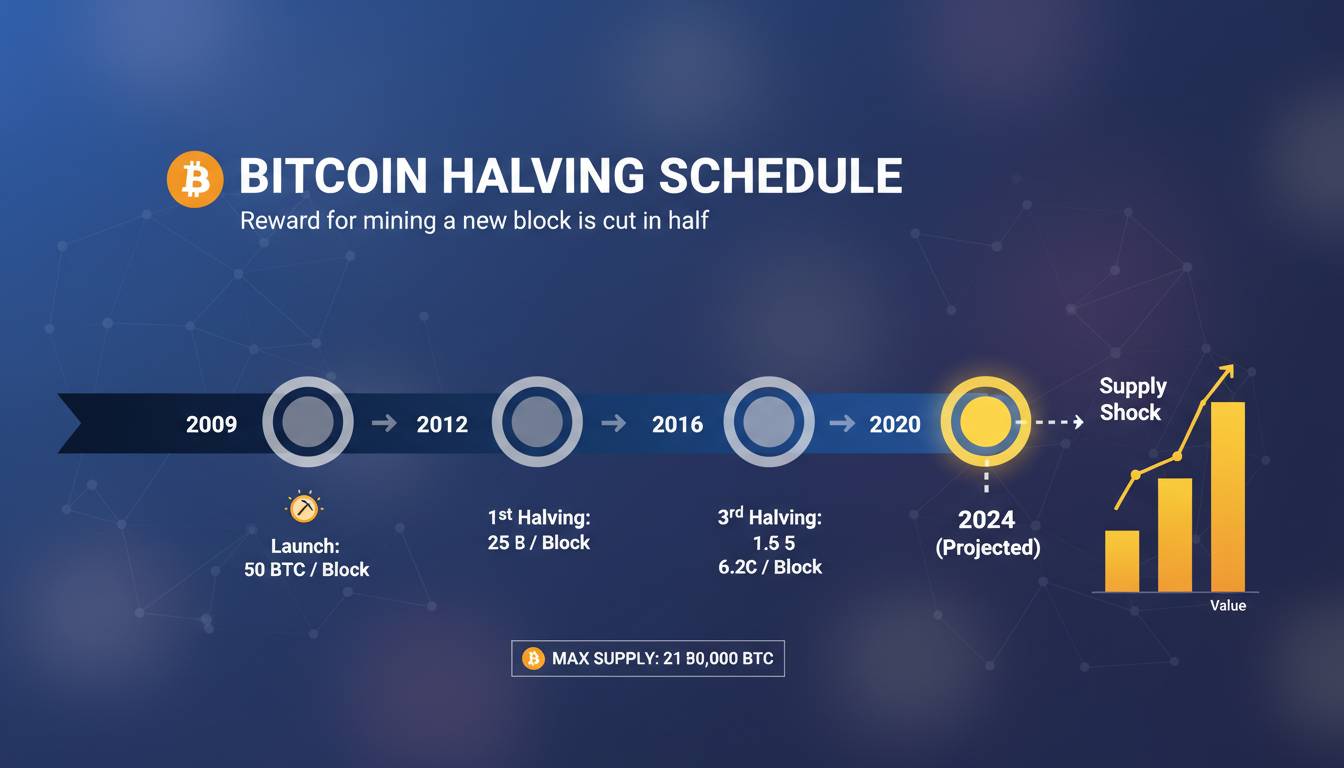
The latest Bitcoin halving occurred in April 2024, reducing the mining reward from 6.25 BTC to 3.125 BTC per block. This programmed event, occurring roughly every four years, cuts the rate at which new bitcoins enter circulation—intensifying scarcity and often influencing market dynamics. This article explores what the halving means, its significance for miners, investors, and the broader U.S. market, and what lies ahead.
What Is the Bitcoin Halving?
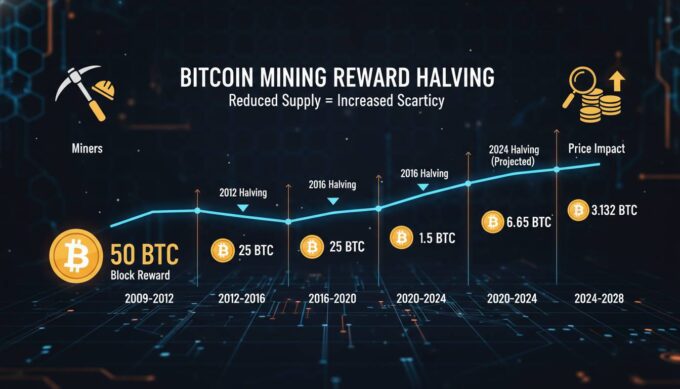
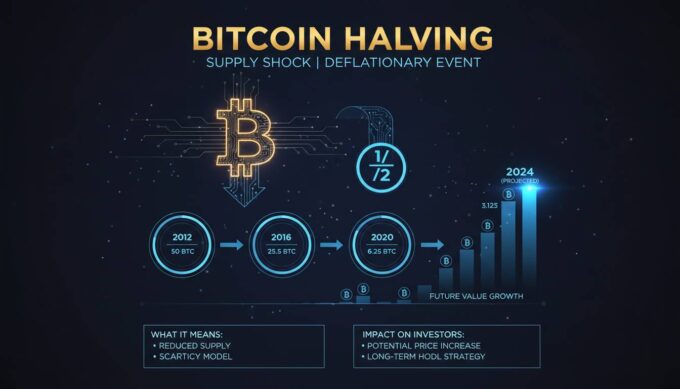
Bitcoin halving is a core feature of Bitcoin’s protocol, triggered every 210,000 blocks—approximately every four years. It halves the reward miners receive for validating new blocks, slowing the creation of new bitcoins and reinforcing the cryptocurrency’s capped supply of 21 million coins .
The most recent halving occurred in April 2024, reducing the block reward to 3.125 BTC. The next halving is projected for around 2028, when the reward will drop further to 1.5625 BTC .
Why It Matters: Scarcity, Inflation, and Market Dynamics
Bitcoin’s halving mechanism is designed to control inflation and simulate scarcity—similar to precious metals like gold. By reducing the flow of new bitcoins, the protocol aims to preserve value over time .
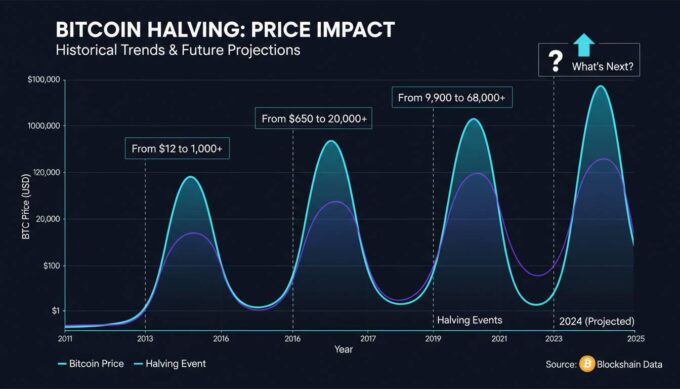
Historically, halvings have preceded significant price rallies. For example, the first halving in 2012 saw Bitcoin’s price jump from around $12 to over $127 within months . However, as the market matures, the magnitude of gains has diminished. One analysis shows returns of 8,858% after the first halving, 294% after the second, 540% after the third, and around 31% following the fourth as of mid‑2025 .
Coinbase reports that Bitcoin gained an average of 61% in the six months before past halvings and 348% in the six months after—but cautions that macroeconomic factors also play a significant role .
Impact on Miners and Network Security
Halving directly affects miners by cutting their block rewards in half. This reduction pressures less efficient operations, potentially forcing them to shut down or upgrade equipment .
Charles Guillemet, CTO at Ledger, explains that halving often leads to a drop in network hash rate as marginal miners exit. This can temporarily reduce network security and push some miners to sell holdings to cover costs. Simultaneously, the supply shock can support price increases .
Advances in mining technology and rising transaction fees help offset reduced rewards. More efficient hardware and consolidation among larger mining operations also contribute to network resilience .
Market Trends and Institutional Influence
The 2024 halving cycle unfolded amid a wave of institutional adoption. Spot Bitcoin ETFs launched in early 2024 attracted over $12 billion in inflows, significantly increasing demand while new supply was reduced by halving. This imbalance amplified upward price pressure .
However, analysts warn that halving alone does not guarantee price increases. Rajeev Bamra of Moody’s highlights the potential for volatility and cautions against relying solely on historical patterns .
A recent academic study using synthetic control methods found that the 2024 halving had a positive causal effect on Bitcoin’s price three months later—accounting for about one-fifth of the total price change between April 2023 and July 2024. The 2020 halving, however, did not show a statistically significant effect .
What’s Next: Looking Toward 2028 and Beyond
The next halving is expected around April 2028, when block rewards will fall to 1.5625 BTC . As supply tightens further, scarcity may intensify—especially if institutional demand continues to grow.
Yet, market maturity suggests diminishing percentage gains. The 2028 cycle may deliver more modest returns compared to earlier cycles, though absolute value could still rise significantly .
Regulatory clarity and macroeconomic conditions will also shape outcomes. Coinbase emphasizes that Bitcoin’s performance is intertwined with broader economic trends, not just halving events .
Conclusion
Bitcoin halving remains a pivotal event in the cryptocurrency’s lifecycle. It enforces scarcity, challenges miners, and often coincides with market rallies. The 2024 halving demonstrated how institutional demand and supply constraints can amplify price dynamics. As we approach the 2028 halving, investors and miners alike must navigate a more mature market shaped by regulatory shifts, macroeconomic forces, and evolving adoption trends.
Frequently Asked Questions
What is a Bitcoin halving?
A Bitcoin halving is a protocol event that cuts the mining reward in half every 210,000 blocks—roughly every four years—to control the supply of new bitcoins and enforce scarcity .
When did the last halving occur, and when is the next one?
The most recent halving took place in April 2024, reducing the block reward to 3.125 BTC. The next halving is expected around April 2028, when the reward will drop to 1.5625 BTC .
How does halving affect Bitcoin’s price?
Historically, halvings have preceded significant price increases, though gains have diminished over time. For example, returns ranged from 8,858% after the first halving to around 31% after the fourth as of mid‑2025 . However, macroeconomic factors also influence outcomes .
What impact does halving have on miners?
Halving reduces miners’ rewards, pressuring less efficient operations. This can lead to consolidation, technological upgrades, and short-term hash rate declines. Over time, improved efficiency and higher transaction fees help maintain network security .
Will the 2028 halving produce similar price gains?
While scarcity will increase, market maturity suggests smaller percentage gains. Institutional demand and regulatory developments will play a larger role in shaping price dynamics .
Is halving the only factor influencing Bitcoin’s price?
No. Halving is one of many factors. Broader economic conditions, regulatory changes, institutional adoption, and investor sentiment all significantly influence Bitcoin’s price trajectory .











Leave a comment