


The latest bitcoin halving in April 2024 marked a pivotal moment in the cryptocurrency world. This event, which cut the block reward from 6.25 BTC to 3.125 BTC, has significant implications for supply dynamics, miner economics, and market sentiment. This article explores the mechanics, historical patterns, and future outlook of bitcoin halving, offering a comprehensive, data-driven analysis for U.S. readers.
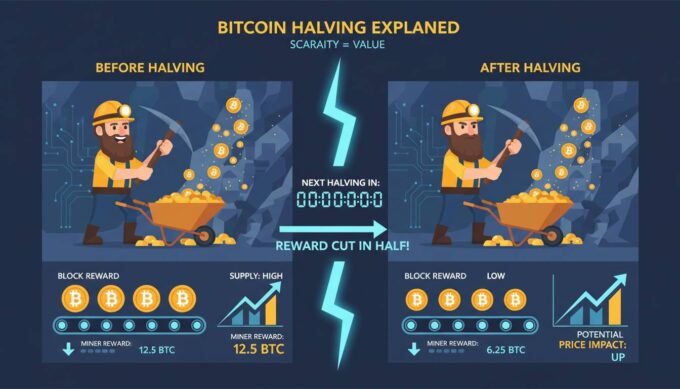
The bitcoin halving is a pre-programmed event that occurs roughly every four years, reducing the reward miners receive for validating transactions by half. This mechanism enforces scarcity and controls inflation within the Bitcoin ecosystem. The most recent halving occurred in April 2024, lowering the block reward to 3.125 BTC .
What Is Bitcoin Halving?
Bitcoin operates on a proof-of-work system where miners validate transactions and receive newly minted BTC as a reward. The protocol is designed to cap the total supply at 21 million coins. To achieve this, the mining reward is halved every 210,000 blocks—approximately every four years .
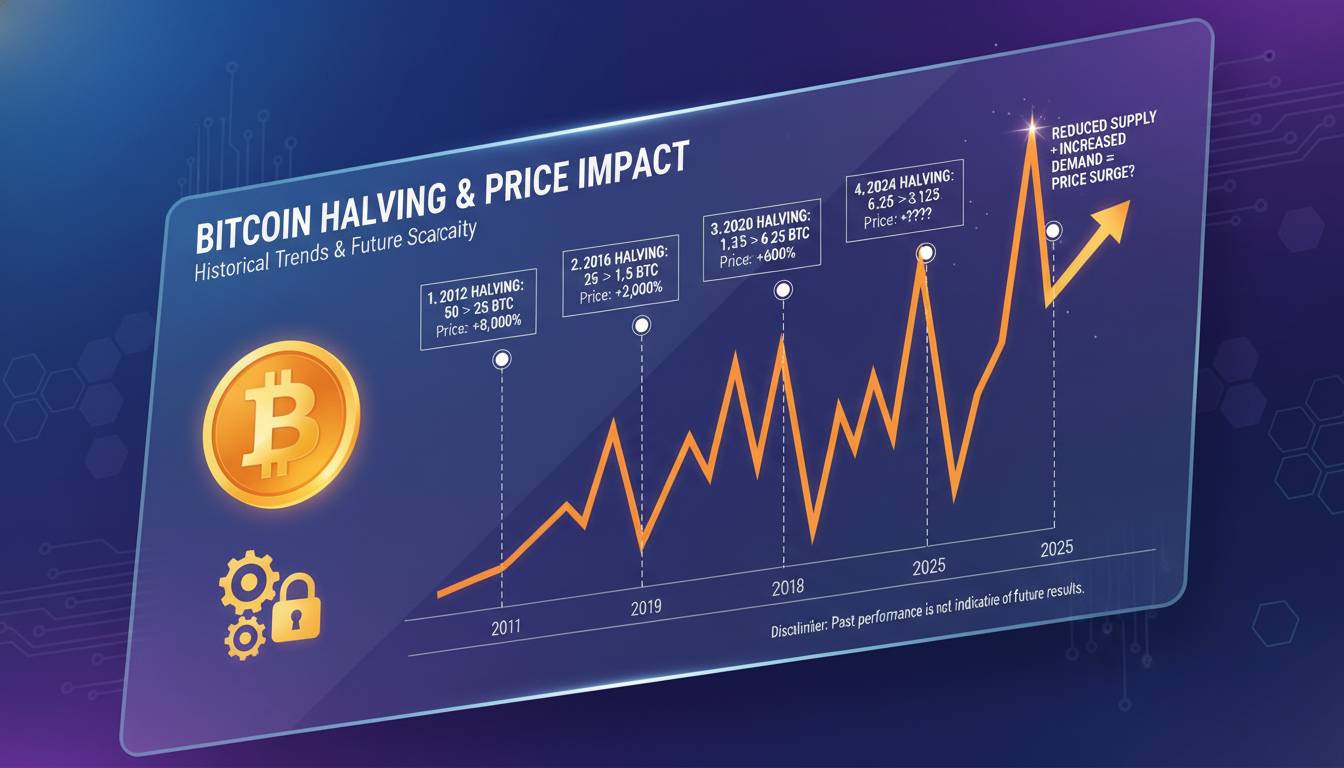
The halving mechanism ensures that the issuance of new bitcoins slows over time. The first halving in 2012 reduced the reward from 50 to 25 BTC, followed by reductions to 12.5 BTC in 2016, 6.25 BTC in 2020, and 3.125 BTC in 2024 .
Historical Price Trends After Halvings
Bitcoin’s price has historically surged following halving events:
- 2012: Price rose from around $12 to over $1,000 within a year .
- 2016: Price climbed from approximately $650 to nearly $20,000 by late 2017 .
- 2020: Price increased from about $8,600 to over $60,000 in 2021 .
- 2024: Price moved from around $60,000 to approximately $109,800 by May 2025—an increase of roughly 83% .
These patterns suggest that halving events often precede substantial price rallies, though the magnitude varies across cycles.
Why Halving Influences Price
Supply Shock and Scarcity
Halving cuts the rate at which new bitcoins enter circulation. If demand remains steady or increases, this supply shock can drive prices higher .
Miner Behavior and Market Structure
With reduced rewards, miners face tighter margins. Some may shut down operations, reducing sell pressure. Grayscale notes that halving halves the annual sell pressure from miners—from about $14 billion to $7 billion—potentially easing downward price pressure .
Institutional Demand via ETFs
The introduction of spot Bitcoin ETFs in the U.S. has created a new, steady source of demand. These funds can absorb miner sell pressure, reshaping market dynamics in favor of price stability or growth .
Market Psychology and Media Attention
Halving events attract widespread media coverage and investor interest. This heightened attention often fuels speculative demand, amplifying price movements .
Miner Economics and Network Security
Profitability Pressures
Post-halving, miners must operate more efficiently or secure cheaper energy. For example, production costs per BTC can double—from around $250 to $500—if electricity costs remain constant .
Hash Rate and Difficulty Adjustments
Less efficient miners may drop out, leading to a temporary decline in hash rate and network difficulty. Over time, these metrics typically recover as the network adjusts .
Transaction Fees as Revenue
As block rewards shrink, transaction fees become a larger portion of miner income. In early 2024, fees accounted for up to 75% of miner revenue, helping sustain operations despite reduced subsidies .
Analytical Insights and Market Evolution
Academic Findings
A recent study using synthetic control methods found that the 2024 halving had a positive price effect three months later, accounting for about one-fifth of the total price change between April 2023 and July 2024 .
Diminishing Supply Shock Impact
As Bitcoin matures, the relative impact of each halving diminishes. Supply shocks become smaller in proportion to the total supply, making demand-side factors increasingly important for price movements .
Price Cycle Patterns
Analysts observe that Bitcoin often reaches its cycle peak around 1,065 days after a halving. If this pattern holds, the 2024 halving could lead to a peak in late 2026 .
Implications for U.S. Stakeholders
- Retail Investors: Halving events can offer opportunities but come with volatility. Understanding historical patterns helps manage expectations.
- Institutional Investors: ETFs provide a structured way to gain exposure, potentially smoothing price swings.
- Miners: Efficiency and cost management are critical. Transitioning to fee-based revenue models is increasingly important.
- Policymakers and Regulators: Halving underscores Bitcoin’s deflationary design and market resilience, relevant to regulatory discussions.
Conclusion
The bitcoin halving is a defining event in the cryptocurrency ecosystem. By halving block rewards, it enforces scarcity, reshapes miner economics, and often triggers significant price movements. While historical trends show strong post-halving rallies, the evolving market—driven by ETFs, institutional demand, and network maturity—means future cycles may differ in scale and timing.
As Bitcoin continues to mature, the interplay between supply constraints and demand dynamics will define its trajectory. For U.S. investors, miners, and policymakers, understanding these forces is essential to navigating the next chapters of Bitcoin’s journey.
Frequently Asked Questions
What is a bitcoin halving?
A bitcoin halving is a pre-programmed event that cuts the mining reward in half every 210,000 blocks—roughly every four years—to control supply and enforce scarcity .
When did the most recent halving occur?
The most recent halving took place in April 2024, reducing the block reward from 6.25 BTC to 3.125 BTC .
How does halving affect Bitcoin’s price?
Halving reduces new supply, potentially increasing price if demand remains steady or grows. Historical cycles show significant price rallies in the months and years following halvings .
Do miners become unprofitable after halving?
Some miners may face losses if they lack efficient hardware or access to cheap energy. However, transaction fees and network adjustments often help maintain profitability .
How do ETFs influence post-halving dynamics?
Spot Bitcoin ETFs in the U.S. provide steady demand and can absorb miner sell pressure, potentially stabilizing prices and reshaping market structure .
Will halving always lead to price increases?
While past halvings have preceded rallies, the impact may diminish over time due to market maturity. Demand-side factors and institutional participation are becoming increasingly influential .

















Leave a comment