


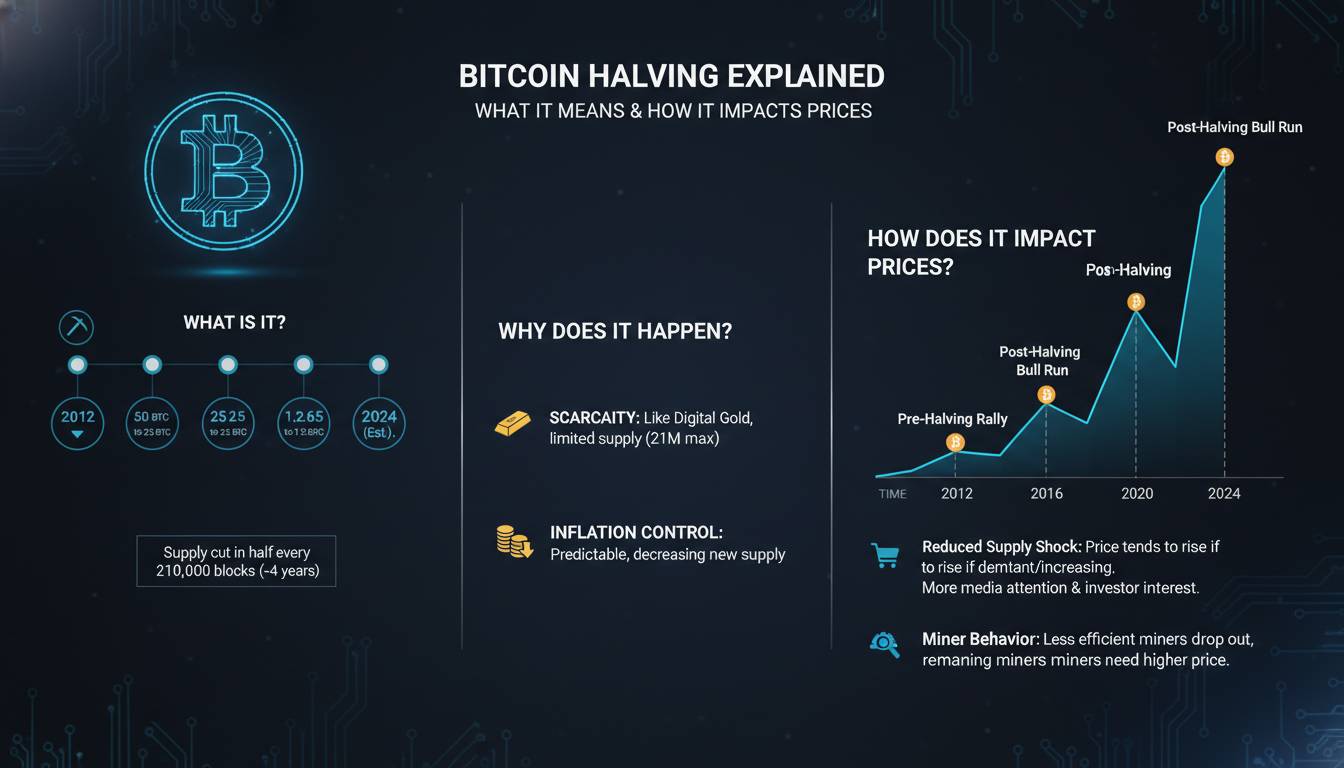
The latest Bitcoin halving, which occurred in April 2024, cut the block reward from 6.25 BTC to 3.125 BTC. This article explores what the halving is, how it affects Bitcoin’s supply and price, its implications for miners and investors, and what may lie ahead.
Bitcoin halving is a pre-programmed event that halves the reward miners receive for validating new blocks—occurring roughly every four years or every 210,000 blocks. It is a core feature of Bitcoin’s monetary policy, designed to cap the total supply at 21 million BTC and reinforce scarcity.
What Is Bitcoin Halving?
Bitcoin halving is embedded in the protocol created by Satoshi Nakamoto. It reduces the number of new bitcoins entering circulation by half, slowing inflation and reinforcing scarcity.
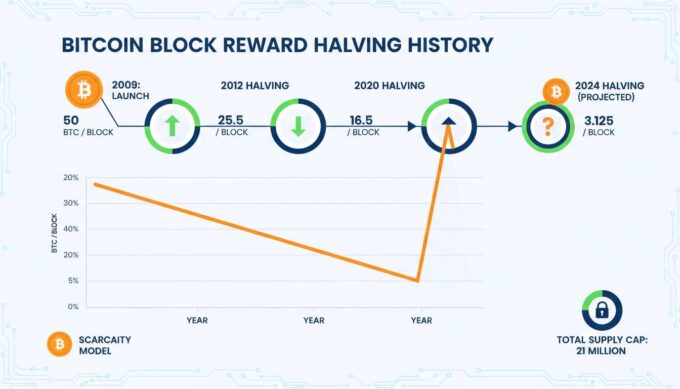
- First halving (2012): reward dropped from 50 BTC to 25 BTC
- Second halving (2016): dropped to 12.5 BTC
- Third halving (2020): dropped to 6.25 BTC
- Fourth halving : dropped to 3.125 BTC
This mechanism ensures that Bitcoin’s supply growth diminishes over time, with the final coin expected to be mined between 2134 and 2140.
Historical Price Trends After Halvings
Bitcoin’s price has historically surged following halving events:
- 2012: from ~$12 to over $1,000 within a year (≈ +8,200%)
- 2016: from ~$650 to ~$2,500 in a year (≈ +285%), later peaking near $20,000
- 2020: from ~$8,600 to over $60,000 in 2021 (≈ +600%)
- 2024: from ~$60,000 to ~$109,800 by mid-2025 (≈ +83%)
However, returns appear to diminish over time as the market matures.
Why Halving Influences Price
Supply Shock and Scarcity
Halving reduces the supply of new bitcoins. If demand remains stable or increases, scarcity can drive prices upward.
Miner Dynamics
Less efficient miners may shut down, reducing network hashrate temporarily. Remaining miners may sell some holdings to cover costs, creating short-term downward pressure.
Institutional Demand and ETFs
In 2024, the launch of U.S. spot Bitcoin ETFs significantly boosted demand. ETFs reportedly purchase around 2,500 BTC daily, while new issuance post-halving drops to about 450 BTC per day—intensifying supply-demand imbalance.
Market Psychology and Speculation
Halvings are highly anticipated events. Market sentiment, speculative behavior, and media coverage often amplify price movements.
Countervailing Security Effects
Some research suggests that halving may negatively impact price and network activity due to reduced miner revenue, potentially undermining security.
The 2024 Halving: A Closer Look
Price Impact
A synthetic control study found that the 2024 halving had a positive effect on Bitcoin’s price three months later—accounting for about one-fifth of the total price change between April 2023 and July 2024.
Miner Revenue and Fees
Despite the reward cut, miners benefited from surging transaction fees. In the months following the halving, fees accounted for up to 75% of miners’ income, helping sustain profitability.
Market Sentiment and Liquidity Risks
Some analysts, like Arthur Hayes, warned that the bullish narrative around halving was already priced in, and that tax season and tightening liquidity could trigger a price correction around the event.
Implications for Stakeholders
Investors
- Long-term holders may benefit from post-halving price rallies.
- Short-term traders should be cautious of volatility and potential corrections.
Miners
- Efficient operations remain viable; less efficient ones may exit.
- Transaction fees become increasingly important for revenue.
Market Observers
- Halvings remain key cyclical events, but their impact may evolve as institutional adoption grows.
- Regulatory clarity and macroeconomic factors now play a larger role than in past cycles.
What Lies Ahead
Next Halving (2028)
The fifth halving is projected for April 2028, reducing the block reward to 1.5625 BTC.
Market Maturity
As Bitcoin’s market cap grows, percentage gains post-halving may continue to decline, though absolute price increases could still be significant.
Institutional and Regulatory Influence
Continued ETF inflows and clearer regulatory frameworks could reshape demand dynamics around future halvings.
Security and Network Resilience
Ongoing improvements in mining efficiency and fee structures will be critical to maintaining network security as block rewards diminish.
Conclusion
Bitcoin halving is a foundational mechanism that enforces scarcity and shapes market cycles. Historically, halvings have preceded significant price rallies, though returns have moderated over time. The 2024 halving reinforced this pattern, supported by institutional demand and robust transaction fees. Yet, risks remain—from miner profitability to macroeconomic headwinds.
As we approach the 2028 halving, the interplay between supply constraints, evolving demand, and regulatory developments will determine Bitcoin’s trajectory. For investors, miners, and observers alike, understanding these dynamics is essential to navigating the next chapter of Bitcoin’s monetary evolution.
Frequently Asked Questions
What is a Bitcoin halving?
A Bitcoin halving is a protocol event that cuts the mining reward in half every 210,000 blocks (about every four years), reducing the rate at which new bitcoins are created.
Why does halving matter for price?
Halving reduces supply. If demand remains steady or grows, scarcity can drive prices upward. Historical data shows significant post-halving rallies.
How did the 2024 halving affect miners?
While block rewards dropped, miners benefited from higher transaction fees, which accounted for up to 75% of their income post-halving.
Is price increase guaranteed after halving?
No. While past halvings often led to price gains, factors like market sentiment, liquidity, and miner behavior can influence outcomes.
When is the next halving?
The next Bitcoin halving is projected for April 2028, reducing the block reward to 1.5625 BTC.
How do ETFs influence halving dynamics?
ETFs increase institutional demand. In 2024, ETF purchases outpaced new Bitcoin issuance, amplifying supply-demand imbalance and supporting price.
















Leave a comment