


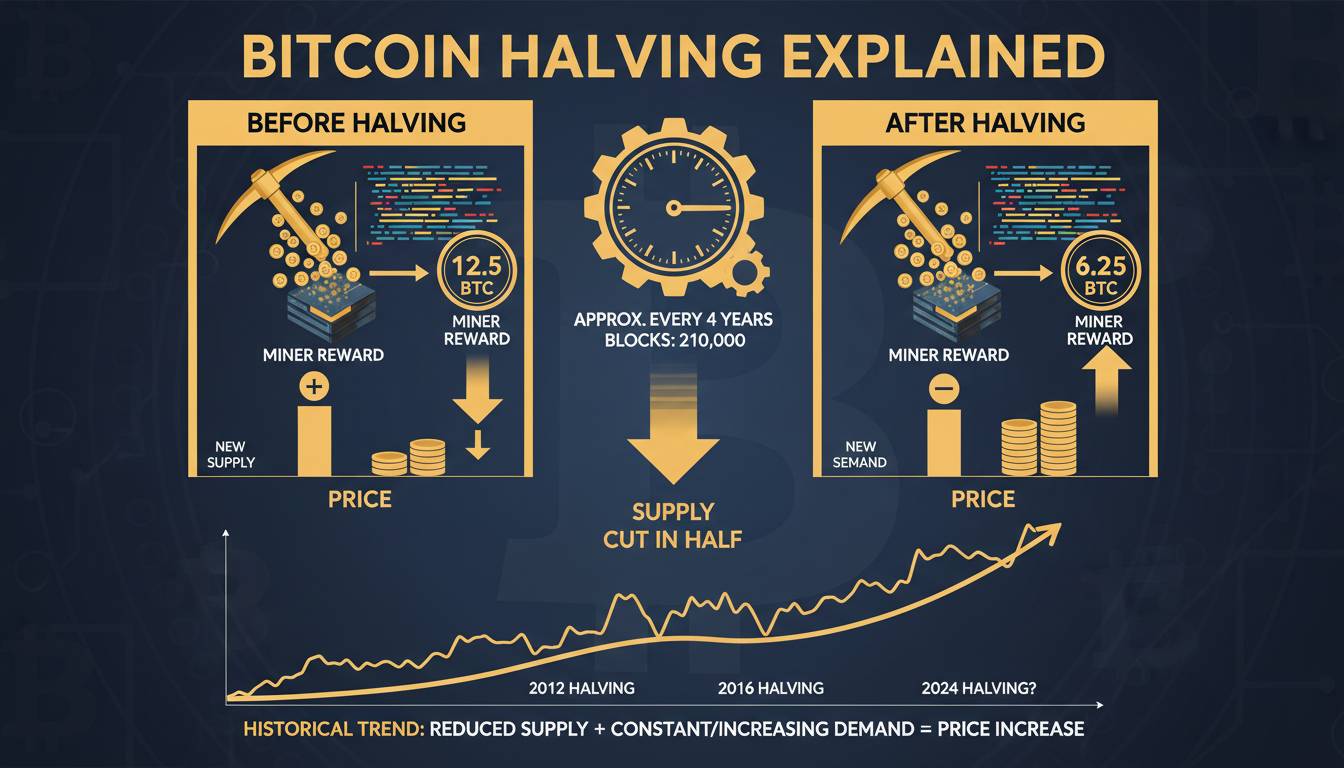
Bitcoin’s latest halving, which occurred on April 20, 2024, reduced the block reward from 6.25 BTC to 3.125 BTC . This article explores what the event entails, its significance for miners and investors, and how it may shape Bitcoin’s price trajectory in the United States.
Bitcoin halving is a pre-programmed event that halves the reward miners receive for validating transactions every 210,000 blocks—roughly every four years . The latest halving marks the fourth such event since Bitcoin’s inception in 2009, reinforcing its finite supply capped at 21 million coins .
What Is Bitcoin Halving?
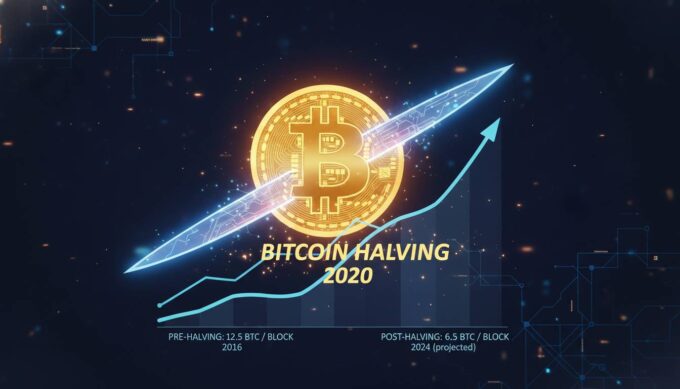
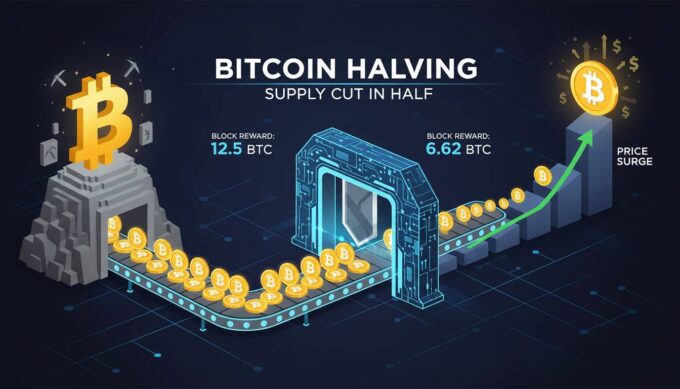
Bitcoin halving is a built-in mechanism that reduces the issuance rate of new bitcoins. It occurs automatically every 210,000 blocks, or approximately every four years, and is designed to control inflation and ensure scarcity .
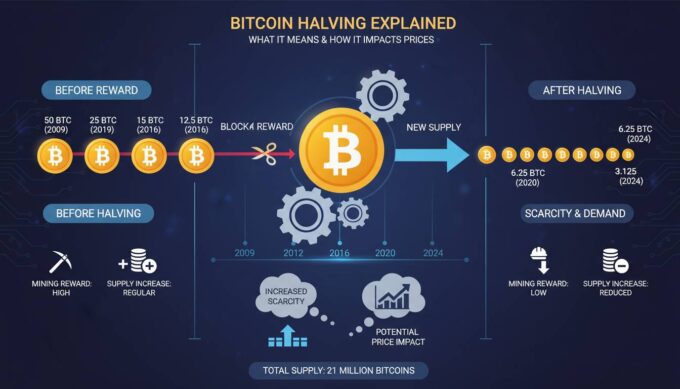
- In 2009, miners received 50 BTC per block.
- The first halving in 2012 reduced the reward to 25 BTC.
- The second in 2016 dropped it to 12.5 BTC.
- The third in 2020 brought it down to 6.25 BTC.
- The most recent halving in April 2024 lowered it further to 3.125 BTC .
This gradual reduction in supply is intended to mimic the scarcity of precious metals and reinforce Bitcoin’s value proposition as “digital gold” .
Why It Matters: Supply Shock and Scarcity
Halving events create a supply shock by cutting the flow of new bitcoins in half. If demand remains steady or increases, basic economic theory suggests upward pressure on price .
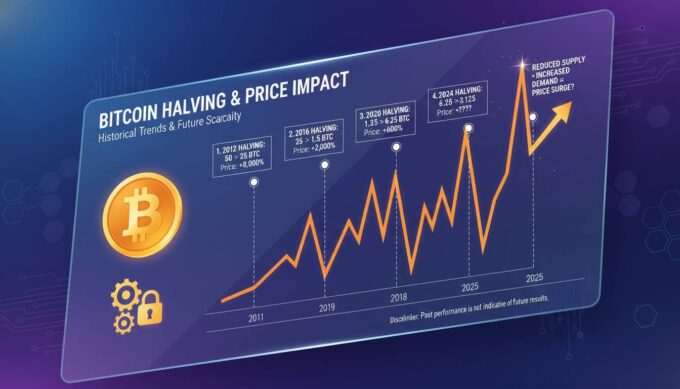
Historically, Bitcoin’s price has surged following halving events:
- After the 2012 halving, the price rose from around $12 to over $1,000 within a year .
- The 2016 halving saw Bitcoin climb from approximately $650 to $2,500 within a year, peaking near $20,000 by late 2017 .
- Following the 2020 halving, the price rose from about $8,600 to over $60,000 by April 2021 .
CryptoQuant’s analysis shows that long-term holders are accumulating Bitcoin at a rate far exceeding new issuance—about seven times more per month—suggesting that demand may now be a stronger price driver than supply reduction alone .
An academic study using synthetic control methods found that the 2024 halving had a positive effect on Bitcoin’s price three months later, accounting for about one-fifth of the total price change between April 2023 and July 2024 .
Impact on Miners and Network Dynamics
Halving significantly affects miners’ profitability. With rewards halved, less efficient operations may become unprofitable and shut down .
- Mining costs can double, pushing breakeven points higher and forcing miners to upgrade hardware or secure cheaper energy .
- A drop in hash rate often follows, reducing network difficulty and potentially increasing transaction fees as competition for block space intensifies .
Charles Guillemet, CTO of Ledger, notes that less profitable miners unplug their machines post-halving, reducing network hash power. Meanwhile, the reduced supply creates a liquidity shock that can drive price increases .
Institutional Demand and Market Sentiment
The 2024 halving occurred amid a wave of institutional interest. U.S.-listed Bitcoin ETFs launched in early 2024 have attracted over $12 billion in inflows, buying approximately 2,500 BTC per day—far exceeding new issuance, which dropped from 900 to 450 BTC daily post-halving .
This imbalance between supply and demand has contributed to Bitcoin reaching record highs near $74,000 in March 2024 .
However, analysts caution that markets may have already priced in the halving. Deutsche Bank noted that the event was “already partially priced in,” and significant price increases may not follow immediately citeturn0news0.
Analysis and Future Outlook
Bitcoin halving remains a powerful structural event with far-reaching implications:
- It enforces scarcity and supports Bitcoin’s narrative as a deflationary asset.
- It pressures miners to optimize operations or exit the market.
- It amplifies volatility and media attention, attracting new investors.
- Institutional demand, especially via ETFs, now plays a larger role in price dynamics.
Yet, the halving’s impact may be diminishing. As CryptoQuant highlights, long-term holder demand now outpaces new supply, potentially reducing the halving’s relative influence .
Looking ahead, Bitcoin’s price may continue to rise, but timing and magnitude remain uncertain. Peaks often occur several months or even over a year after halving events . Market sentiment, macroeconomic conditions, and regulatory developments will also shape the trajectory.
Conclusion
Bitcoin halving is a defining event in the cryptocurrency’s lifecycle. By halving the block reward, it enforces scarcity, reshapes miner economics, and often triggers heightened market activity. The 2024 halving occurred amid unprecedented institutional demand, particularly from U.S. ETFs, intensifying supply-demand imbalances. While historical trends suggest price appreciation, the evolving market landscape means outcomes are less predictable. Investors and stakeholders should monitor demand trends, miner behavior, and macroeconomic factors to gauge future developments.
Frequently Asked Questions
What is Bitcoin halving?
Bitcoin halving is a protocol-driven event that halves the mining reward every 210,000 blocks—about every four years—to control supply and reinforce scarcity.
When did the latest halving occur?
The most recent halving took place on April 20, 2024, reducing the block reward from 6.25 BTC to 3.125 BTC.
How has Bitcoin’s price historically responded?
After past halvings, Bitcoin’s price has surged significantly: from ~$12 to over $1,000 (2012), ~$650 to ~$2,500 (2016), and ~$8,600 to over $60,000 (2020).
Do halvings guarantee price increases?
No. While halvings often precede price rallies, other factors—such as demand, institutional investment, and macroeconomic conditions—also play critical roles.
How do halvings affect miners?
Halvings reduce miner revenue, pushing less efficient operations out of business and increasing the importance of energy efficiency and hardware performance.
What role do ETFs play in the current cycle?
U.S.-listed Bitcoin ETFs have driven substantial demand, buying more BTC daily than new issuance, thereby amplifying the supply-demand imbalance post-halving.












Leave a comment