


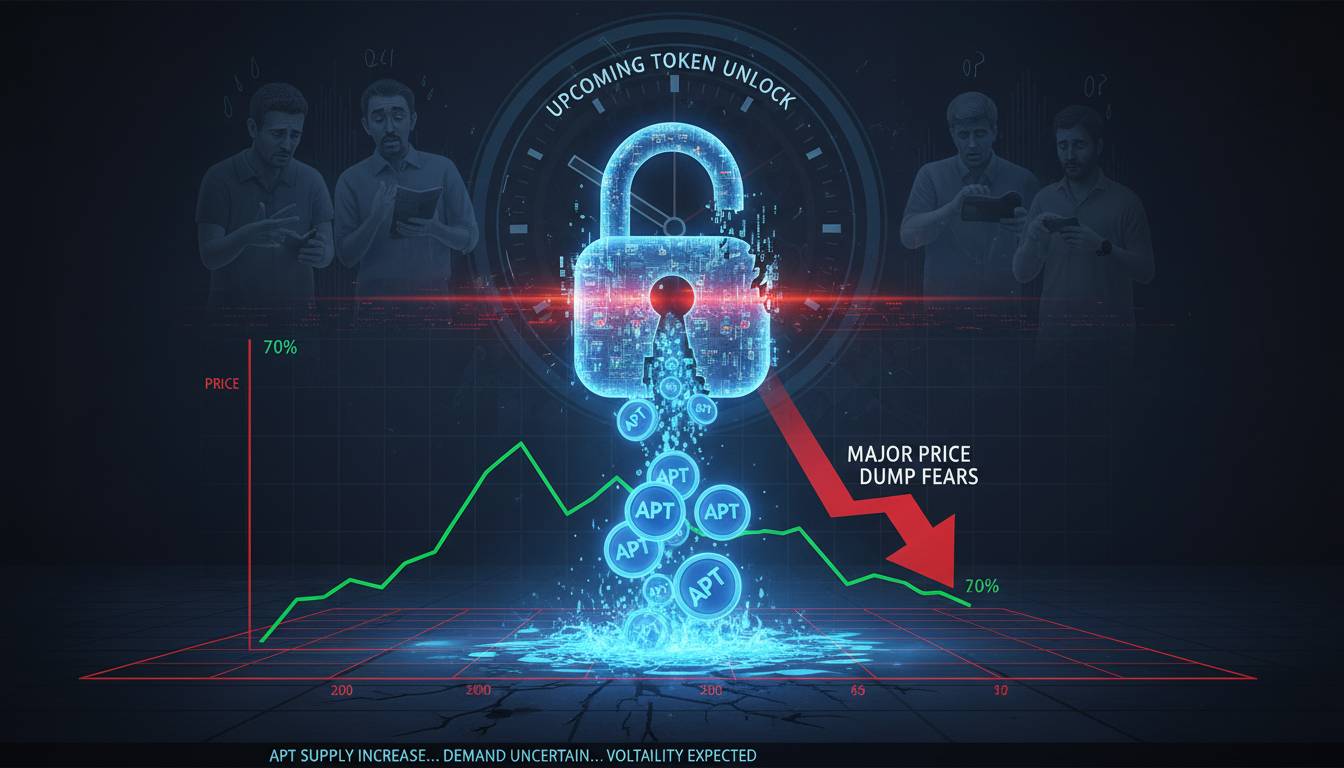
An upcoming token unlock for Aptos (APT) is drawing heightened scrutiny from market watchers. With a significant volume of APT set to become liquid, investors and analysts express growing concerns that the influx could strain prices. Timing, size, and market sentiment are converging to cast a spotlight on how the crypto ecosystem may absorb the new supply.
Why This Unlock Matters Now
The significance of this event lies in its potential market impact. APT is poised to experience a substantial unlock, one that could free millions of tokens into circulation. Investors worry this will weigh heavily on price, especially if holders opt to sell immediately. Volatility may spike as the expanded supply tests market demand amid broader crypto sentiment.
Beyond the immediate supply shock, scheduled unlocks often serve as psychological stressors. They remind investors of dilution risks and can shake confidence. The timing is critical; if sentiment is fragile, even a moderate sell-off could trigger wider losses. Tracking this milestone is essential for anyone holding or trading APT.
Unlock Details and Market Dynamics
Although exact figures vary by source, market projections estimate that tens of millions of APT tokens will unlock in the near term. The unlock schedule is structured in phases, possibly tied to vesting periods for early backers, team members, or ecosystem participants. Each tranche could release at different intervals, creating recurring pressure points.
How markets respond will depend partly on who holds the tokens. If insiders or early investors controlling unlocked tokens decide to sell en masse, the sell pressure could intensify. On the other hand, if distribution is more dispersed or if holders hold through potential dips, the impact may be cushioned.
Analyst Sentiment: Mixed and Watchful
Crypto analysts remain divided on the likely fallout. Some warn that large-scale unlocks historically correlate with price drops. They argue better risk management would involve lockup extensions or staggered release schedules aligned with liquidity conditions.
Others counter that not every unlock triggers a sell-off. Some holders take a long-term view and resist selling even after vesting. They note that token demand fundamentals—network activity, partnerships, developer growth—can sometimes absorb increased supply without sharp losses.
“Not every unlock means capitulation,” one market observer noted. “It depends on holder behavior, market context, and demand signals. Still, this is a clear moment to stay alert.”
Tracking the Unlock: What to Watch
Several key data points should shape how this evolves:
- Exact unlock volume and schedule: Knowing the timing and amount of tokens entering circulation is critical.
- On-chain movement: Watch for large transfers from vesting addresses to exchanges or cold wallets.
- Exchange activity: Spikes in sell-side order books or whale activity could signal intent to dump.
- Sentiment metrics: Social chatter, dive in sentiment scores, or commentary in crypto channels may presage actual moves.
Beyond that, broader market context matters. If the overall crypto market is in risk-off mode, even measured unlocks can amplify price drag. Conversely, a bullish backdrop may mitigate downside.
Implications for Traders and Holders
For short-term traders, the unlock presents both risks and opportunities. A surprise sell-off could offer quick entry points for momentum plays. Conversely, ill-timed exposure may result in rapid losses if downside unfolds abruptly.
Long-term holders may opt for patience. If the network continues to expand adoption or deliver milestones, temporary volatility may prove to be benign. However, caution is warranted: holders should monitor unlock phases and remain flexible.
Looking Ahead: What’s Next
Markets will keep a close eye on early signs of unlock impact. Key triggers could include sudden exchange inflows, sharper price drops, or rising tensions among layered markets. Monitoring tweets, trading volume, futures basis, and liquidity shifts will matter more than ever.
Tokens emerging from vesting need to be digested by the market. If demand doesn’t scale, the price could slide. Conversely, robust ecosystem developments may counterbalance supply-pressure.
Final Takeaways
- A major Aptos token unlock is imminent, with potential to influence APT price significantly.
- Market reaction hinges on unlock size, holder behavior, and macro crypto sentiment.
- Mixed analyst views reflect uncertainty, but all agree on the need for vigilant tracking.
- Watch on-chain flows, exchange dynamics, and sentiment shifts closely in the coming days.
- Holders and traders alike should stay nimble as unlock phases unfold.
Stay attuned.


















Leave a comment