


Current Technical Setup and Price Action
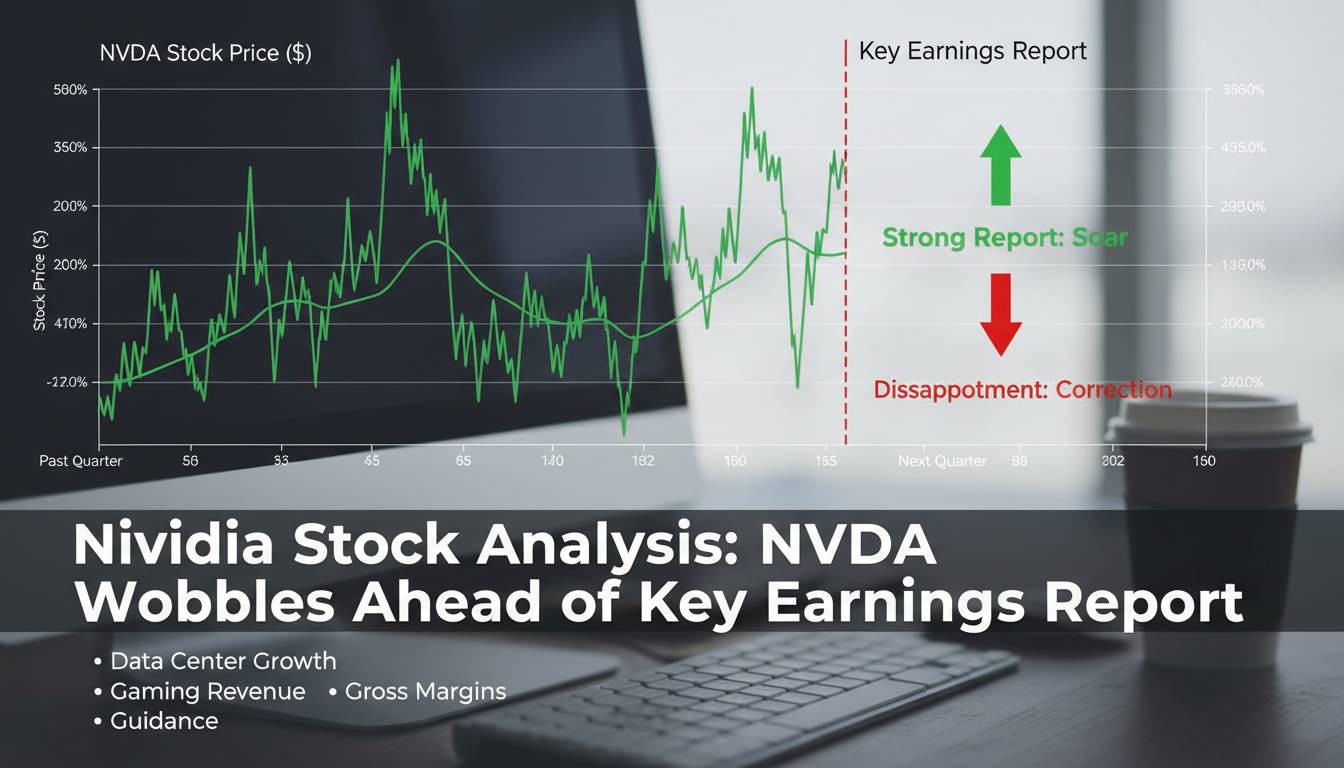
NVDA’s recent price action reveals a complex technical picture that’s keeping traders on edge. The stock has formed what appears to be a consolidation pattern after reaching all-time highs near $153 in late January.
The 50-day moving average, currently sitting around $138, has acted as dynamic support during recent pullbacks. Meanwhile, the relative strength index hovers near 55, suggesting neither overbought nor oversold conditions – a neutral stance that often precedes significant moves.
Trading volume has picked up considerably in the past two weeks. Daily volume averaging 45-50 million shares indicates institutional repositioning ahead of earnings. This elevated activity typically signals that big money is making decisive moves, though the direction remains unclear.
Key Support and Resistance Levels
The immediate support zone sits between $135-$137, where buyers have consistently emerged during recent dips. Below that, the $130 level represents a critical psychological threshold that coincides with the 100-day moving average.
On the upside, resistance looms at $145-$147, where sellers have capped multiple rally attempts. A decisive break above $150 could trigger a fresh wave of momentum buying, potentially pushing the stock toward $160-$165.
Fundamental Drivers Behind the Volatility
Nvidia’s wobbling share price reflects genuine uncertainty about several key factors. The company’s data center revenue, which now represents roughly 80% of total sales, faces questions about sustainability as hyperscalers potentially moderate their capex spending.
Recent comments from major cloud providers suggest AI infrastructure investments remain robust, but the pace of growth might decelerate from the breakneck speeds seen in 2024. Microsoft, Amazon, and Google have all signaled continued AI investments, yet their tone has shifted toward efficiency rather than pure expansion.
Competition concerns add another layer of complexity. AMD’s MI300 series and Intel’s Gaudi accelerators are gaining traction, though Nvidia maintains a commanding market share estimated at over 90% in AI training workloads.
The Blackwell Architecture Factor
The upcoming Blackwell GPU architecture represents both opportunity and risk. Production ramps are reportedly progressing well, with volume shipments expected in the second quarter. However, any hiccups in the rollout could impact near-term guidance and sentiment.
Supply chain checks suggest strong pre-orders for Blackwell-based systems, particularly the GB200 Grace Blackwell Superchip. Major customers have reportedly secured allocations through 2025, indicating sustained demand visibility.
Wall Street Sentiment and Analyst Perspectives
Analyst opinions remain largely bullish, though price targets show wider dispersion than usual. The Street’s average target sits around $165, implying roughly 20% upside from current levels.
Goldman Sachs recently reiterated their buy rating, citing:
“Nvidia’s competitive moat in AI infrastructure remains formidable. While growth rates will naturally moderate from triple-digit levels, we expect the company to sustain 40-50% revenue growth through fiscal 2026.”
However, not everyone shares this optimism. Some analysts worry about peak AI spending and potential inventory corrections if demand disappoints. The bear case centers on valuation concerns, with the stock trading at approximately 35x forward earnings – rich even for a high-growth semiconductor company.
Options Market Insights
The options market reveals fascinating dynamics. Implied volatility for near-term options has spiked to around 65%, suggesting traders expect a roughly 8-10% move following earnings. Put-call skew indicates slight downside protection buying, though overall positioning remains bullish.
Large option trades show institutional investors establishing collar strategies – buying protective puts while selling upside calls to finance the hedge. This suggests a desire to maintain long exposure while managing downside risk.
Historical Earnings Patterns and Seasonality
Nvidia’s track record of earnings surprises provides important context. The company has beaten consensus estimates for 12 consecutive quarters, often by wide margins. However, the magnitude of beats has narrowed recently as analyst estimates caught up with reality.
Post-earnings moves have been substantial, averaging plus or minus 9% over the past eight quarters. Notably, even earnings beats haven’t guaranteed positive reactions, as forward guidance increasingly drives sentiment.
Seasonal patterns show February-March historically represents a strong period for semiconductor stocks. This technical tailwind could provide support if earnings meet expectations.
Risk Factors to Monitor
Several risks warrant careful attention as earnings approach. China exposure remains a wildcard, with export restrictions potentially impacting 15-20% of data center revenue. The company’s workarounds through modified products face ongoing regulatory scrutiny.
Gross margin trajectory presents another concern. While Nvidia has maintained impressive 70%+ gross margins, product mix shifts toward Blackwell could create temporary pressure. Management’s commentary on margin sustainability will be crucial.
Customer concentration risk shouldn’t be ignored. A handful of hyperscale customers drive the majority of data center revenue, making Nvidia vulnerable to any spending pullbacks from these giants.
Macroeconomic Considerations
Broader market conditions add complexity to the analysis. Rising bond yields have pressured high-multiple growth stocks, and Nvidia isn’t immune to these dynamics. The 10-year Treasury yield hovering near 4.5% creates valuation headwinds for richly valued tech names.
Federal Reserve policy remains another variable. Any hints of prolonged restrictive monetary policy could dampen risk appetite and impact Nvidia’s multiple regardless of fundamental performance.
Trading Strategies and Positioning
For traders navigating this uncertainty, several approaches merit consideration. Short-term traders might consider straddle or strangle options strategies to profit from volatility regardless of direction.
Long-term investors could use any earnings-related weakness to accumulate shares, provided the fundamental thesis remains intact. Dollar-cost averaging through the volatility often proves wise for conviction positions.
Risk management becomes paramount. Position sizing should reflect the elevated volatility, and stop-losses might need wider berths to avoid premature exits during whipsaw price action.
Looking Beyond Earnings
While the February 25 report commands immediate attention, investors should maintain longer-term perspective. Nvidia’s position at the forefront of AI infrastructure spending remains enviable, even if growth rates normalize.
The company’s software initiatives, including CUDA ecosystem expansion and enterprise AI platforms, provide additional growth vectors beyond pure hardware sales. These higher-margin revenue streams could surprise to the upside as adoption accelerates.
International expansion, particularly in sovereign AI initiatives, represents another underappreciated opportunity. Countries establishing domestic AI capabilities need Nvidia’s technology, creating a multi-year demand driver.
Conclusion
Nvidia’s stock volatility ahead of earnings reflects genuine uncertainty about growth sustainability and valuation concerns. While the company’s AI leadership position remains strong, questions about demand trajectory and competition create a complex setup. Traders should prepare for significant volatility around the February 25 report, with technical levels at $135 support and $147 resistance serving as key guideposts. Long-term investors might view any earnings-driven weakness as an opportunity, provided management maintains confidence in the AI infrastructure buildout. The combination of elevated implied volatility, mixed analyst sentiment, and crucial technical levels suggests NVDA could see dramatic moves in either direction, making risk management essential for all market participants.
FAQs
What are the key levels to watch for NVDA stock around earnings?
The critical support zone sits at $135-$137, with major resistance at $145-$147. A break below $130 could signal further weakness, while clearing $150 might trigger momentum buying toward $160.
How much is the options market expecting NVDA to move after earnings?
Options pricing suggests an 8-10% move in either direction following the earnings announcement. Implied volatility around 65% indicates traders are positioning for significant price swings typical of Nvidia’s post-earnings reactions.
What’s the main risk factor for Nvidia’s upcoming earnings?
Forward guidance represents the biggest wildcard, particularly regarding AI infrastructure spending sustainability and Blackwell architecture ramp timing. Any disappointment in 2025 outlook could trigger selling despite solid current quarter results.
Should investors buy NVDA before or after earnings?
Risk-averse investors might wait for post-earnings clarity given elevated volatility, while those with strong conviction could use pre-earnings weakness to establish positions. Dollar-cost averaging through the event often proves prudent for long-term holdings.
How does Nvidia’s valuation compare to historical levels?
At roughly 35x forward earnings, NVDA trades at a premium to its 5-year average of 28x but below peak multiples near 45x seen during previous AI hype cycles. The valuation remains elevated for semiconductors broadly but potentially justified by superior growth prospects.
What earnings metrics matter most for the stock reaction?
Data center revenue growth and operating margin trends will likely drive the immediate reaction, but forward guidance and management commentary on AI demand sustainability matter more for sustained price movement beyond the initial knee-jerk response.




















Leave a comment