


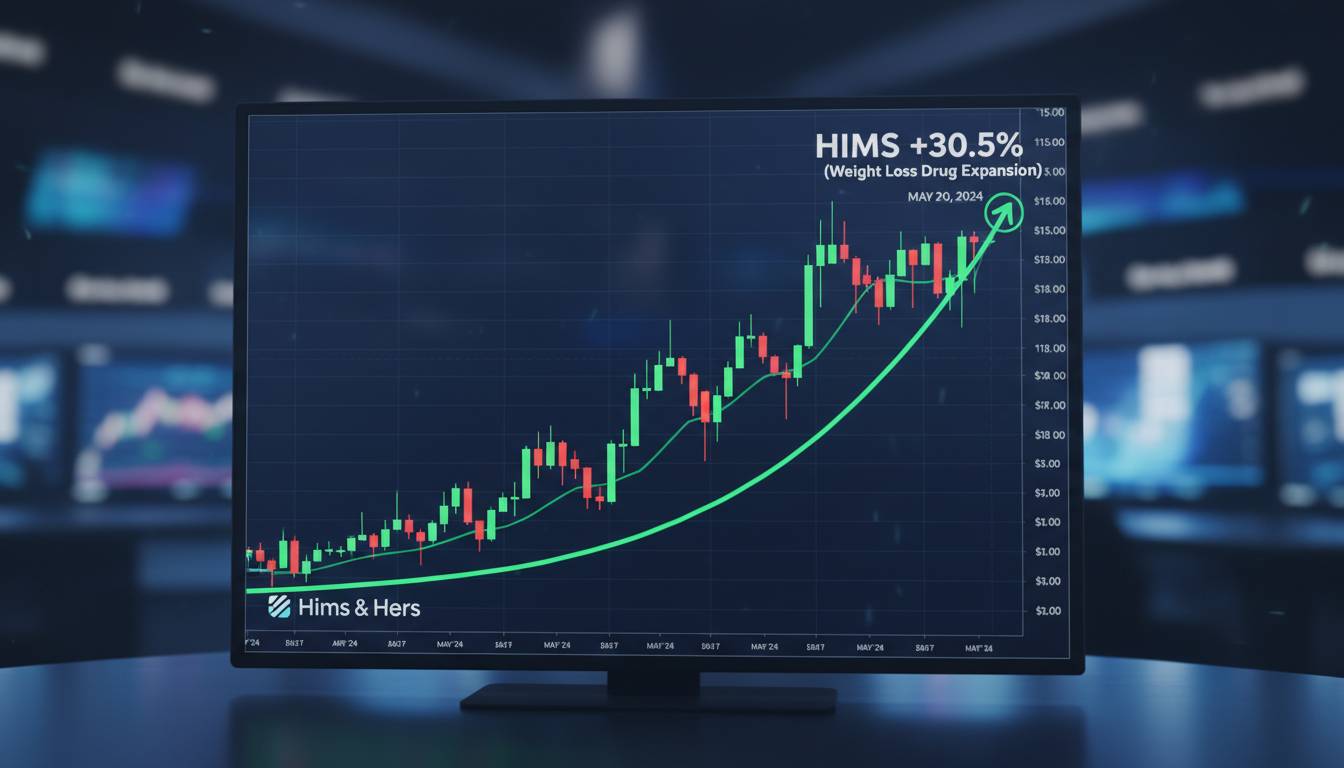
The Strategic Move Behind HIMS’s Weight Loss Expansion
The timing of Hims & Hers’ expansion couldn’t be more calculated. With weight loss drugs experiencing unprecedented demand and frequent shortages, the company identified a crucial market gap. Traditional GLP-1 medications often cost upwards of $1,000 monthly without insurance coverage, creating a significant barrier for many consumers.
The company’s approach leverages its existing telehealth infrastructure to streamline prescription and delivery processes. This isn’t just about adding another product line – it’s a fundamental shift in how weight loss medications reach consumers. By utilizing compounded versions of these drugs, Hims & Hers can offer more competitive pricing while maintaining quality standards.
What makes this particularly interesting is the company’s vertical integration strategy. They’re not just prescribing medications; they’re handling the entire patient journey from consultation to delivery. This end-to-end control allows for better margins and a more cohesive customer experience.
Understanding the Compounded Drug Advantage
Compounded medications represent a legitimate pathway for companies to offer alternatives when brand-name drugs face shortages. The FDA allows certified compounding pharmacies to create these medications under specific circumstances, which Hims & Hers is capitalizing on brilliantly.
The cost differential is staggering. While Novo Nordisk’s Wegovy can cost over $1,300 monthly, and Eli Lilly’s Zepbound sits around $1,050, Hims & Hers’ $199 price point represents an 80-85% discount. This pricing disruption has caught Wall Street’s attention, explaining the stock’s dramatic movement.
However, it’s worth noting that compounded drugs don’t undergo the same rigorous FDA approval process as their brand-name counterparts. They’re prepared by specialized pharmacies based on individual prescriptions, which allows for more flexibility but also raises some quality control questions that investors should monitor.
Market Impact and Competitive Landscape
The weight loss drug market is experiencing what many analysts call a “gold rush” moment. Morgan Stanley projects the global obesity drug market could reach $150 billion by 2033, up from roughly $6 billion today. That’s not just growth – its a complete market transformation.
Hims & Hers isn’t alone in recognizing this opportunity. Competitors like Ro and Curology are also eyeing the space, but HIMS has several advantages. Their established user base of over 1.7 million subscribers provides an immediate market for cross-selling. Additionally, their brand recognition in the direct-to-consumer healthcare space gives them credibility that newer entrants lack.
“The telehealth model is perfectly suited for weight management medications. Patients want discretion, convenience, and affordability – three things traditional healthcare often struggles to provide simultaneously.”
Traditional pharmaceutical giants aren’t sitting idle either. Novo Nordisk and Eli Lilly are ramping up production capacity, but supply constraints persist. This shortage creates a window of opportunity for companies like Hims & Hers to establish market presence before the big players can fully meet demand.
Revenue Projections and Financial Implications
Analyst projections suggest this move could add $500 million to $1 billion in annual revenue within 18-24 months if execution goes smoothly. Considering Hims & Hers reported $871 million in revenue for 2023, this represents potential growth of 57-115%.
The company’s gross margins, currently hovering around 80%, could see some compression with pharmaceutical products. But even at lower margins, the volume opportunity is substantial. If just 5% of their current subscriber base opts for weight loss medications at the announced pricing, that’s approximately $170 million in additional annual revenue.
The market clearly believes in this potential. HIMS stock has already gained over 120% year-to-date before this announcement, reflecting investor confidence in the company’s growth trajectory. This latest move only reinforces the bullish thesis.
Technical Analysis and Stock Performance
From a technical standpoint, HIMS has been in a strong uptrend since early 2024. The stock broke through key resistance levels at $15 and $20, establishing new support zones. Today’s surge pushed it through the $25 level, which could become the new floor if momentum continues.
Trading volume spiked to over 5x the average daily volume in pre-market, indicating strong institutional interest. The relative strength index (RSI) is approaching overbought territory at 72, suggesting some near-term consolidation might be healthy. However, in momentum stocks like HIMS, overbought conditions can persist for extended periods.
Chart patterns show a classic cup-and-handle formation on the daily timeframe, with today’s breakout confirming the pattern. Technical traders often view this as a bullish continuation signal, projecting further upside potential.
Key Risks to Consider
Despite the optimism, several risks deserve attention. Regulatory oversight remains the biggest wildcard. The FDA has been increasingly scrutinizing telehealth prescribing practices, particularly for controlled substances. While GLP-1 drugs aren’t controlled, any regulatory crackdown on telehealth could impact the sector broadly.
Competition will intensify. As the market opportunity becomes clearer, expect more entrants. Amazon’s pharmacy division, CVS Health’s digital initiatives, and even traditional weight loss companies like WW (formerly Weight Watchers) are potential competitors. The first-mover advantage is valuable but not insurmountable.
Supply chain reliability for compounded drugs presents another challenge. Unlike established pharmaceutical companies with dedicated manufacturing facilities, Hims & Hers relies on third-party compounding pharmacies. Any quality issues or supply disruptions could damage brand reputation and growth trajectory.
Investment Outlook and Strategic Positioning
For investors, HIMS represents a compelling growth story at the intersection of several powerful trends: telehealth adoption, pharmaceutical accessibility, and the weight loss revolution. The company’s ability to execute on this expansion will be crucial.
The current valuation at roughly 3.5x forward sales seems reasonable given the growth potential, especially compared to traditional pharmaceutical companies trading at higher multiples with slower growth. However, the stock’s recent run-up means new investors are paying a premium for future execution.
Long-term investors might view any consolidation as an entry opportunity. The fundamental thesis – that telehealth can disrupt traditional pharmaceutical distribution – remains intact. Short-term traders should watch the $25 level as key support, with resistance likely around $28-30.
Portfolio positioning depends on risk tolerance. Growth-oriented investors might allocate 2-3% of their portfolio, while more conservative approaches might wait for proven execution over the next 2-3 quarters. Either way, HIMS deserves attention as a potential disruptor in the massive healthcare market.
Conclusion
Hims & Hers’ entry into the weight loss drug market represents more than just a product expansion – it’s a bet on the future of healthcare delivery. By offering GLP-1 medications at disruptive price points through their telehealth platform, the company is challenging traditional pharmaceutical distribution models.
The stock’s surge reflects market confidence in this strategy, but execution will determine long-term success. Investors should monitor key metrics including subscriber growth, revenue per user, and regulatory developments. While risks exist, the opportunity in the weight management market is undeniable.
For those bullish on telehealth’s potential to democratize healthcare access, HIMS offers compelling exposure to this theme. The next few quarters will be crucial as the company scales its weight loss offerings and proves it can compete with pharmaceutical giants. Today’s stock movement might just be the beginning of a larger transformation story.
FAQs
What caused HIMS stock to surge today?
HIMS stock jumped over 15% following the announcement that the company will offer compounded GLP-1 weight loss medications at $199 per month, significantly undercutting competitors like Ozempic and Wegovy which can cost over $1,000 monthly.
How do Hims & Hers’ weight loss drugs differ from Ozempic or Wegovy?
Hims & Hers offers compounded versions of GLP-1 medications through partnering pharmacies, while Ozempic and Wegovy are FDA-approved brand-name drugs. Compounded drugs provide similar active ingredients but at much lower costs.
Is HIMS stock still a good investment after this surge?
While the stock has run up significantly, analysts remain bullish given the massive weight loss drug market opportunity projected to reach $150 billion by 2033. However, investors should consider the increased valuation and potential for near-term consolidation.
What are the main risks for Hims & Hers in the weight loss drug market?
Key risks include potential FDA regulatory changes, increasing competition from both telehealth and traditional pharmaceutical companies, and reliability concerns around compounded drug supply chains.
How much revenue could weight loss drugs add to Hims & Hers?
Analysts project the weight loss drug expansion could add $500 million to $1 billion in annual revenue within 18-24 months, potentially doubling the company’s current revenue base of $871 million.
When will Hims & Hers weight loss medications be available?
While the company hasn’t announced an exact launch date, their existing telehealth infrastructure suggests they could begin offering these medications within the next few months, likely by early 2025.



















Leave a comment