


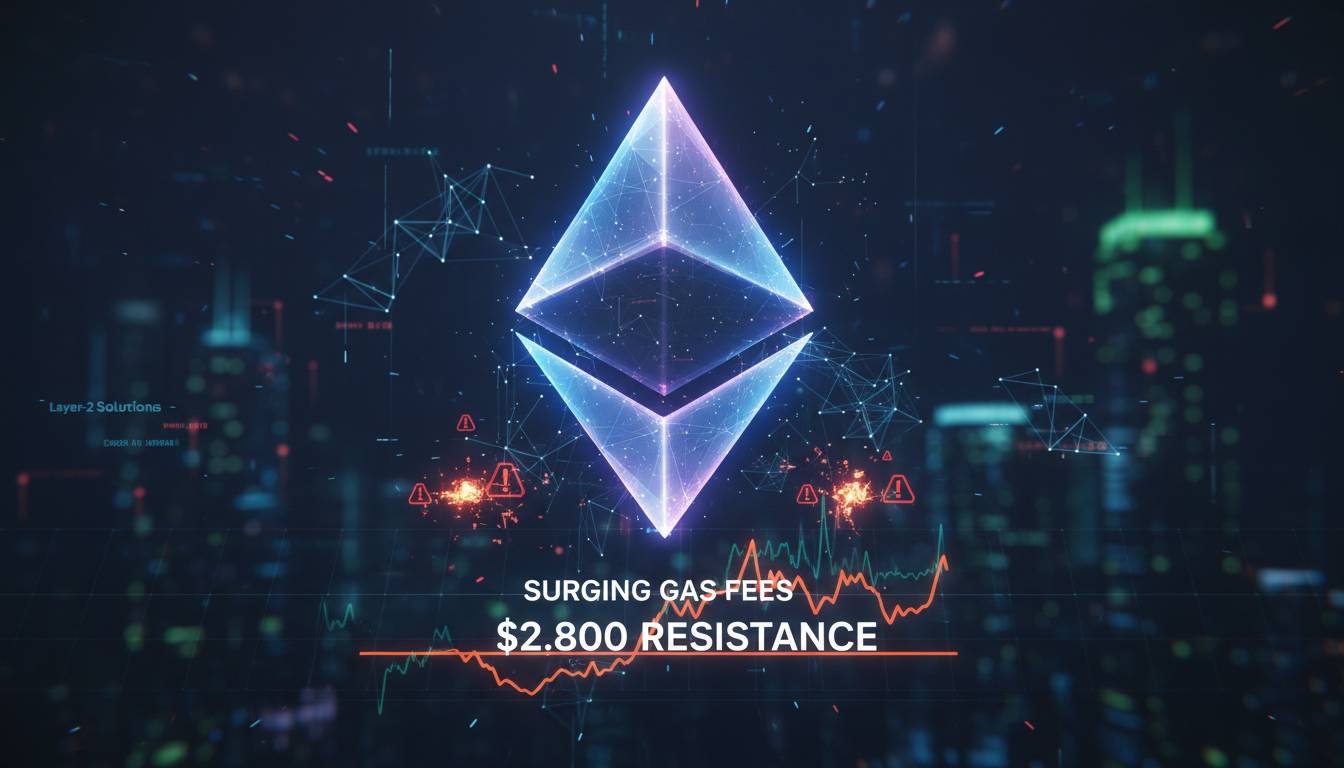
Ethereum (ETH) is presently struggling near the $2,800 mark amidst surging gas fees that reflect increasing network congestion and demand. Rising transaction costs are putting pressure on on‑chain activity and investor sentiment even as ETH hovers around this key resistance level.
Price Action at a Glance
Ethereum’s price has recently stalled just below the $2,800 threshold. A prior surge near this level triggered over $500 million in crypto liquidations—an event driven more by forced short-covering than genuine market confidence.
On-chain metrics show weak whale accumulation, with significant ETH moving onto exchanges—a bearish sign amid tepid buying interest. In technical terms, ETH remains trapped beneath its 50-day moving average near $2,798 and within a broader descending trend channel, suggesting more sideways or downward movement unless fresh catalysts emerge.
Why Gas Fees Are Surging Now
Ethereum is seeing a sharp jump in gas prices—up 333% to about 4.256 Gwei—as demand outpaces available block capacity. This is being driven by稳定coin transfers and aggressive MEV bot activity; one bot alone burned about $250,000 in fees in just one day.
This “noisy neighbor” effect—where high-volume actors monopolize limited block space—is inflating costs for regular users and disrupting liquidity. The spike illustrates a structural tension: Ethereum’s shared execution layer remains battle-tested by scaling demands.
Impact: What This Means for Users
Higher gas fees make everyday transactions costlier. That discourages smaller DeFi users and NFT traders and shifts volume toward centralized platforms or Layer‑2 networks.
Meanwhile, the elevated fee environment may depress speculative on-chain activity—especially when ETH can’t break key resistance levels. Combined, these dynamics paint a picture of frustration for retail users and cautious behavior from institutional players until network congestion eases.
What’s Driving Network Congestion?
Several key dynamics are at play:
- MEV Bot Dominance: MEV bots and stablecoin contracts are consuming a disproportionate share of block space, worsening congestion.
- Layer‑1 Limits: Despite improvements, mainnet capacity remains constrained—supply still lags demand during active periods.
- Lack of New Catalysts: Without institutional momentum like ETF rollouts or regulatory clarity, there’s no fresh fuel to ignite buyers above $2,800.
A Potential Path Forward
There are signs Ethereum may more effectively manage these challenges in the coming months:
- Layer‑2 Adoption and Protocol Upgrades: Upgrades like Fusaka and Dencun have boosted blob capacity and lowered costs—if adoption continues, pressure on mainnet could ease.
- On‑Chain Innovation: Fee-market reforms like congestion-aware fee adjustments or reserved block slots (suggested in recent academic studies) could enhance fairness and throughput over time.
- Macro Developments: Institutional catalysts—like ETF approvals or increased staking inflows—could shift sentiment, supporting price strength above resistance.
Summary and Outlook
Ethereum remains in a tug-of-war zone. On one side, the price is stuck under $2,800 with weak momentum and shrinking whale interest. On the other, gas fees are surging due to network congestion and MEV activity.
Any hope for a breakout hinges on easing fees, increased activity on Layer‑2, or fresh institutional triggers. For everyday users, that means either enduring higher costs or shifting to cheaper alternatives. For traders, the resistance zone remains the battleground—until something changes, expect ETH to hover in no-man’s land.
FAQs
Why isn’t Ethereum breaking past $2,800?
The recent rally was powered mainly by forced short squeeze liquidations—not broad buying. Weak whale activity and regulatory and technical hurdles are mowing down bullish conviction.
What’s causing gas fees to spike now?
A rush of stablecoin and MEV transactions is overwhelming available block space, fueling fee spikes that spread congestion across the network.
Are Layer‑2 solutions helping?
Yes—upgrades like Fusaka and Dencun have improved Layer‑2 efficiency and reduced costs. Continued adoption could ease pressure on the mainnet𑁋but it’s not enough yet.
How do gas fees affect DeFi and trading?
High fees deter small-scale trading and DeFi participation. Users either delay transactions or migrate to less costly platforms like L2s—or even centralized exchanges.
What could turn sentiment around for Ethereum?
Institutional interest—like ETF approval or major inflows—along with continued improvement in network scalability, are the most likely triggers to propel ETH past resistance.
Is this congestion a long-term problem?
It’s a structural challenge. Network designs and protocol improvements aim to spread demand more evenly, but until Ethereum scales or fee markets improve, these pressure points will keep recurring.
Ethere is battling on multiple fronts. Price, fees, and usability are entwined—only meaningful upgrades or demand shifts will break the impasse.


















Leave a comment